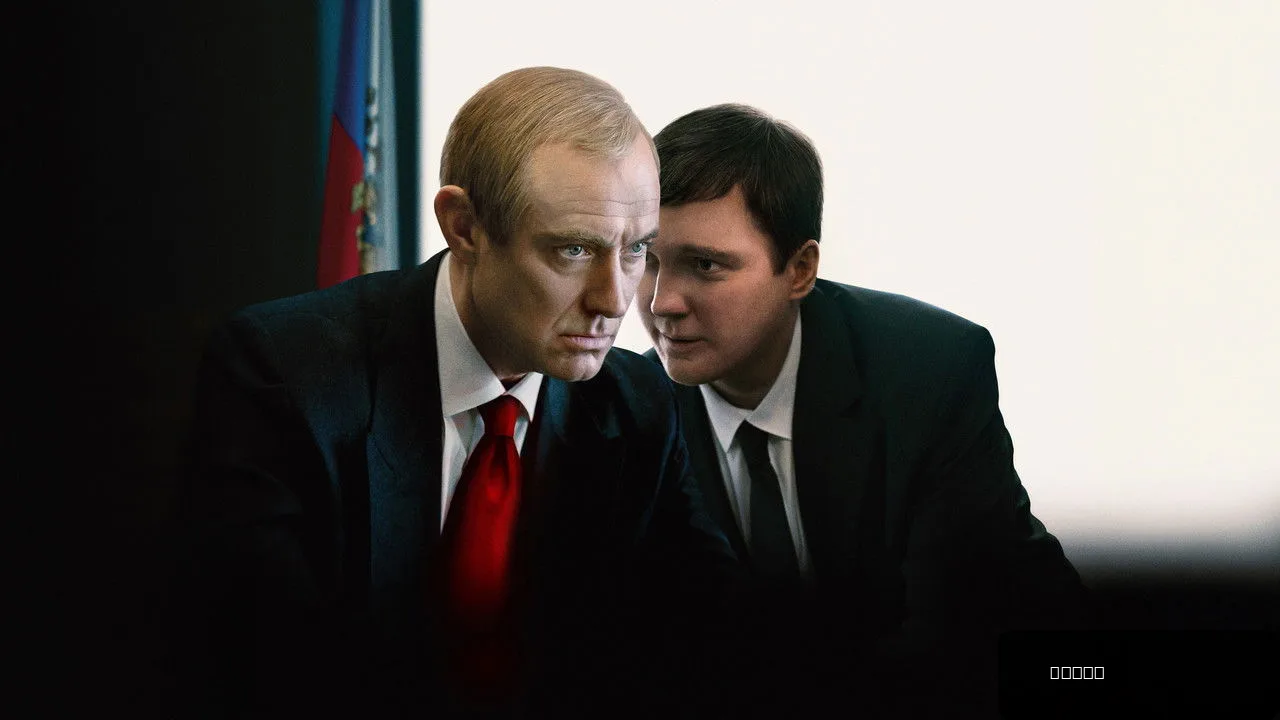
Jude Law's Unsettling Putin and Paul Dano's Master Manipulator Make The Wizard of the Kremlin Impossible to Dismiss
TL;DR: Olivier Assayas's Venice 2025 competition film dramatizes Putin's rise through a fictional spin doctor, anchored by Jude Law's magnetic performance and Paul Dano's reinvention. Runtime: 155 minutes. Metacritic: 54 (mixed). Worth watching if political intrigue is your genre — but expect pacing problems and a film that doesn't quite hold together, even when individual scenes do.
Paul Dano Chose the Hardest Role of His Career — and It Shows
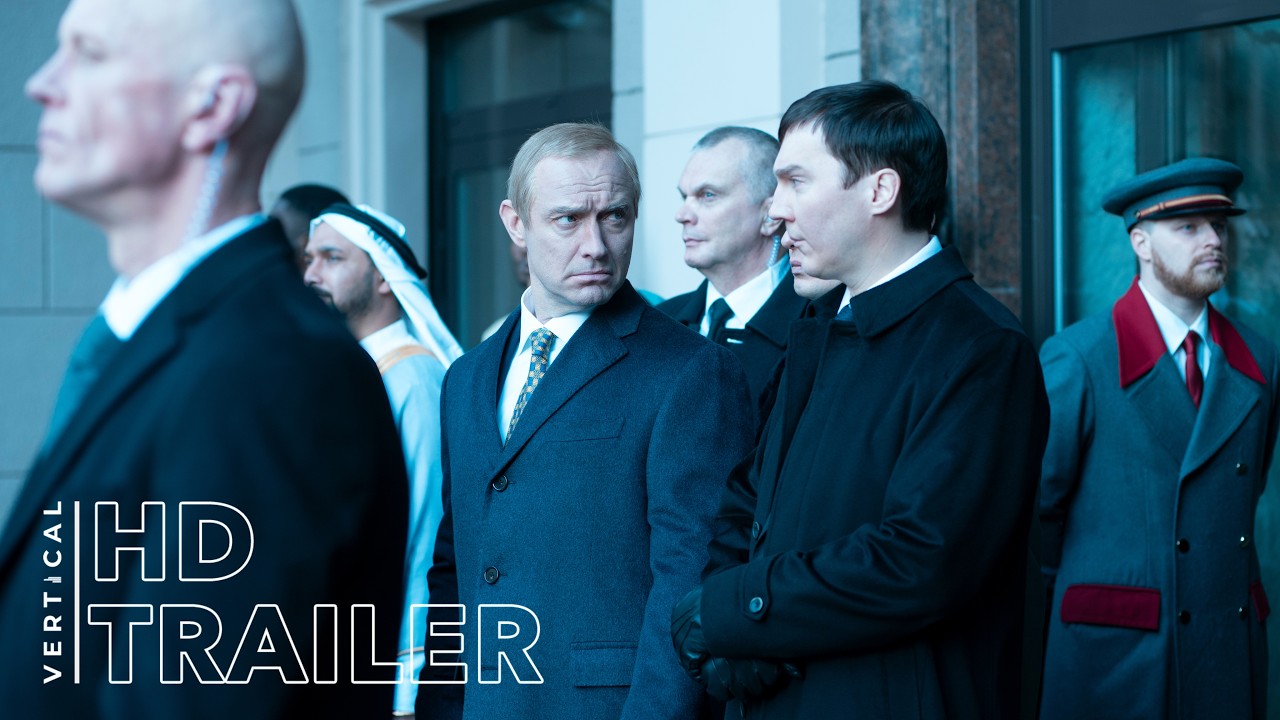
Paul Dano doesn't usually do power. His filmography is broken men, desperate men, quietly unraveling men — There Will Be Blood, Prisoners, The Batman. So when Olivier Assayas offered him Vadim Baranov, a Soviet-era artist turned Kremlin spin doctor who engineered Vladimir Putin's ascent, it wasn't a stretch. It was a complete reinvention.
And here's what's striking: even when the film around Dano falters — and it does, noticeably in the second hour — he doesn't. Opposite a genuinely unsettling Jude Law as young Putin, Dano anchors The Wizard of the Kremlin in a way that keeps you watching even when the script gets clumsy or the pacing sags. You can feel him working, thinking through each scene, choosing which silences matter.
The film premiered at Venice on September 1, 2025, in competition, and promptly divided critics almost evenly. Some found it sharply intelligent. Others found it thin. The truth is somewhere in between — closer to the former when Dano and Law share the screen, closer to the latter when the film tries to be a larger political epic.
What's Actually on Screen (And What Isn't)
Director: Olivier Assayas (Personal Shopper, Irma Vep)
Cast: Paul Dano, Jude Law, Alicia Vikander, Will Keen, Tom Sturridge
Runtime: 155 minutes
Metacritic Score: 54
Where It Premiered: Venice Film Festival (Competition)
Screenplay: Olivier Assayas & Emmanuel Carrère, based on Giuliano da Empoli's 2022 novel
The plot is simple in outline. In post-Soviet chaos — oligarchs, organized crime, institutional collapse — a rising KGB officer named Vladimir Putin joins forces with Vadim Baranov, a master manipulator, to reshape Russia. Violence, deception, and very expensive vodka. The story runs from the 1980s through Putin's consolidation of power, framed by a 2019 conversation between an older Baranov and a Western journalist.
The supporting cast deserves specificity:
- Jude Law as Putin — controlled, still, assembled piece by piece into something that will outlast everyone around him. This is Law's strongest work in years.
- Will Keen as Boris Berezovsky, the oligarch whose fall from Putin's grace became Russia's defining cautionary tale.
- Alicia Vikander as Ksenia, Baranov's girlfriend. She doesn't have nearly enough to do — honestly, that's the film's most frustrating waste of a good actor.
- Tom Sturridge as Dmitri Sidorov, a fictional composite oligarch whose arc mirrors several real figures.
What Assayas and Carrère get right is treating Baranov not as villain or hero, but as something far more uncomfortable: a man who understood exactly what he was building and built it anyway. That's the film's central intelligence, when it remembers to lean on it.
What the film leaves out is curious. The 1991 coup attempt barely registers. Alexei Navalny doesn't appear at all. Key historical moments feel compressed or skipped entirely — which, for a 155-minute film, is a choice that stings.
Why This Film Arrives at a Genuinely Strange Moment
Political dramas about Russian power aren't new. But they've rarely felt this urgent. The Wizard of the Kremlin enters a world that's spent three years processing the full weight of Putin's decision to invade Ukraine, which means every creative choice carries extra weight.
The source novel — Giuliano da Empoli's 2022 bestseller, translated into over 30 languages — was a sensation in Europe, praised for its insider feel, its account of how authoritarian spin doctoring actually operates. The film adaptation was always a high-wire act. Assayas, a French director working in English with a predominantly Western cast, took the most provocative route possible: no Russian actors in the leads, no Russian accents, a deliberate distancing effect.
This is the film's most divisive choice. SHIFTER Magazine's review called it "sharply written yet clumsy" — and that paradox captures something real. You've got screenplay intelligence sitting next to directorial choices that don't quite land. It's the tension between what Assayas wants to say and how he's chosen to say it.
For context, this debate isn't new. Downfall (2004), Vice (2018), Munich (2005) — they all grappled with the same question: how much authenticity does a political drama owe its subject? The Wizard of the Kremlin sits somewhere in that tradition, more earnest than The Death of Stalin's black comedy but less formally rigorous than Spielberg at his most serious.
What the Critics Actually Disagree On
The Venice split was real — not polite disagreement, but genuine fracture. Some reviewers found the political intelligence thrilling. Others found the characterizations thin.
The Film Verdict noted that Law's performance is "magnetic," and most critics agree. Law plays Putin as a project — a man being assembled into something that will outlast everyone around him. It's controlled stillness, and it's the film's single strongest element.
The criticisms, though, land hard. Pacing sags noticeably in the second hour. Several characters feel underwritten — Vikander's Ksenia most obviously. And there's a long, circling conversation between Baranov and Berezovsky about power that feels like it belongs in a better film entirely. You can feel Carrère's screenplay straining against Assayas's direction in moments like that — like two artists working toward different ends.
What I keep coming back to is this: the film knows what it's doing when it's focused on the relationship between Dano and Law. Everything else feels secondary, including the historical machinery supposedly driving the plot forward. That's either a flaw or a point — depending on whether you think a film about the nature of influence should be intimate or grand.
Where You'll Actually Watch This (And When)
Theatrical release timing hasn't been officially confirmed for India, though given the film's Venice competition pedigree and English-language production, a wide US/UK release in autumn 2025 is expected. Streaming windows typically follow within 90 days — so figure late 2025 or early 2026 for OTT availability.
Indian distribution isn't yet locked down. The likely candidates — Netflix India or Amazon Prime Video India — have acquired comparable European prestige titles in recent years. No Hindi or regional-language dub has been announced. The film's runtime and talky, dense screenplay suggest it'll likely skip theatrical distribution in India entirely, moving straight to streaming.
Movie OTT's where-to-watch tracker aggregates listings across Netflix, Prime Video, Disney+ Hotstar, JioCinema, SonyLIV, and Zee5 — it's the fastest way to check current availability once the distribution deal is announced for your region.
If you've got patience for slow-burn political drama and a taste for the cerebral — The Crown, Munich: The Edge of War, Fauda — this will register. If you need plot momentum or emotional catharsis, you'll find yourself checking the runtime.
Assayas and Carrère: Two Artists, One Gamble
Olivier Assayas isn't an obvious choice for material this large. His best work — Personal Shopper (2016), Clouds of Sils Maria (2014), the 2022 HBO remake of Irma Vep — is intimate, character-driven, deliberately oblique. He's a filmmaker of textures and atmospheres.
Which is exactly why The Wizard of the Kremlin is interesting as a career move. Assayas bringing his sensibility to geopolitical chess is genuinely unpredictable.
Emmanuel Carrère, his co-writer, is one of France's most decorated literary figures. His nonfiction novel The Adversary (2000) remains a masterclass in inhabiting a real criminal's psychology without excusing it. That instinct — to understand without endorsing — is visible in Baranov as written, even when Assayas's direction doesn't fully serve the screenplay.
Paul Dano, now in his late 30s, has built one of American cinema's most quietly distinguished careers since Little Miss Sunshine (2006). Jude Law, 52, is in a remarkable late-career renaissance. Alicia Vikander (Ex Machina, Tomb Raider) deserved more screen time than she got — that's a genuine creative misfire.
The Awards Question (And It's Complicated)
Metacritic 54 isn't disqualifying — Vice scored 61 and landed eight Oscar nominations — but Venice's mixed response suggests The Wizard of the Kremlin won't have the groundswell that turns a prestige drama into a genuine contender.
Watch for Jude Law's name in early Best Actor conversation. His Putin is the kind of transformative performance that awards bodies notice even when the film around it is imperfect. Whether that translates to nominations at the Golden Globes or BAFTA is genuinely hard to say. The film's politics are too immediate, too contested, for comfortable awards-season consensus.
Should You Actually Watch This?
Yes — if you tolerate slow pacing for the sake of watching two actors at the top of their game work through something genuinely difficult. Dano's reinvention and Law's stillness are worth your time, even if the film's structure isn't.
No — if you need your historical dramas to feel complete. This one has gaps. Real ones.
The honest take: it's a fascinating failure, which is infinitely more interesting than a competent nothing. Watch the Dano-Law scenes. Skip the oligarch subplots. You'll get what the film is trying to do without sitting through the parts that don't work.
Watch the official trailer: