Constantin Popescu's Birds of the Soul: A Romanian Director Takes on Supernatural Franchise Cinema
TL;DR: Romanian arthouse director Constantin Popescu is directing the first two films in a new supernatural franchise called Birds of the Soul, set in 1917 Carpathia. Production starts November 2026. No streaming home confirmed yet, but this is worth tracking — it's the kind of prestige-horror bet that rarely happens anymore.
Three years after Robert Eggers proved that folk horror rooted in specific geography could actually work at scale — The Northman cost $70 million and earned $68.5 million worldwide — another production is betting the same formula translates to Eastern European mythology. The project: Birds of the Soul. The director: Constantin Popescu, a Berlin Film Festival Silver Bear winner who's spent his career building dread through restraint rather than jump scares.
This is the move the industry doesn't usually make.
Just Entertainment and AiMation are producing. Popescu will shoot both the first and second films back-to-back starting November 2026 in the Dominican Republic (standing in for wartime Romania). No cast announced. No streaming deal confirmed. And yet this feels like one of those rare moments when a franchise actually assembles the right filmmaker for the right material, before the machine starts grinding.
What's Actually Confirmed (and What Isn't)
Here's what we know as of May 19, 2026, when Deadline broke the news:
- Director: Constantin Popescu (both films)
- Producers: Just Entertainment (P.J. Pettiett) and AiMation
- Production timeline: November 2026, back-to-back shooting
- Location: Dominican Republic (doubling for Carpathian Mountains)
- Release date: Not announced
- Streaming platform: Not announced
- Cast: No names attached as of now
- Genre: Supernatural drama set in 1917
The back-to-back production schedule is the real signal here. That's not a "let's see how the first one performs" move — that's a director and studio betting on the mythology hard enough to lock in continuity and shared production infrastructure. Peter Jackson did this with The Lord of the Rings. It's expensive. It's risky. It only happens when someone believes in what they're building.
Cast announcements should arrive within the next 60 days if they're hitting that November start. The fact that they haven't dropped yet is either strategic silence or a sign the deals are still being negotiated. From what I gather, the production is courting at least one name-level European actor for the village elder role, though that part is still rumour. Hard to say which way it breaks.
Why Popescu Matters (and Why Most Audiences Won't Know His Name)
Constantin Popescu isn't a household name outside festival circuits, and that's exactly what makes this interesting. He's part of the Romanian New Wave — that wave of post-2000 filmmakers (Cristian Mungiu, Cristi Puiu) who built a house style around long takes, naturalistic acting, and the refusal to aestheticize pain. His 2017 feature Pororoca won the Silver Bear for Best Actor at Berlin (Bogdan Dumitrache, in a performance that's basically a 128-minute anxiety attack about a father losing his daughter in a park and then losing his mind in the aftermath). Critics took notice. Festivals programmed him. The mainstream largely ignored him.
Which is fine, because what he brings to a supernatural franchise isn't visual flash or jump-scare mechanics. It's the opposite. He's spent his career building dread through behavior — the way a community's social fabric tears, the way fear rewires how people speak to each other. Applied to a story about a village consumed by supernatural forces in a wartime winter? That's a combination I keep coming back to.
The thing nobody mentions is that this kind of casting — arthouse director into franchise machinery — has a documented failure rate. Robert Eggers walked away from franchise work after The Northman. The creative conditions that produce The Witch don't survive a studio machine grinding toward a second installment. Whether Popescu has the contractual protection to stay true to his instincts across two simultaneous productions is the real story nobody's tracking yet.
The Premise: What Birds of the Soul Actually Is
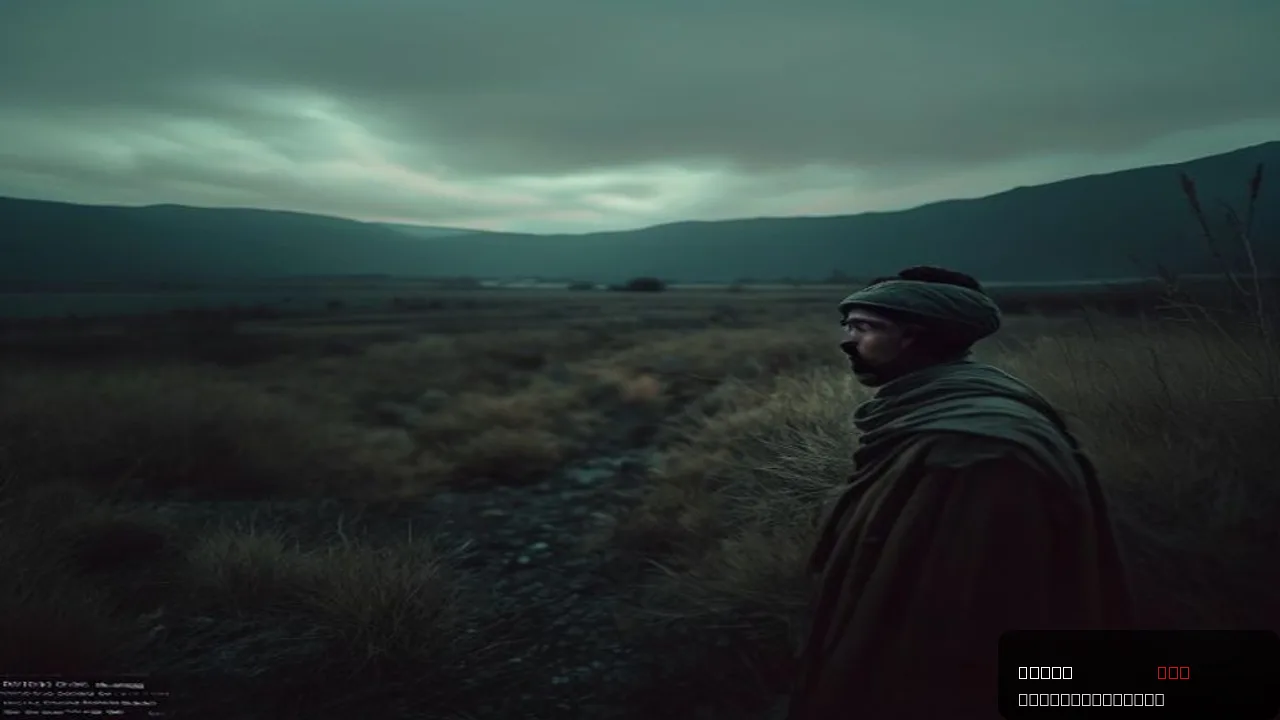
The franchise synopsis from Deadline: the first film follows a remote village in the Carpathian Mountains in 1917, "gripped by unexplained events as wartime paranoia" deepens. That's as much detail as we've got. The studio's being cagey about the rest.
But here's what matters: it's grounded. It's not a ghost-franchise where the rules change every installment. It's not built for jump scares. P.J. Pettiett told Deadline the films are designed as "grounded supernatural epics that explore faith, fear, and survival through a distinctly cinematic lens." That language — "grounded," "distinctly cinematic" — is a direct signal to distributors and viewers that this won't be multiplex horror. Think atmosphere over shock. Think Midsommar pacing, not Conjuring.
Popescu's own statement reinforces it: "What drew me to the project was the opportunity to build something mythic and emotional within the reality of war. At its core, this is a story about humanity confronting forces it cannot fully understand."
That's not marketing speak. That's a filmmaker talking about the architecture of the thing — the collision between rational wartime collapse and something that resists explanation. That tension is where the real horror lives.
Where This Lands for Indian Audiences (and When to Expect Deals)
Here's the honest part: Birds of the Soul doesn't have a confirmed Indian streaming home yet. No territory has a distribution deal. That'll change — probably within the next six months, definitely before the November shoot wraps — but right now it's still unsigned.
When deals do land, Movie OTT will have the real-time updates. Based on the production profile and budget tier, the likely Indian platforms are Netflix (aggressive with prestige international horror), Amazon Prime Video (strong track record with European arthouse genre), or Apple TV+ (increasingly interested in this tier of international cinema).
The more interesting question: will they localize it? Hindi, Tamil, and Telugu dubbing tracks would substantially expand who watches this thing. No word on whether that's planned, but for a franchise with global ambitions, it'd be a straightforward investment. Movie OTT's where-to-watch tracker will flag those options as they're confirmed.
For Indian audiences, the more relevant comp isn't The Conjuring Universe — it's Tumbbad (2018), which earned ₹13.5 crore on a ₹5 crore budget by proving that mythology-rooted, slow-burn supernatural cinema can find a devoted theatrical and streaming audience in India without relying on conventional horror tropes. Birds of the Soul shares that exact structural DNA: ancient belief systems colliding with period-specific rationalism, a community under siege from forces that resist explanation. It's a template that translates, and the word on the lot is that at least two Indian distributors have already flagged the project internally.
The Real Question Nobody's Asking Yet
Look — most coverage of this will frame it as "arthouse director goes commercial." That's the lazy read. The more accurate one is whether Just Entertainment is building the Carpathian answer to The Conjuring Universe, and whether Popescu survives that institutional pressure intact. Most trade write-ups miss what's actually unusual here: this is the first time a Romanian New Wave director has been attached to a multi-film franchise production of any kind, at any budget level. That's not a comeback story or a crossover moment. It's an experiment without precedent, and the results will either open a pipeline for Eastern European auteurs into genre franchise work or close it for a decade.
Back-to-back franchise productions have a track record of grinding down exactly the filmmakers who make them valuable in the first place. The conditions that produce restraint and dread don't coexist well with studio notes, franchise mythology that needs expanding, and the pressure to make the second film bigger than the first. Popescu's contractual autonomy — whether he has final cut, whether the studio can override his choices — that's the thing that'll determine whether Birds of the Soul stays weird and atmospheric or gradually becomes something safer.
I'm not predicting either outcome. Just saying: watch the second film closely. It'll tell you everything about what happened behind the scenes.
What Comes Next: The Timeline
Before November 2026, we should see:
- Cast announcements — within 60 days, realistically
- First-look images — usually tied to a distribution deal announcement
- Festival strategy clarification — whether they're targeting Venice 2027, Cannes 2028, or going straight to streaming
- Distribution deals — India, UK, US, other territories should be locked by August 2026 at the latest
Franchise extensions beyond the first two films haven't been discussed publicly. The back-to-back structure implies the mythology's mapped deeper than that, but you don't announce sequels before the first film exists. That'd be Avatar: The Way of Water energy, and this isn't that kind of production.
Keep Movie OTT's filmmaker database bookmarked if you want Popescu's complete filmography before the franchise arrives. Understanding his prior work — the pacing choices, the performance direction, how he builds atmosphere — will make watching Birds of the Soul make a lot more sense.
Why This Matters Right Now
We're in a weird moment for horror franchises. The IP-heavy model (endless Conjuring sequels, Insidious spin-offs) is showing fatigue. Audiences aren't showing up for the eighth installment the way they used to. Meanwhile, standalone prestige horror — Hereditary, It Comes at Night, Saint Maud — is performing consistently well, but the studios don't know how to franchise that sensibility without killing it.
Birds of the Soul is a bet that you can. That you can hire a restrained, festival-credentialed director. Give him two films to work with. Let him build something real rather than something designed-by-committee. And that audiences will actually want to watch it.
That's a bet worth tracking before the conversation gets loud. Bookmark this one.