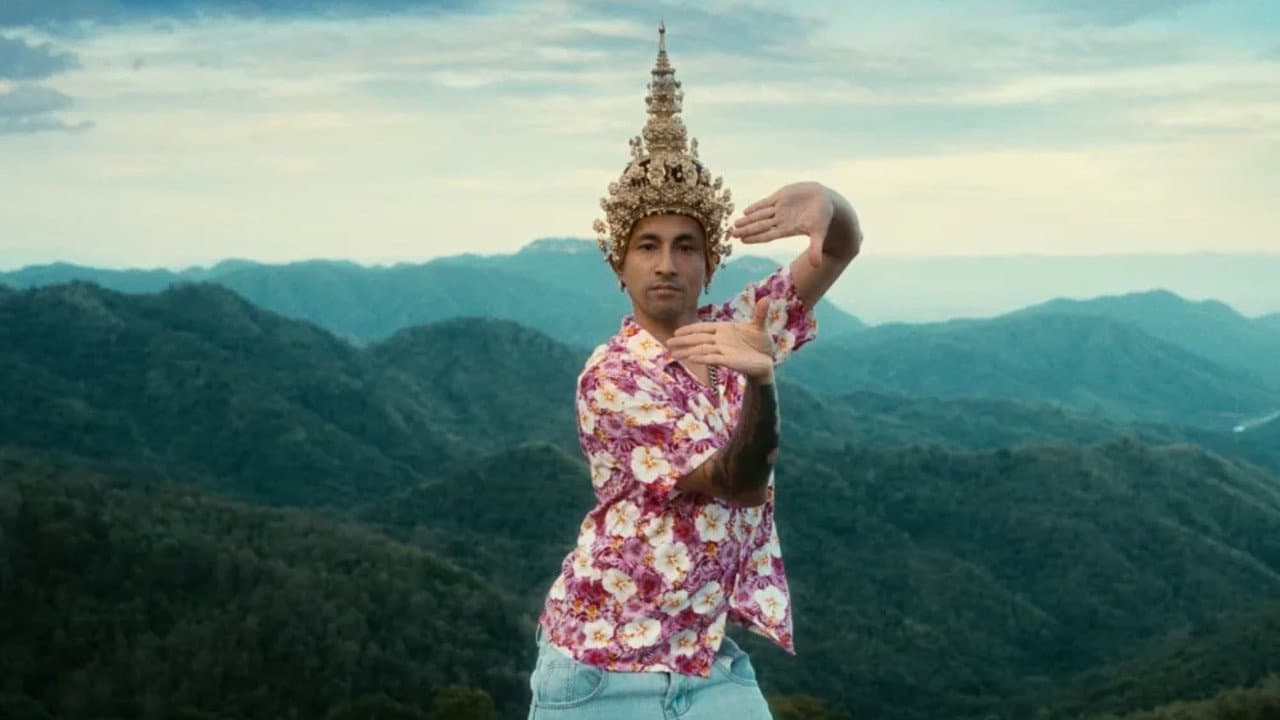
10s Across the Borders
A Southeast Asian ballroom scene born from New York's legacy
10s Across the Borders is a 2026 documentary that follows three queer activists as they transplant the underground ballroom culture of 1980s New York to the Philippines, Malaysia, and Thailand. It's a film about building home when the world won't build it for you — and it's nothing like the spectacle-focused ballroom docs you might expect.
The three subjects — Xyza Pinklady Mizrahi, Teddy Oricci, and Aurora Sun Labeija — have each watched homophobia, transphobia, colorism, and HIV stigma calcify into law and custom in their countries. So they did what their predecessors in Harlem and the Bronx did decades before: they created chosen families, categories, and safe rooms where identity isn't a liability. The film doesn't just document this. It moves with it.
Why the ballroom format matters in Southeast Asia right now
Here's what I keep coming back to: ballroom culture arrived in the Philippines, Malaysia, and Thailand not as a historical artifact but as a blueprint for survival. That's different from how it's usually framed in Western documentaries. It's not museum footage. It's active resistance.
Director Chan Sze-Wei, a Singapore-based choreographer and filmmaker, shoots with a real understanding of dance as testimony — not entertainment. There's a sequence in the Philippine ball where the category is less about fashion than about who gets to exist in public without apology. The crowd's reaction carries the weight of years. No narration needed.
The film premiered at the Busan International Film Festival before screening at the Singapore International Film Festival (where it received an R21 rating) and the Los Angeles Asian Pacific Film Festival in May 2026. An Audience Choice Award for Documentary followed — the kind of win that tracks when a film actually lands with people in the room.
Production stretched across the Philippines, Singapore, and Germany, with Daluyong Studios credited as a key producer, making it genuinely transnational in both subject and infrastructure. The Marché du Film has listed the project, signaling real international sales momentum — though theatrical and streaming rollout dates haven't been formally announced yet.
How it compares to Paris Is Burning — but not in the way you think
Everyone's going to mention Paris Is Burning (1990), and sure, the connection is real. Jennie Livingston's landmark documented Black and Latinx ballroom in New York. 10s Across the Borders extends that genealogy — showing how the culture traveled, got claimed by new communities, and took on entirely new urgency across Southeast Asia. But it's not a retread. It's a sequel written in a different country's language.
What strikes me is how the film refuses to flatten the three scenes into one story. Teddy's Malaysia isn't Xyza's Philippines. Each nation's legal landscape, each community's specific griefs — they're distinct. The film honors that. Fans of Kokomo City (2023) or Pose will recognize the emotional territory: chosen family, fierce joy, the politics of visibility. But the Southeast Asian specificity is genuinely new ground.
Where to watch and what format suits it best
10s Across the Borders is 99 minutes — long enough to breathe, short enough not to overstay. It's a film that rewards watching with other people. A festival screening is ideal, but streaming works too.
The documentary is available on major OTT services. Check Movie OTT's where-to-watch tracker for the most current platform listings — availability shifts as licensing deals finalize, and their database updates in real time. Since this is still in festival circulation, it hasn't hit every platform yet. Setting a watchlist alert there beats refreshing five apps yourself.
Given its profile and audience overlap with Disclosure and Kokomo City, it's well-positioned for discovery once it lands on a platform with global reach. Movie OTT aggregates that data across services, making it the fastest first stop.
Who this is actually for
You should watch 10s Across the Borders if:
- You've seen Paris Is Burning or Pose and want the conversation to continue in a new context
- You're curious how culture migrates and mutates across borders — how New York becomes Manila becomes Bangkok
- You care about queer history, chosen family, or resistance through art
- You appreciate dance as a political language, not just movement
This isn't a film that whispers. It demands attention. And it earns every minute.
FAQ
Q: Is this a documentary or narrative film?
Documentary. The people and communities are real, and Chan Sze-Wei embedded with them to capture their work building ballroom scenes across Southeast Asia.
Q: How long is it?
99 minutes. Tight pacing, no filler.
Q: Where can I find it right now?
Streaming availability varies by region and evolves as new licensing deals confirm. Movie OTT keeps live, updated platform listings — start there rather than hunting separately.
Q: What's the rating?
It received an R21 rating in Singapore, indicating mature content. It's not gratuitous — the rating reflects frank discussions of sexuality, gender, and HIV.
Q: Do I need to know about ballroom culture beforehand?
No. The film assumes no prior knowledge and lets the culture explain itself through the people living it. Comparisons to Paris Is Burning help, but aren't required.
Next step: Set a watchlist alert on Movie OTT for platform availability in your region, or check festival schedules if you're near a screening. This one's worth prioritizing.