The story of 13 Assassins and its feudal conspiracy
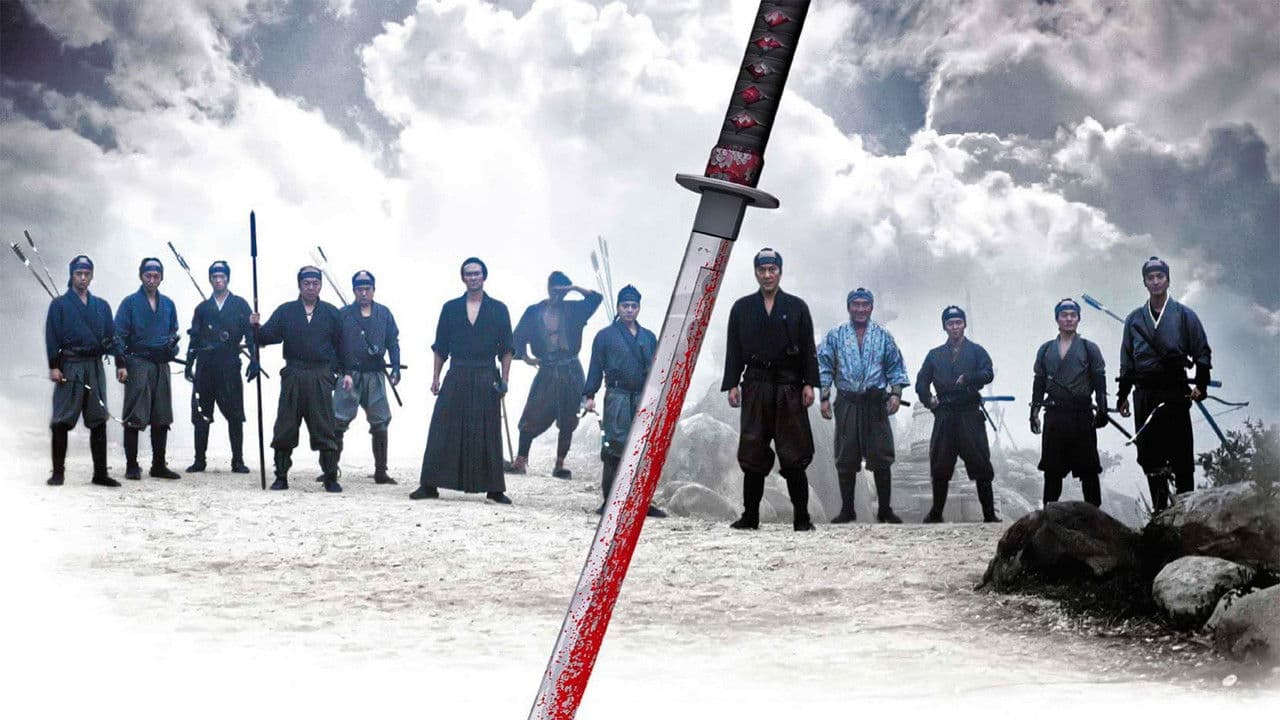
13 Assassins opens in the waning days of Japan's Edo period, a time when the old samurai code was already fading into history. The film centers on a conspiracy that feels almost impossible to pull off: a veteran samurai named Shinzaemon, played by Kôji Yakusho, assembles a ragtag group of twelve fellow warriors plus a hunter to stop Lord Matsudaira Naritsugu from ascending to the Shogunate Council. Naritsugu isn't your typical antagonist — he's a murderer, a sadist, and worse. His brutal actions have earned him enemies in high places, but his family connections make him nearly untouchable through normal channels. So Shinzaemon and his crew have no choice but to operate in the shadows, planning an assassination that could either save Japan or doom them all. The tagline says it all: "Take up your sword."
Behind the making of 13 Assassins and its ambitious scope
Takashi Miike didn't invent this story from scratch—he was remaking Eiichi Kudo's 1963 film of the same name, a period drama that had already captured audiences decades earlier. But Miike, known for his fearless approach to violence and moral ambiguity, brought something entirely his own to the material. The production was a massive undertaking, with backing from TOHO, Toei Studios Kyoto, TV Asahi, and a sprawling international co-production network that included Recorded Picture Company and HanWay Films. That kind of investment reflects the scale of what Miike was attempting—this isn't a small, intimate chamber piece. It's a samurai epic that demanded resources, a strong ensemble cast, and a director willing to spend nearly two and a half hours building toward something genuinely explosive.
The cast assembled around Yakusho brought serious pedigree. Alongside him, you've got Takayuki Yamada, Sōsuke Takaoka, Hiroki Matsukata, and Gorō Inagaki—names that carry weight in Japanese cinema. What's striking is how Miike uses this ensemble not to create a star vehicle but to build a collective tragedy. These aren't heroes riding in to save the day. They're men who've already lost everything—their status, their purpose, their place in a changing world. Hiring them was essential to making that theme land. The film clocked in at 141 minutes when it released in 2010, and on IMDb it holds a solid 7.3 rating, suggesting audiences connected with what Miike was building, even if the runtime asks for real commitment.
What makes 13 Assassins stand out in samurai cinema
Here's the thing about Takashi Miike's approach to this material: he doesn't shy away from the horror of what these men are about to do. One reviewer noted that Miike excels at extracting true horror from the internal darkness of humanity, and that's exactly what he does with Lord Naritsugu. The villain isn't just evil for plot convenience—he's a window into what happens when power and cruelty combine without restraint. Naritsugu murdered an entire family against his own brother's wishes, and that act of defiance, that refusal to be controlled, is what sets the whole assassination plot in motion. It's psychological as much as it is physical.
But the real payoff comes in that climactic 45-minute battle sequence. Honestly, it's one of the most sustained action sequences in modern samurai cinema—not because of fancy editing or wire work, but because Miike commits to the geography, the exhaustion, the sheer grinding brutality of thirteen men trying to hold a position against overwhelming odds. The film doesn't cut away when things get messy. It doesn't soften the blow. Viewers who come for samurai action will find it, but they'll also find something closer to Kurosawa's moral seriousness—the sense that violence, even justified violence, carries a weight that can't be shrugged off. That's what separates this from being just another action movie where "13 guys kill by hundreds," as one reviewer put it. Miike forces you to care about why.
Where to stream 13 Assassins online
13 Assassins is currently available on major OTT services, and you can check the Where to Watch widget at the top of this page to see exactly which platforms are carrying it in your region right now. Streaming availability shifts constantly—what's on Netflix one month might move to Prime Video the next—so Movie OTT keeps a live database of where films like this are actually streaming. If you're hunting for a 141-minute commitment on a weekend, it's worth checking there first rather than bouncing between three different apps. The film's length and intensity make it the kind of watch you'll want to plan for, not something you stumble into at 11 p.m. on a Tuesday.
Frequently asked questions
Q: Is 13 Assassins a true story?
No, it's a fictional narrative set during a real historical period—the end of Japan's Edo era in 1844. While the Shogunate Council and feudal political structures were real, the plot about the thirteen assassins and Lord Naritsugu is a creation of the original 1963 film, which Takashi Miike adapted for his 2010 version.
Q: Who directed 13 Assassins?
Takashi Miike directed the 2010 film. He's known for his willingness to explore violence and moral ambiguity in cinema, bringing a distinctly modern sensibility to this period-drama remake.
Q: How long is 13 Assassins?
The film runs 141 minutes, with the final 45 minutes devoted to a single, sustained battle sequence that forms the climax of the entire story.
Q: Is 13 Assassins a remake?
Yes, it's a remake of Eiichi Kudo's 1963 Japanese period drama film also called 13 Assassins, though Miike's version expands the scope and brings his own directorial vision to the material.
Q: What's the genre of 13 Assassins?
It's classified as action, adventure, and drama—a samurai epic that blends historical setting with intense action sequences and character-driven storytelling.
Final thoughts on 13 Assassins
If you're looking for a samurai film that doesn't rely on nostalgia or romanticized swordplay, 13 Assassins deserves your attention. It's brutal, it's long, and it won't apologize for either of those things. Miike has created something that feels both rooted in the traditions of Japanese period cinema and distinctly modern in its willingness to show consequences. The ensemble cast carries the weight of men who've already lost their world, fighting for a future they'll never see. That's not a story Hollywood typically tells, which is exactly why it matters.