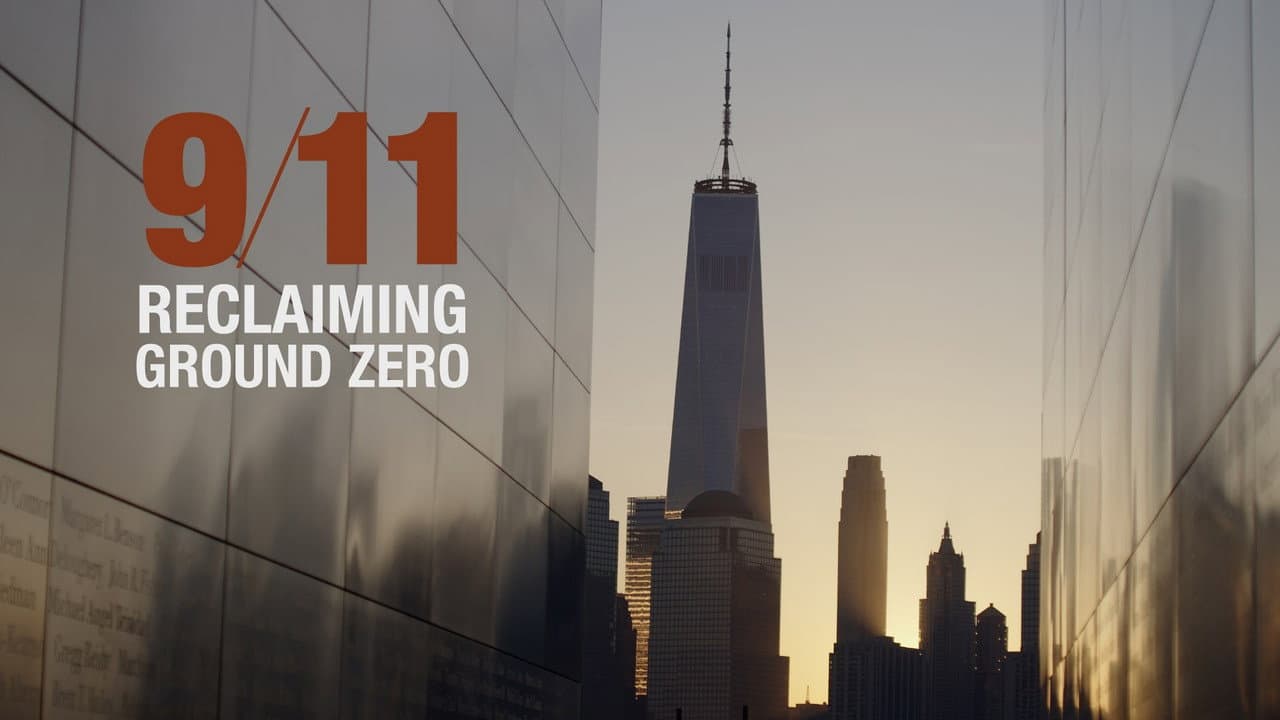
9/11: Reclaiming Ground Zero
A 2026 documentary that refuses to be about 9/11 itself — it's about what 5,000 New Yorkers did when they actually got a say in rebuilding it.
The story: when citizens told the government "no"
Here's what gets lost in every other post-9/11 film: the part where regular people won. In 2002, three years after the attacks, the City of New York had a plan. Six proposals for what should happen at Ground Zero. Top-down. Decided. Ready to move forward. Then the government convened what became the largest town hall in American history — more than 5,000 people gathered to vote on these options. What happened next wasn't a rubber stamp. It was a revolt. The crowd rejected the official plans outright and demanded something different. And they got it. The documentary follows this moment, these people, and what they actually managed to change.
Runtime: 72 minutes. Released: 2026. Directed by J.B. Sabey, produced by Matters Media.
The thing nobody mentions about post-9/11 documentaries is how exhausted the formula has become — archive footage, survivor testimonials, the swelling orchestral score. This film doesn't do that. It skips the attacks entirely. What 9/11: Reclaiming Ground Zero cares about is the democratic confrontation that followed — ordinary people discovering they had power, and using it. That's the whole story. And it's genuinely riveting because it's true, it's unexpected, and it actually mattered.
Who's in it and why they matter
The film brings three voices that keep it grounded in something real rather than abstract civics-class theory.
Carolyn Lukensmeyer — founder of AmericaSpeaks and the architect of the 2002 town hall process itself. She's the person who actually built this thing. Her firsthand account of organizing 5,000 people to collectively reject a government plan carries the weight of someone who understood the stakes as they were happening, not in retrospect.
Errol Louis — the veteran New York journalist and political commentator. He brings the insider's clarity that keeps the film from tipping into sentimentality. This isn't a feel-good civics lesson; it's a political confrontation, and Louis's analysis makes that distinction obvious.
George Pataki — the former Governor of New York at the time of the attacks and the rebuilding. His presence complicates things. He wasn't a villain in this story. He was a person operating under enormous pressure, same as everyone else. That complexity is what makes the film's argument actually stick.
Director Sabey's choice to include Pataki is smart — it forces the film to avoid the easy narrative of government bad, people good. Reality was messier than that. The officials wanted to rebuild. The people wanted input. Both things were true.
Why it's different from other post-9/11 films
Most films about 9/11 are about grief. Loss. Resilience. Those matter, obviously — but they're what everyone expects from the topic. 9/11: Reclaiming Ground Zero flips the frame entirely. The attacks are context. The story is what citizens did when democracy actually worked.
The 72-minute runtime isn't padding. There's no digression into tangential narratives (which is restraint, and you notice it). The film trusts its central argument to carry itself. And it does. I keep coming back to that moment in the town hall when the room rejected the proposals — not as a feel-good turning point, but as a genuine collision between what the government expected and what the people actually demanded. Lukensmeyer's recollections land because she was there. Louis's commentary lands because he understands the political machinery. Pataki's presence lands because it admits the officials weren't cartoon villains.
Compare this to something like Fahrenheit 9/11 or The 9/11 Commission Report — both important, both about systems and power. But neither is about ordinary people winning a specific, measurable victory. That's rare. That's what makes this film unusual.
Where to watch it
The film is available on major streaming platforms. Check Movie OTT's where-to-watch tracker for current availability — streaming rights shift fast, and the tracker updates in real time across Netflix, Prime Video, and other services. No sense hunting blindly when the aggregator does it for you.
Early 2026 screenings happened at universities and community events (the University of Southern Maine hosted one as part of a program on democracy in practice). But for most viewers, streaming is the path. It's the kind of 72-minute documentary you can fit into an evening without rearranging your schedule — and the kind that'll stick with you after it's done.
FAQ
Is this a grief documentary or a political documentary? Political. The attacks are the context, not the subject. It's about what happened after the smoke cleared and the city had to decide what came next.
Who directed it? J.B. Sabey directed; Matters Media produced.
Where can I actually watch it? Movie OTT has the current streaming breakdown. Most major platforms carry it. It's in limited distribution, not a wide theatrical release.
Is it based on a true story? Completely. The 2002 AmericaSpeaks town hall actually happened. More than 5,000 New Yorkers actually rejected the proposals. What stands at Ground Zero today is the direct result of that decision.
How long is it? 72 minutes. Tight. No filler.
Who should watch this? Anyone who's wondered whether public participation in government actually changes anything. Anyone who cares how cities rebuild after catastrophe. Urban planners. History nerds. People who want their documentary watching to feel useful, not just informative. If you liked The Pruitt-Igoe Myth (another film about how cities get remade by collective decision), this connects with that same energy — except here the people actually won.
Why it matters now
Democracy works like this sometimes. Not often. But sometimes — when enough people show up and say no loud enough, things change. This film is evidence of that. It's not inspirational in the manipulative sense. It's inspirational in the factual sense: here's what happened when a government held a town hall expecting compliance and got a confrontation instead. The people didn't burn the city down. They didn't riot. They voted. They organized. They won.
That's the story 9/11: Reclaiming Ground Zero tells. It's worth 72 minutes of your time.