





The story of A Room for Romeo Brass
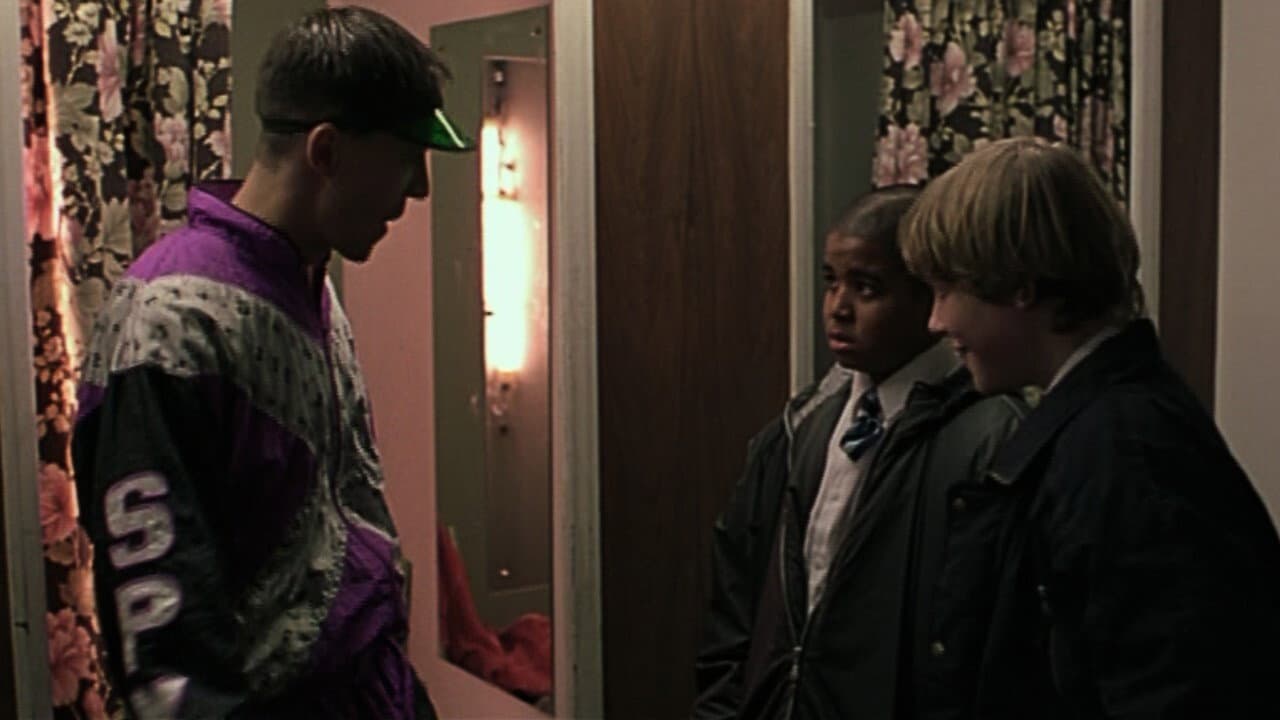
A Room for Romeo Brass opens on the streets of working-class Nottinghamshire, where two twelve-year-old boys—Romeo and Gavin—are inseparable. Their world is small, tactile, and theirs alone. They're the kind of kids who exist in that narrow window between childhood and adolescence, still young enough to believe in adventure but old enough to sense that something's shifting beneath their feet. Then Morell arrives. He's an older, seemingly friendly drifter who befriends the boys and gradually insinuates himself into their lives. What begins as an odd mentorship curdles into something far more sinister when Morell becomes fixated on Romeo's older sister and—when she rejects him—transforms from eccentric oddball into something genuinely threatening. The film doesn't announce this shift with dramatic music or a villain's monologue. It happens the way real danger often does: quietly, then all at once.
Behind the making of A Room for Romeo Brass
A Room for Romeo Brass arrived in 1999 as the feature directorial debut of Shane Meadows, a filmmaker who'd already earned respect in British independent circles for his short work. Meadows co-wrote the script with Paul Fraser, drawing on the kind of hyperlocal storytelling that would become his signature—stories rooted so firmly in specific geography and class experience that they feel almost documentary-like in their authenticity. The production was shot on location in Calverton, Nottinghamshire between September and October 1998, a choice that grounds the film in genuine working-class landscape rather than a polished studio approximation. One seaside sequence was filmed in Chapel St. Leonards, Lincolnshire, adding visual texture to what's otherwise an intimate, claustrophobic narrative. The film was produced through a collaboration of Alliance Atlantis, BBC Film, the Arts Council of England, Company Pictures, and Big Arty Productions—a mix of institutional and independent backing that allowed Meadows creative freedom without major studio interference. The 90-minute runtime is lean and purposeful; there's no fat here, no scene that doesn't earn its place. The film carries a 7/10 on IMDb, a respectable score that reflects its polarizing nature—some viewers connect deeply with its raw emotional honesty, while others find its tonal shifts between comedy and genuine menace unsettling (which, of course, is rather the point).
What makes A Room for Romeo Brass stand out
What's striking about A Room for Romeo Brass is how it refuses to be a single thing. It's a comedy, yes—there are genuinely funny moments, awkward teenage humor, the kind of deadpan observation that comes from watching real kids navigate social hierarchies. But it's also a drama with real teeth, and the closer you watch, the more you realize Meadows is doing something more ambitious than just capturing youthful mischief. He's interested in alienation, in the loner figure, in how a charismatic outsider can exploit the vulnerabilities of kids who are desperate to be seen as grown-up. The performances anchor everything. There's no grandstanding, no theatrical excess—just kids being kids, and an adult predator being exactly what he is. Meadows' direction has an earthy, street-level quality to it; you believe every location, every interaction, every moment of friction between the boys and their environment. What critics and audiences have consistently noted is that Meadows brings an almost anthropological eye to working-class British life—he's not mocking these characters, he's not looking down at them. He's telling their story with the kind of honesty that makes the film's darker turns genuinely unsettling. The tonal balance is precarious, and it works precisely because Meadows never winks at the camera or lets sentiment soften the sharper edges.
Where to stream A Room for Romeo Brass online
A Room for Romeo Brass is available on major OTT services—you can check the Where to Watch widget at the top of this page for current streaming availability in your region. Since streaming rights shift frequently, Movie OTT tracks where this film and thousands of others are currently available, so you won't waste time hunting across multiple platforms. The film's 90-minute runtime makes it ideal for a single sitting, and it's the kind of title that benefits from undivided attention—the quiet moments and tonal shifts demand you stay present. If you're a fan of British independent cinema or coming-of-age stories that don't shy away from uncomfortable truths, it's worth seeking out.
Frequently asked questions
Q: Who directed A Room for Romeo Brass?
Shane Meadows directed and co-wrote the film with Paul Fraser. It was his feature directorial debut and established many of the themes and stylistic approaches that would define his later work in British cinema.
Q: When was A Room for Romeo Brass released?
The film was released in 1999. It was shot on location in Nottinghamshire and Lincolnshire between September and October 1998.
Q: Is A Room for Romeo Brass based on a true story?
The film isn't based on a specific true story, but it draws on Meadows' and Fraser's observations of working-class British life and adolescent experience. Its authenticity comes from emotional truth rather than biographical fact.
Q: What's the runtime of A Room for Romeo Brass?
The film runs 90 minutes, a lean length that keeps the narrative focused and propulsive without sacrificing character development or thematic depth.
Q: What genres is A Room for Romeo Brass?
It's a comedy-drama that blends dark humor with genuine menace. The tonal shifts between comedic moments and darker psychological territory are central to its impact.
Final thoughts on A Room for Romeo Brass
A Room for Romeo Brass doesn't feel dated nearly twenty-five years later—if anything, its unflinching look at how vulnerability can be exploited feels more relevant than ever. It's not a comfortable watch, and it isn't designed to be. But for viewers willing to sit with its contradictions and follow Meadows into genuinely uncertain emotional territory, it's a remarkable piece of filmmaking. Here's a film that trusts you to understand complexity without spelling it out. That's rare. If you haven't seen it, it's worth the time.