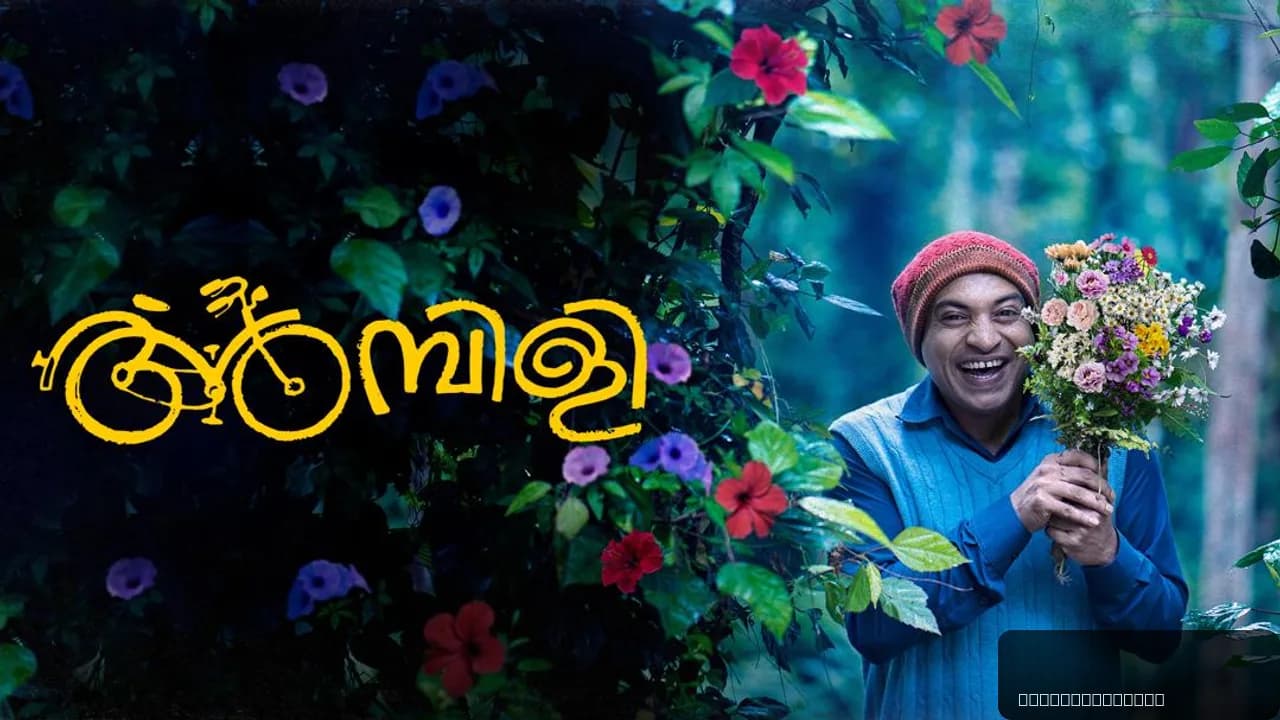



The Story of Ambili and His Unshakeable Outlook on Life
Ambili isn't your typical protagonist. He's guileless—almost impossibly so—in a way that feels both vulnerable and quietly powerful. Written and directed by Johnpaul George, this 2019 Malayalam-language film centers on a man beloved by his entire village, not because he's accomplished or clever, but because he moves through the world with a kind of childlike grace that refuses to bend to cynicism. The narrative traces how Ambili's perspective on life becomes a mirror for everyone surrounding him, forcing them to confront their own challenges and anxieties through his eyes. It's a premise that could easily collapse into saccharine territory, but the film takes it seriously—treating Ambili's simplicity not as a punchline but as a genuine philosophy worth examining.
Behind the Making of Ambili and Its Creative Team
Ambili emerged from the production partnership of E4 Entertainment and AVA Productions, with producers Mukesh R. Mehta, A. V. Anoop, and C. V. Sarathi backing Johnpaul George's directorial vision. The filmmaker chose to cast Soubin Shahir in the title role, a decision that proved crucial to the film's success. Shahir, known for his nuanced work in Malayalam cinema, brought depth to what could have been a one-dimensional character. The supporting ensemble—including Naveen Nazim, Tanvi Ram, Jaffer Idukki, Sreelatha Namboothiri, Binu Pappu, and Vettukili Prakash—creates a lived-in village community where Ambili's presence actually means something. The film runs 133 minutes, a length that allows George to build character relationships without rushing through the quieter moments that give the story its emotional weight. While Ambili didn't become a massive box-office juggernaut, it found its audience among viewers seeking something gentler than the typical Malayalam commercial fare, and it's the kind of regional indie that Movie OTT helps surface for streaming audiences who might otherwise miss it entirely.
What Makes Ambili Stand Out in Malayalam Comedy-Drama
What's striking about Ambili is how it refuses to weaponize its protagonist's innocence for easy laughs. Yes, there's comedy woven throughout—the film is technically a comedy-drama, after all—but the humor emerges from situations and character dynamics rather than from mocking Ambili himself. Instead, the film seems genuinely interested in exploring what happens when someone who sees the world differently enters a community full of people wrestling with pride, resentment, and practical worry. Soubin Shahir's performance anchors everything. He doesn't play Ambili as intellectually limited; rather, he suggests someone whose emotional intelligence far exceeds his formal education, whose capacity for forgiveness and presence unsettles people precisely because it's so rare. The supporting cast works overtime to create a texture of village life—the small frustrations, the petty feuds, the way gossip travels. When you watch Ambili move through these spaces, you're not just seeing a feel-good narrative; you're watching a quiet challenge to how his neighbors have chosen to live. That's more ambitious than it sounds. The thing nobody mentions is that films like this—regional, character-driven, skeptical of big dramatic turns—are often the hardest to make work, yet Ambili mostly succeeds because everyone involved seems to believe in the material.
Where to Stream Ambili Online
If you're looking to watch Ambili, you'll find it on Prime Video, where it's available as part of the streaming catalog. Movie OTT tracks current availability across multiple platforms, and the "Where to Watch" widget at the top of this page will show you the most up-to-date streaming options and any subscription requirements. Prime Video's Malayalam-language film collection has expanded significantly in recent years, making it easier for diaspora audiences and regional cinema fans to access titles that might have been harder to find a decade ago. Availability can shift based on licensing agreements, so it's worth checking the widget before you settle in to watch.
Frequently Asked Questions
Q: Who directed Ambili and what's his background?
Johnpaul George wrote and directed Ambili in 2019. This was one of his notable directorial projects in Malayalam cinema, and the film showcases his interest in character-driven storytelling over high-concept plotting.
Q: Is Ambili based on a true story?
There's no indication that Ambili is adapted from real events. It appears to be an original screenplay by Johnpaul George, designed as a fictional exploration of how innocence and kindness can affect a community.
Q: What's the runtime and should I expect a typical Bollywood-style film?
Ambili runs 133 minutes and is a Malayalam-language film, not Hindi cinema. It's a regional indie with a slower, more meditative pace than typical Bollywood fare—expect character work and village atmosphere over elaborate song-and-dance sequences.
Q: How does the IMDb rating of 4.9/10 affect whether I should watch it?
Critical consensus on IMDb doesn't always reflect a film's actual appeal, especially for regional cinema that values subtlety over broad entertainment. Many viewers find Ambili rewarding precisely because it's quiet and character-focused rather than plot-driven. It's worth forming your own opinion.
Q: Who stars in Ambili?
Soubin Shahir leads the cast as Ambili, supported by Naveen Nazim, Tanvi Ram, Jaffer Idukki, Sreelatha Namboothiri, Binu Pappu, and Vettukili Prakash in key roles.
Final Thoughts on Ambili
Ambili won't be for everyone. It's deliberately paced, skeptical of melodrama, and more interested in mood than plot momentum. But if you're tired of noise—if you want a film that trusts its audience to sit with quietness and find meaning there—it's worth your time. Soubin Shahir's performance alone justifies the watch. Check your local streaming availability through Movie OTT's platform guides, settle in with 133 minutes to spare, and let the village of Ambili work on you slowly. Sometimes the most radical thing a film can do is simply ask: what if kindness actually mattered?