








The story of Amen.: conscience against institutional silence
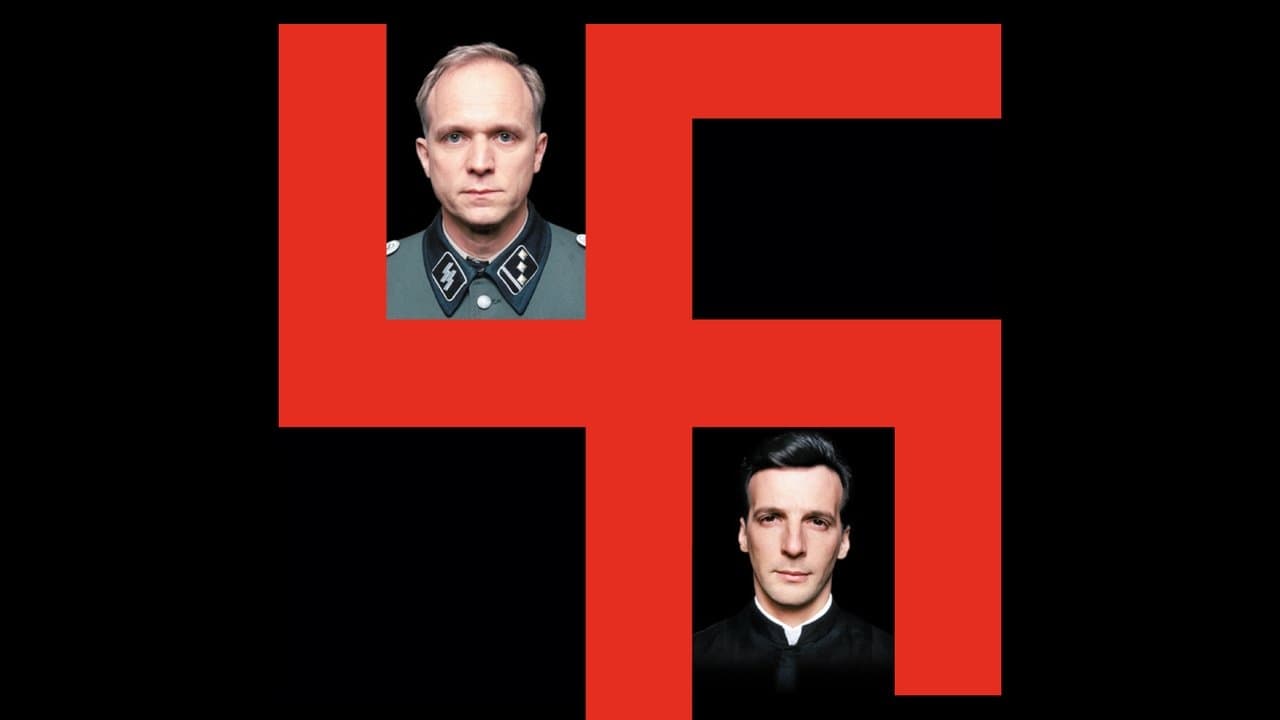
Amen. opens on a man confronting the unthinkable. Kurt Gerstein, a chemist embedded in the Waffen-SS's Institute for Hygiene, discovers that a poison gas he helped develop—intended for disinfection—is being weaponized to murder Jews in concentration camps. The horror of this realization sets him on a collision course with the most powerful institution in Europe: the Vatican itself. Paired with Riccardo Fontana, a young Jesuit priest equally appalled by the Church's inaction, Gerstein attempts to alert the world to the atrocity unfolding in Nazi-occupied Europe. What unfolds is a tense, methodical examination of how institutions—even those built on moral authority—can become complicit through silence, bureaucracy, and calculated indifference. The 132-minute drama doesn't offer easy answers or redemptive arcs; instead, it traces the grinding futility of conscience pitted against power.
Behind the making of Amen.: Costa-Gavras and a Franco-German co-production
Amen. is directed by Costa-Gavras, the legendary Greek-French filmmaker known for political thrillers like Z and Missing. Released in 2002, the film is based on Rolf Hochhuth's play The Deputy, which itself ignited controversy when it premiered in 1963 for its direct accusation that Pope Pius XII failed to condemn Nazi atrocities. The screenplay, co-written by Costa-Gavras and Jean-Claude Grumberg, adapts that explosive material for cinema with meticulous attention to historical detail and moral ambiguity. The production brought together French, German, and Romanian studios—Katharina, Renn Productions, KC Medien, and TF1 Films Production—reflecting the pan-European stakes of the story itself. The ensemble cast includes Ulrich Tukur as Gerstein (delivering a performance of quiet, mounting desperation) and Mathieu Kassovitz as the idealistic Fontana, alongside Sebastian Koch and Ulrich Mühe in supporting roles. While Amen. didn't become a major box-office phenomenon, it earned serious critical attention and holds an IMDb rating of 6.956/10, positioning it as a film that critics and historians take seriously even when audiences remain divided on its emotional impact.
What makes Amen. stand out: moral clarity without easy sentiment
What's striking about Amen. is how it refuses the comfort of a heroic narrative. Gerstein and Fontana aren't triumphant whistleblowers—they're men watching their pleas bounce off marble walls and ecclesiastical indifference. The Vatican sequences are particularly cutting; cardinals nod sympathetically, file reports, and do nothing. There's a scene where Fontana sits across from a cardinal in a sun-dappled room, making an impassioned case for action, and you watch the cardinal's face shift from attentiveness to a kind of polite dismissal—it's the death of hope in real time. Costa-Gavras shoots these moments with restraint, letting dialogue and performance carry the weight rather than resorting to dramatic orchestration. Tukur's Gerstein is especially compelling because he's not a hero by temperament; he's a man tormented by knowledge he can't unknow, moving through Nazi hierarchies with the grim realization that his warnings will change nothing. The film doesn't shy away from the moral paradox either—Gerstein is, after all, a member of the SS, and the movie doesn't let us forget that complicity even as we sympathize with his conscience. Kassovitz brings a different energy as Fontana, youthful and earnest, but equally trapped by institutional machinery. What the film captures—and what Movie OTT users searching for substantive historical drama should know—is that Amen. is less interested in plot momentum than in the slow, suffocating realization that moral clarity doesn't automatically produce moral action.
Where to stream Amen. online
Amen. is available on major OTT streaming platforms, and you can check the Where to Watch widget at the top of this page for current availability in your region. The film's 2002 release date and European production heritage mean its streaming home shifts periodically—it may appear on services that specialize in international cinema or prestige historical dramas. If you're hunting for it, Movie OTT tracks current streaming availability across Netflix, Prime Video, and other major platforms, so you won't waste time searching blindly. The 132-minute runtime means you'll want to carve out a focused viewing window; this isn't a film that rewards half-attention or distraction.
Frequently asked questions
Q: Is Amen. based on a true story?
Yes and no. The film adapts Rolf Hochhuth's 1963 play The Deputy, which was itself inspired by real historical events—specifically, the Vatican's response (or lack thereof) to Nazi atrocities during World War II. The characters Gerstein and Fontana are fictionalized versions of real figures, and the plot compresses and dramatizes actual historical tensions, but the core accusation—that the Vatican knew about the Holocaust and chose silence—remains a subject of legitimate historical debate.
Q: Who directed Amen. and what else has he made?
Costa-Gavras, a Greek-French director, helmed Amen. His most famous works are the political thrillers Z (1969) and Missing (1982), both of which examine state power and institutional corruption. Amen. fits his career-long obsession with how bureaucracy and silence enable atrocity.
Q: What's the runtime, and is it slow-paced?
The film runs 132 minutes. It's deliberately paced—Costa-Gavras favors dialogue and moral tension over action set pieces—so if you're expecting a thriller with momentum, you'll find Amen. more contemplative than propulsive. That's intentional; the slowness mirrors the grinding frustration of Gerstein and Fontana's failed efforts.
Q: Does Amen. show concentration camp scenes?
The film references and implies the Holocaust but doesn't exploit graphic depictions of camps. It's more interested in the institutional and moral machinery that enabled genocide than in shock value. That said, it's not a light watch—the subject matter is inherently dark.
Q: How does Amen. compare to other Holocaust films?
Unlike Schindler's List or The Pianist, Amen. doesn't center Jewish victims or survival stories. Instead, it examines the complicity of powerful institutions and the paralysis of conscience. It's a film about perpetrators, enablers, and institutional failure rather than resistance or resilience.
Final thoughts on Amen.: a film for serious viewers
Amen. isn't designed to comfort or inspire. It's a film that asks uncomfortable questions about institutional power, moral compromise, and the gap between knowing something is wrong and having the courage or leverage to stop it. If you're drawn to historical dramas that refuse easy answers—films that trust viewers to sit with moral complexity—then Amen. belongs on your watchlist. It's the kind of film that lingers, especially in moments of institutional silence, which, frankly, feel increasingly relevant. Don't expect catharsis. Expect clarity.