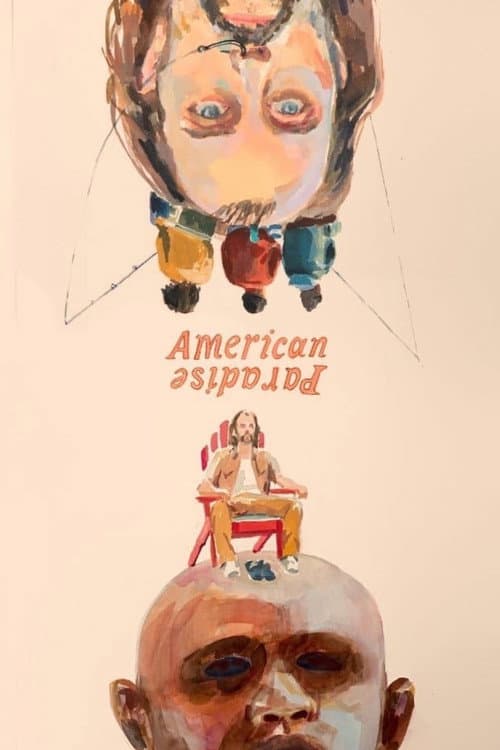
The story of American Paradise
American Paradise follows a man pushed to the margins of contemporary society—the kind of person who's become invisible in his own country. He's forgotten, overlooked, and running out of options. The premise is deceptively simple: he decides that committing the perfect crime might be his only way out, his last shot at changing the trajectory of a life that's spiraling downward. What makes the film compelling isn't just the crime itself, but the desperation that drives it. The 18-minute runtime works to the film's advantage, compressing tension and emotional weight into a lean narrative that doesn't waste a single frame. You feel the character's entrapment almost immediately.
The film's grounding in true events gives it an extra layer of weight. This isn't some fictional thought experiment—it's rooted in real human desperation, real choices made by real people facing impossible circumstances. That authenticity seeps through every scene, making what could've been a gimmicky premise feel urgent and alive.
Behind the making of American Paradise
American Paradise arrived in 2017, a year when the political and social landscape of America was particularly fractured. The film's subtitle—"Trump's America"—isn't accidental; it's a direct commentary on the economic and social conditions that leave certain people behind. The short earned recognition within the festival circuit and beyond, racking up 1 win and 6 nominations across various competitions. Its 7.4 IMDb rating from 92 votes suggests the film resonates with viewers who seek cinema that grapples with real social problems rather than offering escapism.
While the cast and crew details remain relatively modest—as is often the case with short films—the production demonstrates that you don't need a massive budget or A-list names to create something that sticks with audiences. The filmmakers understood that constraint can be a creative asset. A short film format demands efficiency; every scene has to earn its place. There's no room for filler, no chance to coast on star power or spectacle. What you get instead is pure storytelling, stripped down to its essentials. The awards recognition—winning at least one festival and earning six nominations—speaks to the film's craft and its resonance with industry gatekeepers who recognize when something matters.
What makes American Paradise stand out
There's something about the way this film refuses to judge its protagonist that makes it exceptional. Too many crime narratives position the viewer as a moral arbiter, forcing you to either condemn or sympathize. American Paradise doesn't do that—it observes. It shows you a man in crisis and lets you sit with the discomfort of understanding how someone gets to that point without necessarily excusing what he does. That's harder to pull off than it sounds, especially in just 18 minutes.
What's striking is how the film uses its compressed format to build claustrophobia. There's no wasted space, no subplot that doesn't feed into the central tension. The performances anchor everything—you're watching someone at a breaking point, and that vulnerability has to read as genuine, not theatrical. The cinematography and editing work in concert to create a sense of inevitability, as if we're watching dominoes fall in slow motion and can't do anything to stop them.
I keep coming back to how the film manages to be both intimate and political without ever feeling preachy. It doesn't lecture you about income inequality or social safety nets. Instead, it shows you a man whose circumstances have narrowed to almost nothing, and you understand the calculus he's making—not because you agree with it, but because you can trace the logic of desperation. That's the mark of good storytelling: you don't need a voiceover explaining the subtext. The subtext is the text.
How to watch American Paradise online
American Paradise is available across major OTT services, making it accessible whether you're a subscriber to Netflix, Prime Video, or other streaming platforms. Since streaming availability shifts regularly based on licensing agreements, Movie OTT maintains an up-to-date "Where to Watch" widget at the top of this page—just check there to see which services currently have it in your region. The 18-minute runtime makes it perfect for a quick watch between longer commitments, though don't mistake brevity for lack of impact. This is the kind of short that'll stay with you longer than many feature films.
Frequently asked questions
Q: Is American Paradise based on a true story?
Yes—the film is inspired by true events, which grounds its narrative in real human circumstances rather than pure fiction. That authenticity is part of what gives the film its emotional and political weight.
Q: How long is American Paradise?
The film runs 18 minutes, making it a short rather than a feature. That compressed format is intentional and effective, packing significant narrative and thematic punch into a lean runtime.
Q: What's the IMDb rating for American Paradise?
American Paradise holds a 7.4 out of 10 rating on IMDb based on 92 votes, indicating strong reception among viewers who've seen it.
Q: Where can I stream American Paradise?
The film is available on major OTT streaming services. Check the "Where to Watch" widget at the top of this page for current availability in your region, as platforms rotate titles based on licensing.
Q: What awards has American Paradise won?
The film has earned 1 win and 6 nominations across various film festivals and competitions, reflecting recognition from both audiences and industry professionals.
Final thoughts on American Paradise
American Paradise is the kind of film that reminds you why short-form cinema matters. It doesn't have the budget of a prestige drama or the marketing muscle of a studio release. What it has is clarity of vision and something urgent to say about the state of things. If you're looking for cinema that challenges you—that shows rather than tells, that trusts its audience to sit with moral ambiguity—this is worth your 18 minutes. It's a reminder that sometimes the most powerful storytelling happens when filmmakers are forced to cut away everything except what absolutely matters.