


The story of Angel's Egg
Angel's Egg arrives as a fever dream wrapped in post-apocalyptic wreckage. In a decaying city where nothing quite makes sense—where the architecture seems borrowed from a nightmare and the sky itself feels wrong—a young girl wanders the cobblestones cradling an enormous egg as if her entire existence depends on its safety. She doesn't speak much. She barely acknowledges the world around her. But when a boy appears, someone who's been haunted by the memory of a bird he saw in sleep, something shifts. Their meeting isn't sweet or simple. It's tentative, strange, and loaded with a weight neither character fully understands. At just 71 minutes, this isn't a film that rushes anywhere. It moves at its own rhythm, one that rewards patience and punishes distraction.
Behind the making of Angel's Egg
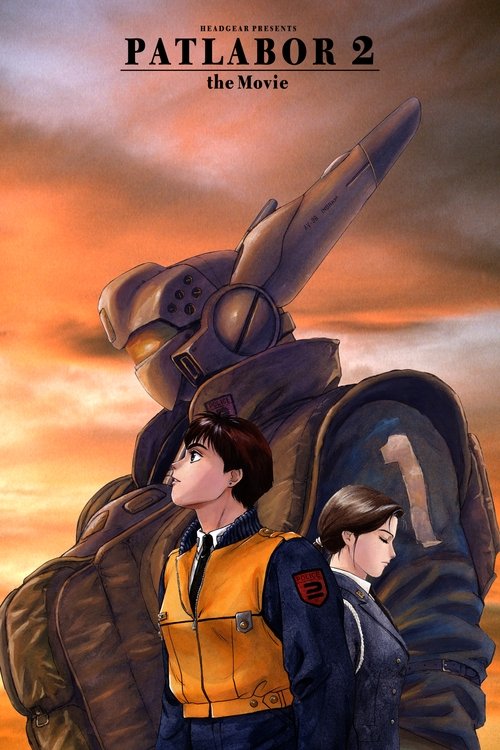
Angel's Egg emerged in December 1985 as Mamoru Oshii's first original directorial project, a collaboration between the filmmaker and legendary artist Yoshitaka Amano that would become something of a cult artifact. Tokuma Shoten and Studio Deen brought the film to life, though "brought to life" feels almost too energetic a phrase for something so deliberately, meticulously paced. The production itself was unconventional—Oshii wasn't adapting a manga or working from an existing property. He was building a world from scratch, one where visual storytelling mattered more than exposition, where atmosphere could do the heavy lifting that dialogue wouldn't. Amano's design work gives the film its distinctive look: all sharp angles, religious iconography, and a color palette that feels deliberately muted, almost desaturated, as if the world itself is running out of energy. The IMDb rating of 7.7/10 reflects the film's niche appeal—it's not a film designed to please everyone, and it doesn't pretend otherwise. What's striking is how Oshii's thematic DNA—the loneliness, the philosophical questioning, the willingness to leave things unexplained—would echo through his later work, including Ghost in the Shell and his Patlabor films.
What makes Angel's Egg stand out
Here's the thing about Angel's Egg: it doesn't work because of what it tells you. It works because of what it refuses to explain. The girl's egg—is it literal? Metaphorical? A symbol of faith, of motherhood, of hope in a world that's already dead? The film won't say. The boy's bird—does it exist? Did he dream it? Does the distinction even matter? You're left suspended in ambiguity, and that's precisely the point. What's remarkable is how the film achieves this through pure cinema. There's almost no dialogue, which means the animation itself has to carry everything: the girl's protective gestures around the egg, the way she moves through empty spaces, the boy's searching gaze. One scene sticks with you—the moment where they stand together in a vast, echoing space, and you realize how small they are, how insignificant, and yet how their connection seems to be the only real thing in this dying world. Critics have noted the film's melancholic beauty, its refusal to offer comfort, its willingness to sit with loneliness and loss without looking away. The performances—if you can call them that, given the minimal dialogue—come through in the animation itself, in posture and movement and the spaces between actions. It's minimalist storytelling executed with maximum precision.
Where to stream Angel's Egg online
Angel's Egg is available across major OTT services, and finding it is easier than it's ever been. Movie OTT tracks current streaming availability, so you can check which platform near you is carrying it right now—availability shifts, and what's on Netflix in one region might be on a different service elsewhere. The film's cult status means it pops up on streaming platforms with some regularity, though it's not the kind of title that gets heavily promoted or pushed into algorithmic recommendations. If you're serious about watching it, Movie OTT's Where to Watch widget at the top of this page will show you exactly where to find it today. Don't sleep on it—these experimental films have a way of disappearing and reappearing based on licensing agreements.
Frequently asked questions
Q: Who directed Angel's Egg?
Mamoru Oshii wrote and directed Angel's Egg in 1985. It was his first original project and established many of the thematic and visual styles he'd return to throughout his career, most famously in Ghost in the Shell.
Q: Is Angel's Egg based on a book or manga?
No, Angel's Egg is an original screenplay created specifically for film. Oshii and artist Yoshitaka Amano developed the story and visual world together, making it a purely cinematic creation rather than an adaptation.
Q: How long is Angel's Egg?
The film runs 71 minutes, making it a relatively compact experience—though its dreamlike pacing means it can feel longer or shorter depending on your engagement level.
Q: What do the egg and the bird symbolize?
The film intentionally leaves this open to interpretation. The egg could represent faith, hope, motherhood, or something unknowable. The bird could be memory, a dream, or something the boy is chasing that can never be caught. Oshii doesn't provide answers, which is part of what makes the film so haunting.
Q: Is Angel's Egg appropriate for kids?
While there's no violence or explicit content, the film's slow pace, lack of dialogue, and existential themes make it better suited for older teens and adults. It's not a children's film, despite its fairy-tale premise.
Final thoughts on Angel's Egg
Angel's Egg won't be for everyone—and that's okay. It's a film that asks you to sit with discomfort, with unanswered questions, with the possibility that some stories don't resolve neatly. But if you're willing to meet it on its terms, if you can surrender to its logic and its pace, it offers something rare: a complete artistic vision, uncompromised and utterly singular. Nearly forty years later, it still feels like nothing else. That's not nothing.