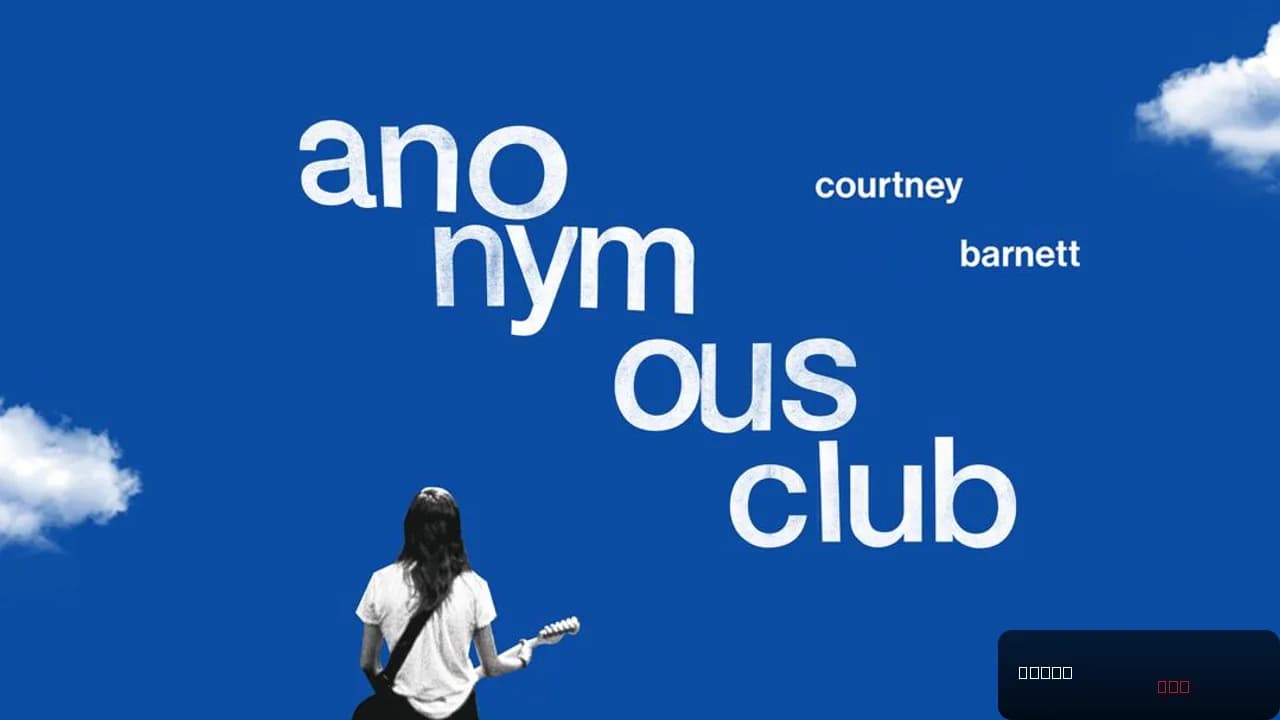
The story of Anonymous Club and Courtney Barnett's tour diary
Anonymous Club isn't your typical music documentary. Rather than focusing on stadium crowds or chart success, director Danny Cohen's 2022 film zooms in on the quiet, often painful moments that happen behind the scenes when a notoriously shy musician hits the road. The film follows Australian singer-songwriter Courtney Barnett—known for her deadpan delivery and witty, rambling lyrics—as she navigates a three-year world tour supporting her album Tell Me How You Really Feel. What makes this 83-minute documentary distinctive is its commitment to Barnett's perspective: she recorded audio diary entries on a dictaphone that Cohen provided, and those unfiltered, sometimes brutally honest reflections form the backbone of the narrative. The result is a portrait of creative life that doesn't shy away from the contradictions—the joy of connecting with fans alongside the anxiety, isolation, and physical exhaustion that touring demands.
Behind the making of Anonymous Club and its critical reception
Danny Cohen spent three years shooting Anonymous Club on vivid 16mm film, a choice that gives the documentary a warm, tactile quality that feels more intimate than digital might have. The production drew critical attention at festivals and earned recognition from major critics: Rotten Tomatoes gave it an 86% Fresh rating, while Metascore rated it 68/100, signaling solid critical appreciation across different review outlets. The film went on to rack up three wins and five nominations at various awards ceremonies, though it remained a modest theatrical release, grossing just $35,481 at the box office—a figure that underscores how niche documentary filmmaking remains, even when the subject is a respected indie artist. The cast includes Barnett herself alongside collaborators and friends like Bones Sloane, Dave Mudie, Katie Harkin, and Stella Mozgawa, who appear throughout the narrative to provide context and support. What's striking is how Cohen resists the urge to turn Barnett into a conventional success story; instead, he lets her voice—literally, through those dictaphone entries—drive the emotional architecture of the film.
What makes Anonymous Club stand out as a study of fame and creative struggle
Honestly, the thing that separates Anonymous Club from other music docs is its refusal to celebrate. Most documentaries about touring musicians eventually land on some triumphant note—the sold-out show, the standing ovation, the affirmation that it was all worth it. Anonymous Club doesn't quite do that. Instead, Barnett's narration circles back repeatedly to doubt, exhaustion, and the gap between how people perceive her and how she actually feels. You'll hear her grappling with anxiety, questioning whether the album is any good, worrying about letting people down—the unglamorous interior monologue that doesn't make it into Instagram captions. The 16mm cinematography complements this mood perfectly; there's a softness and grain to the image that feels almost nostalgic, even melancholic, which mirrors the emotional texture of Barnett's reflections. Critics have noted that the film succeeds because it doesn't pretend fame is simple or that success solves anything. Instead, it suggests something more complex: that creative ambition and personal well-being can pull in opposite directions, and that touring—even when you're doing it for music you love—can be a form of slow erosion. The performances and moments of vulnerability aren't theatrical; they're the kind of real that only emerges when someone's been given permission to speak privately, without a camera in their face.
Where to stream Anonymous Club online
If you're ready to watch Anonymous Club, you can currently stream it on Prime Video. The film's intimate, diary-like structure makes it ideal for the at-home viewing experience—you're not missing a theatrical spectacle, but rather gaining access to something more personal. Movie OTT tracks where this title and thousands of others are available across streaming platforms, so you can check the widget at the top of this page to confirm current availability in your region. Since streaming rights shift over time, it's worth bookmarking Movie OTT if you want to stay on top of where your favorite documentaries and indie films are living at any given moment.
Frequently asked questions
Q: Is Anonymous Club based on a true story?
Anonymous Club is a documentary, so yes—it's entirely based on real events. Danny Cohen follows Courtney Barnett through an actual three-year touring cycle, and Barnett's narration comes from real audio diary entries she recorded during that time.
Q: Who directed Anonymous Club?
Danny Cohen directed the film. He's known for his documentary work and spent three years shooting on 16mm to create the film's distinctive visual style.
Q: What is Courtney Barnett's music like?
Courtney Barnett is an Australian singer-songwriter known for deadpan vocals, witty and rambling lyrics, and indie rock arrangements. She gained international attention with her 2013 compilation album The Double EP: A Sea of Split Peas and has released several albums since, including Tell Me How You Really Feel, which is the focus of Anonymous Club.
Q: How long is Anonymous Club?
The film runs 83 minutes, making it a relatively tight documentary that doesn't overstay its welcome.
Q: What's the IMDb rating for Anonymous Club?
Anonymous Club has a 5.1/10 rating on IMDb based on 181 votes, though critical aggregators like Rotten Tomatoes (86%) and Metascore (68) rated it more favorably, suggesting critics were more enthusiastic than general audiences.
Final thoughts on Anonymous Club
Anonymous Club won't appeal to everyone—if you're looking for a feel-good music doc with a triumphant arc, you'll want to look elsewhere. But if you're curious about what touring actually feels like for an artist who'd rather be alone, or if you appreciate documentaries that prioritize honesty over narrative convenience, this one's worth your time. It's a film about the gap between how the world sees you and how you see yourself. That gap, it turns out, can be a lonely place—even when you're surrounded by thousands of people singing your songs.