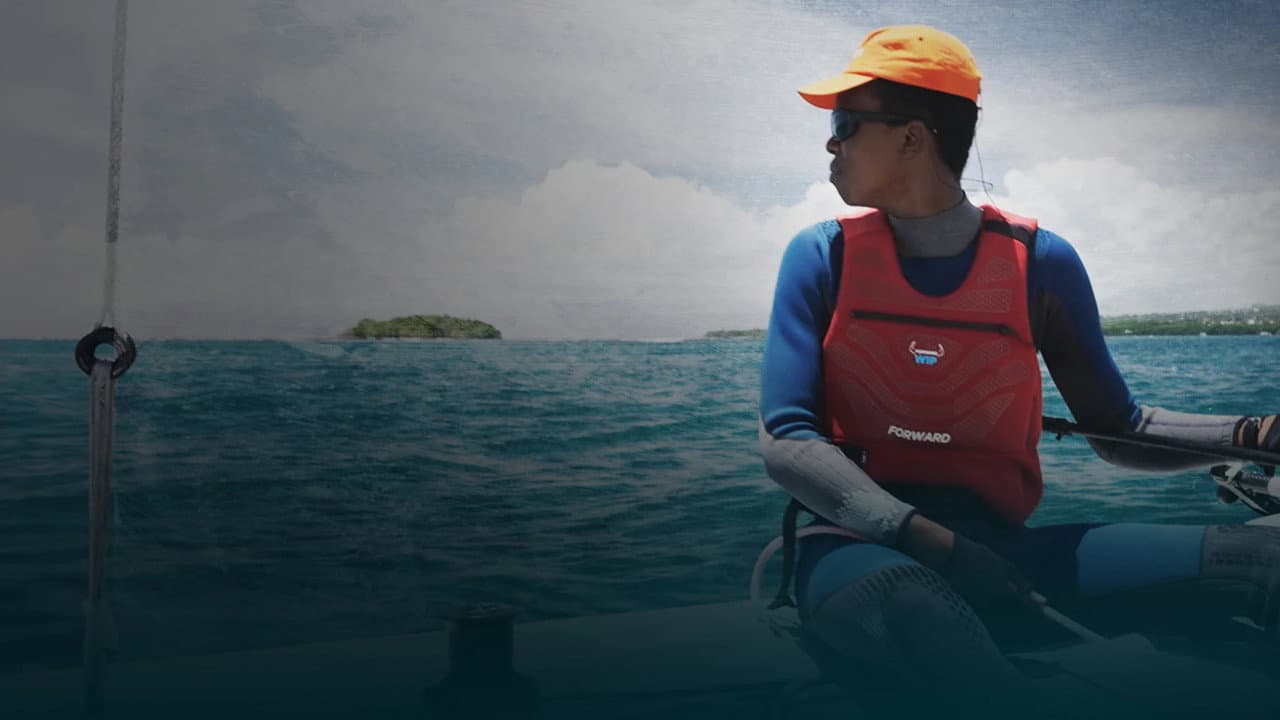
Antilles, la mer en héritage
Three young people from Guadeloupe and Martinique are reclaiming their ancestors' relationship with the sea — and a 52-minute French TV documentary follows them doing it. That's the whole pitch, and it works because the filmmakers trust the premise without hammering it.
What you're actually watching
Antilles, la mer en héritage isn't a crisis documentary. No coral bleaching montages, no drones swooping over endangered ecosystems. Instead, directors Hermine Costa and Hervé Corbière stay close to three people building real careers on the water: Rodolphe training as a navigator, Klarysse launching a maritime business, and Coralie — a former competitive swimmer — pivoting toward conservation work.
What's striking is how the film refuses to make this inspirational. There's a moment early on where Klarysse's entrepreneurial ambitions collide with economic reality, and Costa and Corbière just let it sit there, unresolved. They don't cut away. That restraint is the whole craft.
The Caribbean Sea surrounds these islands on every side, yet generations of islanders have felt disconnected from it — culturally and economically. This film watches a generation saying no to that distance. It's not heavy-handed about it. The sea's just there, part of the landscape, part of the work, part of who they're deciding to become.
Where and when it aired
France Télévisions broadcast Antilles, la mer en héritage on France 3 around June 8–9, 2026 — a timing that wasn't accidental. World Ocean Day falls June 8th, and the network clearly positioned this as purposeful public-interest programming rather than prestige documentary chasing festival circuits.
The production company Antipode has deep roots in French overseas territory filmmaking, and that institutional familiarity shows. Costa and Corbière didn't parachute in with a crew. They spent real time with their subjects before shooting a single frame.
No theatrical release happened (this was always television), so box-office figures don't exist, and neither do major awards announcements — though French TV documentary categories could surface the film down the line. Hard to say if that's on anyone's radar yet.
How to stream it right now
france.tv and La1ere.fr are the primary platforms — these are France Télévisions' direct services and they carry replay access. myCANAL and Orange TV also have it, though availability varies by region and subscription tier.
If you're outside France or hitting a geo-block, myCANAL tends to be more flexible for diaspora viewers. Movie OTT's where-to-watch tracker aggregates current availability across these platforms and updates quietly as titles shift — useful for documentaries like this one, where streaming rights don't generate press announcements.
The runtime is 52–55 minutes, so it's a single-sitting watch. No commitment required.
Why this stands apart from other ocean documentaries
Honest answer: the ocean documentary is crowded. Blue Planet set a bar most productions can't clear on budget, and plenty of what followed leans hard on spectacle. What Antilles, la mer en héritage does differently is stay human. The sea's never just scenery.
French press described the film's approach as a "reconquête culturelle et identitaire" — a cultural and identity reconquest — which is more charged and honest than most eco-docs allow themselves. Megazap flagged this framing specifically, and they're right. The blue economy angle (Klarysse's entrepreneurship, Rodolphe's navigation work) could easily have become an infomercial. Instead, the filmmakers let friction show. Aspiration meets reality. It's quiet. It's earned.
What I keep coming back to is Coralie's arc — the transition from individual athletic achievement to collective environmental responsibility. That's not a simple journey, and the film doesn't flatten it into a redemption arc or a feel-good career pivot. It's messier than that, which makes it true.
Movie OTT's editors flagged this title specifically because it offers something the algorithm-driven streaming landscape rarely surfaces: a focused, short documentary about a place and people that most international platforms wouldn't greenlight. It's the kind of thing that disappears into the overnight slot and then quietly becomes essential.
Is it family-friendly?
Yes. There's nothing graphic or explicit. Kids old enough to sit through a 52-minute documentary will be fine — though it's really made for adults.
FAQ
Q: How long is it?
52–55 minutes. One sitting.
Q: Who made it?
Hermine Costa and Hervé Corbière directed and wrote it. Antipode produced it with France Télévisions participation.
Q: Is it a real documentary or dramatized?
Real. Rodolphe, Klarysse, and Coralie are actual people building actual lives connected to the sea.
Q: When was it made?
Produced in 2025, broadcast June 2026.
Q: What if I liked My Octopus Teacher or The Deepest Breath? You'll connect with this. It's got that same intimate, one-person-at-a-time storytelling instead of sweeping environmental arguments. But it's much shorter and rooted in a specific cultural reclamation rather than individual obsession.
Q: Is there a theatrical release?
No. This was always television. Direct-to-broadcast on France 3.
Who should watch it
People who want documentary filmmaking that trusts its subjects. Not a crisis film. Not a polemic. Antilles, la mer en héritage is a quiet argument — made through people rather than statistics — that cultural reconnection and ecological responsibility can be the same project.
If you've ever felt that ocean documentaries spend too much time on the water and not enough on the humans who depend on it, this corrects that. Watch it if you're interested in French Caribbean culture, the blue economy in practice, or just a well-made short documentary with genuine warmth.
The 52 minutes will stick with you longer than most features twice that length.