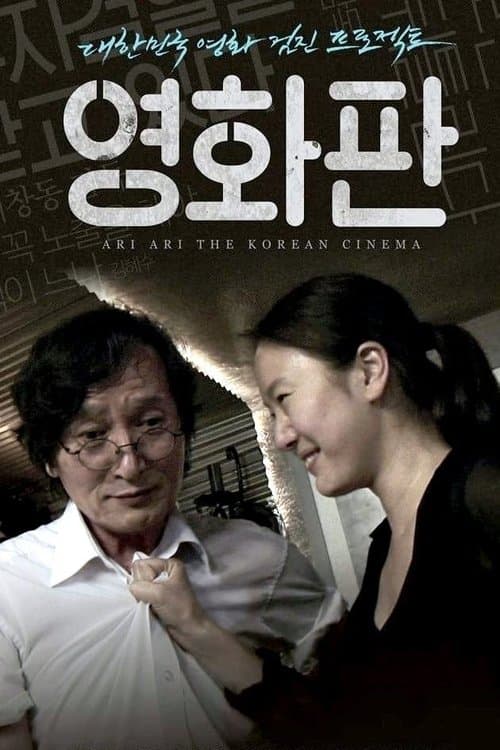
The story of Ari Ari the Korean Cinema
Ari Ari the Korean Cinema isn't your typical behind-the-scenes fluff. Director Chung Ji-Young sets out to challenge a prevailing assumption in Korean film circles: that older directors somehow can't make certain kinds of movies anymore. It's a premise that sounds academic, but what unfolds is far more intimate. The documentary emerged from a 2009 conversation between Ji-Young and actress Yoon Jin-Seo, who was grappling with her own identity as a performer in an industry that often boxes people in. They decided to investigate Korean cinema itself—not the finished products we see in theaters, but the grinding, often invisible process of making them. What's striking is how personal the film becomes, even as it tackles industry-wide questions. The result is a 83-minute documentary that weaves together interviews with Korean directors, actors, and actresses, all wrestling with similar doubts: Can I still make the work I want to make? Do I belong here? Those aren't easy questions, and Ari Ari doesn't pretend to have neat answers.
Behind the making of Ari Ari the Korean Cinema
Produced by Aura Pictures, Ari Ari the Korean Cinema arrived in 2012 at a moment when South Korea's film industry was already gaining international traction. The documentary came together organically—not as a commissioned project, but as a genuine investigation by filmmakers who were tired of the myths surrounding Korean cinema. Chung Ji-Young and Yoon Jin-Seo's collaboration is itself the engine of the film; they're not detached observers handing a microphone to subjects and stepping back. Instead, you feel their presence throughout, their curiosity driving the conversations forward. The film doesn't chase awards or blockbuster distribution (it carries a modest 5.5/10 rating on IMDb, which tells you something about how niche this work is), but that's partly the point. This is cinema about cinema, made by people inside the system asking uncomfortable questions of their peers. The documentary format allows for a rawness that scripted drama can't quite capture—these are real directors and performers talking about real struggles with career longevity, creative autonomy, and the gap between who they are and who the industry wants them to be.
What makes Ari Ari the Korean Cinema stand out
Here's what I keep coming back to with this film: it refuses to mythologize Korean cinema. At a time when Korean film was (and still is) getting rapturous international press—think Bong Joon-ho, Park Chan-wook, the whole prestige machinery—Ari Ari asks a much quieter, more unsettling question. What about the people who aren't household names? What about the mid-career directors, the character actors, the performers trying to find their footing in an industry that often mistakes youth for talent and fame for skill? That's the real subject here, and it's uncomfortable by design. The documentary doesn't have the slick pacing of a Netflix feature or the narrative arc of a traditional documentary. Instead, it accumulates—interview by interview, conversation by conversation—a portrait of an industry that's far messier and more human than the glossy film festival circuit suggests. Yoon Jin-Seo's presence as both subject and co-investigator is particularly effective; she's not asking these questions from the outside, but from within her own struggle. When she talks about identity and belonging, you're not watching an actress perform vulnerability—you're watching someone genuinely reckoning with her place in a world that often feels indifferent to her questions.
Where to stream Ari Ari the Korean Cinema online
If you're looking to watch Ari Ari the Korean Cinema, the film is available across major OTT services—check the Where to Watch widget at the top of this page for current availability in your region. Since streaming catalogs shift constantly, Movie OTT tracks which platforms carry this title right now, so you won't waste time searching. The documentary's modest runtime—just 83 minutes—makes it an easy fit for a weeknight viewing, though don't mistake brevity for lightness. This is the kind of film that sticks with you, that prompts conversations afterward about what you saw and what it means. Given how specific its subject matter is, it's worth noting that finding it requires a bit of intentional searching; it's not the kind of film that algorithms typically surface, but that's part of its charm.
Frequently asked questions
Q: Who directed Ari Ari the Korean Cinema?
Director Chung Ji-Young helmed the film, working alongside actress Yoon Jin-Seo as a co-investigator. Their collaboration shapes the documentary's intimate, questioning tone throughout.
Q: What year was Ari Ari the Korean Cinema released?
The documentary premiered in 2012, arriving during a particularly vibrant period for Korean cinema on the international stage.
Q: How long is Ari Ari the Korean Cinema?
The film runs 83 minutes, making it a lean but densely packed exploration of Korean filmmaking and the people who make it.
Q: Is Ari Ari the Korean Cinema based on a true story?
It's a documentary, so yes—it's based entirely on real interviews and conversations with actual Korean directors, actors, and actresses discussing their genuine experiences in the industry.
Q: Where can I watch Ari Ari the Korean Cinema?
The film is currently available on major OTT platforms. Use the Where to Watch widget on this page to find which service has it in your region right now.
Final thoughts on Ari Ari the Korean Cinema
Ari Ari the Korean Cinema won't appeal to everyone. It's slow, deliberately unglamorous, and deeply committed to asking questions rather than providing answers. But if you're interested in how cinema actually gets made—the doubts, the compromises, the small victories—it's essential viewing. The film doesn't pretend that Korean cinema is some monolithic achievement; instead, it treats it as what it really is: a space where real people are trying to do meaningful work and often struggling. That's not a weakness. That's the whole point. Watch it if you care about cinema beyond the red carpet.