The story of Artists and Models
Artists and Models follows two struggling roommates living hand-to-mouth in the same apartment. Rick Todd, played by Dean Martin, is a painter desperate for his big break, while his roommate Eugene Fullstack—Jerry Lewis in full comedic flight—is a comic book fanatic with an imagination that won't quit. Here's where the scheme takes shape: Eugene spends his nights narrating elaborate adventure stories in his sleep, complete with a superhero called Vincent the Vulture. Rick, spotting opportunity in his friend's unconscious rambling, starts stealing the plots wholesale and selling them as his own comic book ideas. The trouble? Unbeknownst to either man, the actual artist behind their favorite comic book lives in the same building, and she's been drawing from real-life inspiration all along. When those worlds collide—when dreams, reality, and professional ambition tangle together—the comedy spirals into increasingly absurd territory. What starts as petty theft of ideas becomes a full-blown tangle of mistaken identities, romantic entanglements, and spy-movie nonsense that neither of them can quite control.
Behind the making of Artists and Models
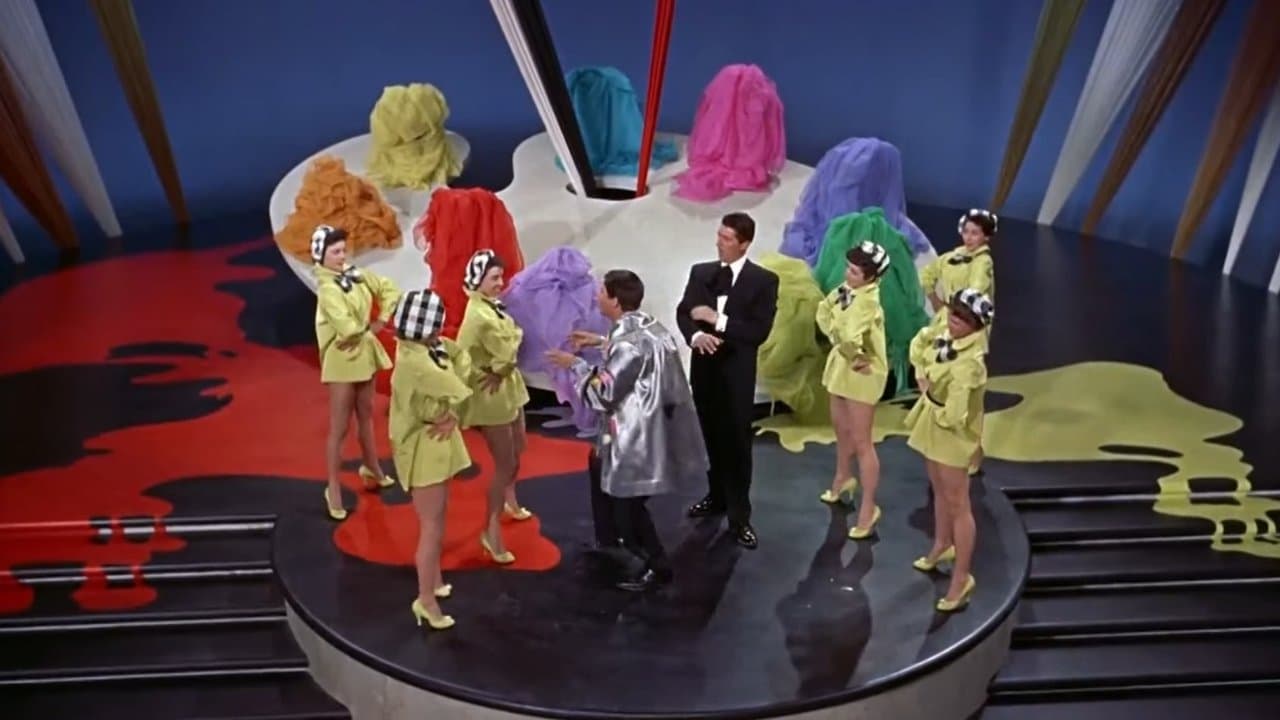
Artists and Models arrived in 1955 as the 14th feature film collaboration between Martin and Lewis, a partnership that had become box-office gold by the mid-1950s. Director Frank Tashlin, known for his kinetic visual style and willingness to let his comedians run wild, helmed the picture in VistaVision—Paramount's wide-screen format that was still relatively novel and impressive at the time. The supporting cast was stacked with Hollywood talent: Shirley MacLaine played one of the leads (her star was rising fast), Dorothy Malone provided another anchor, and Eva Gabor and Anita Ekberg rounded out the ensemble, even if their roles were brief. Hal Wallis Productions, which had backed many Martin and Lewis vehicles, produced the film for Paramount Pictures. The 110-minute runtime gave Tashlin plenty of room to build elaborate set pieces and let the physical comedy breathe—something Lewis in particular thrived on. While the film didn't become a major awards contender (the Academy wasn't handing out Oscars to slapstick comedies in that era), it performed respectably at the box office and has held up well enough in the decades since that it remains watchable, if occasionally uneven, entertainment. The MPAA gave it a clean rating for general audiences, which helped its reach.
What makes Artists and Models stand out
What's striking about Artists and Models is how it captures a very specific moment in American popular culture—the anxiety around comic books as a legitimate art form, the tension between high art and commercial entertainment, and the scramble for success that defined the post-war creative class. Jerry Lewis's Eugene isn't just a comic book nerd; he's a genuine dreamer whose imagination is both his greatest asset and his biggest liability. Dean Martin, often the straight man in their partnership, gets to show off his charm and timing in ways that make him feel like an actual character rather than just a foil. The film doesn't take itself seriously for a second, which is exactly why it works. There's no pretense here—just two guys trying to make it, a building full of beautiful women, and increasingly ridiculous situations that escalate with the kind of dream logic that Eugene himself might have cooked up. I keep coming back to the fact that the film is genuinely interested in the creative process, even as it's making fun of it. How do ideas get made? Who deserves credit? What happens when your private thoughts become public property? These aren't questions the film answers with any seriousness, but it asks them anyway, buried under layers of slapstick and musical numbers. Tashlin's direction keeps things moving fast enough that you don't have time to wonder if the plot makes sense—and honestly, that's a feature, not a bug.
Where to stream Artists and Models online
Finding Artists and Models is easier than you might think for a film from 1955. The film is currently available on several major OTT services, which means you've got options depending on what you already subscribe to. Rather than hunting across multiple platforms yourself, Movie OTT aggregates all the current streaming availability in one place, so you can see exactly where it's playing right now without the guesswork. Since streaming rights shift periodically, checking the Where to Watch widget at the top of this page will give you the most up-to-date information on which services have it in your region. Whether you're a Martin and Lewis completist or just curious about mid-century comedy, you won't have to dig very far to access it.
Frequently asked questions
Q: Who directed Artists and Models?
Frank Tashlin directed the film. He was known for his energetic approach to comedy and his ability to work with physical comedians like Jerry Lewis, giving the picture its kinetic, fast-paced style.
Q: Is Artists and Models based on a true story?
No, it's an original screenplay. The plot about dream-stealing and comic book creation is entirely fictional, though it does play with real anxieties about artistic credit and commercial success that existed in the 1950s.
Q: How long is Artists and Models?
The film runs 110 minutes, which gives director Frank Tashlin plenty of time to build elaborate comedic set pieces and musical numbers without feeling rushed.
Q: What other actors appear in Artists and Models?
Shirley MacLaine and Dorothy Malone carry significant roles alongside Martin and Lewis, while Eva Gabor and Anita Ekberg appear in smaller parts. The ensemble cast helps round out the romantic and comedic complications.
Q: Was Artists and Models a box office success?
Yes, it performed respectably at the box office as the 14th Martin and Lewis collaboration, though it wasn't a massive awards contender. The pair's popularity in the mid-1950s meant audiences showed up to see them, and the film delivered the kind of entertainment fans expected.
Final thoughts on Artists and Models
Artists and Models isn't a perfect film—the pacing can feel uneven, and some of the humor hasn't aged gracefully—but it's got genuine charm and energy. If you're interested in mid-century comedy, the Martin and Lewis partnership, or just want to see how Hollywood thought about comic books and artistic integrity in the 1950s, it's worth the 110-minute investment. The film works best if you come to it on its own terms: as a vehicle for two comedians doing what they do best, supported by a strong cast and a director who knew how to keep the chaos organized. Don't expect subtlety or emotional depth. Do expect laughs, musical numbers, and the kind of fast-paced nonsense that defined a whole era of American entertainment.