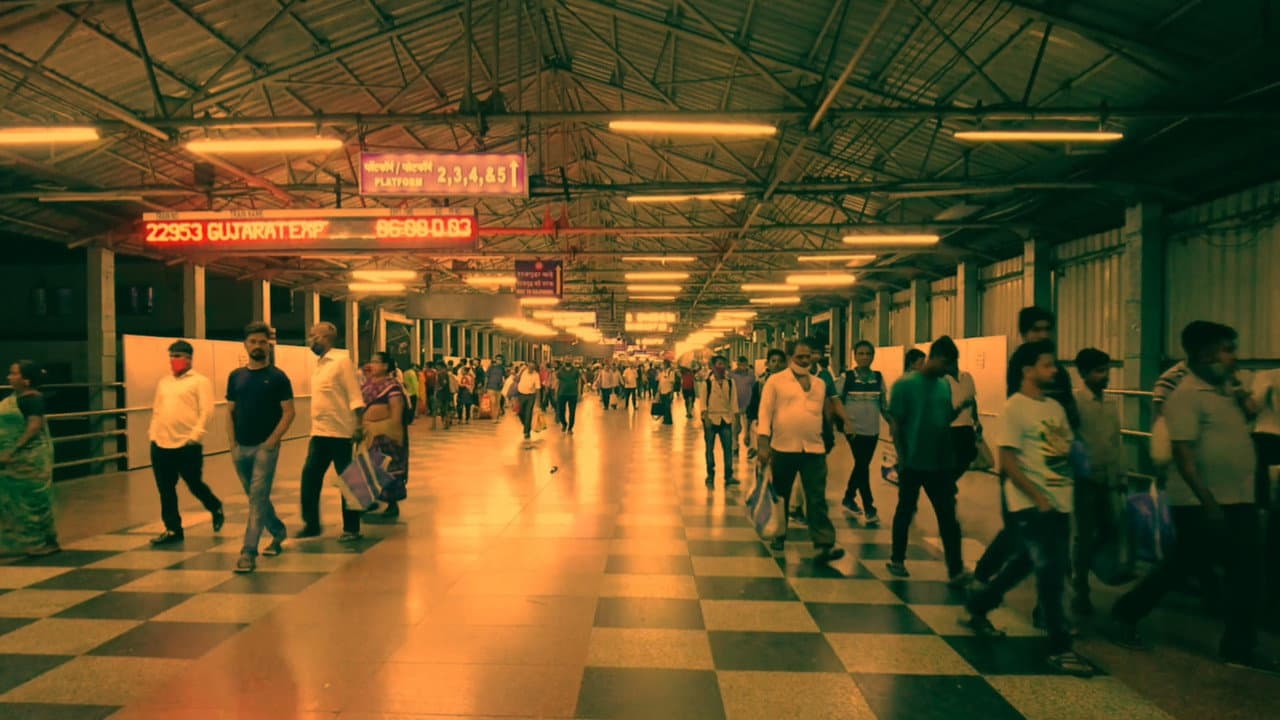
As The Train Passes
A smartphone documentary capturing 170 years of Indian railway memory
As The Train Passes is a 2026 documentary short that does something quietly ambitious: it treats the Indian railway system not as a historical timeline but as a living character — one that's shaped how millions of people remember their own lives. Produced by Crayon Cassette, it traces the evolution of train travel while staying focused on the moments that actually stick: platform farewells, chai vendors, the hypnotic blur of landscape through a window seat. This isn't a film about engineering milestones or timetables. It's about what it feels like to be on a train in India, and why that feeling has lodged itself so stubbornly in the national imagination — in literature, in cinema, in memory itself.
Shot entirely on a smartphone: why that constraint matters
Here's the technical detail that makes this film unusual: it was shot entirely on a smartphone. That's not a budget workaround dressed up as vision. It's a genuine creative choice that shapes everything — the grain, the handheld immediacy, the way natural light catches dust motes in a third-class compartment. None of that gets polished away by a traditional camera package.
There's something fitting about it, too. Millions of Indian passengers already use their phones to photograph passing landscapes from train windows. The filmmaker's using the same device, the same instinct. The intimacy you feel watching isn't accidental.
The smartphone approach also means the film participates in something Indian cinema has been doing for decades — using trains as intimate spaces where strangers become close, where class and caste briefly share a berth, where the country's contradictions ride side by side. From the rain-soaked platform sequences in classic Hindi films to the train-set climaxes in contemporary blockbusters, the railway's functioned as one of cinema's most durable dramatic spaces. As The Train Passes doesn't just document this history. It continues it.
Where to watch it right now
As The Train Passes is currently streaming on major OTT platforms in India and beyond. Movie OTT's where-to-watch tracker pulls live data across Netflix, Prime Video, Hotstar, and regional platforms — so if you're checking availability in your area, that widget shows what's current rather than what was available last month. Streaming rights for documentary shorts shift around, so that live-update approach actually matters here.
For viewers in India especially, the platform distribution leans toward services most active in the South Asian market. Check the widget at the top of this page for the complete breakdown in your region.
Why 2026 is seeing a wave of train documentaries
Look — it's strange that train documentaries are clustering in 2026. But they are. A Romanian film from the same year, covered by Cineuropa, fixates on a train that passes through a rural village repeatedly without stopping, using that recurring motif to frame mortality and rural decline. Very different emotional register than As The Train Passes. Where the Romanian film meditates on absence and abandonment, this one celebrates presence and connection.
Yet both filmmakers are circling the same insight: trains work as lenses. They compress whole worlds — class, geography, time, human longing — into a single moving frame. It's a subject that keeps pulling filmmakers back, across cultures and contexts.
The personal documentary format and why it works here
I keep coming back to a specific choice the filmmaker made: keeping this personal rather than institutional. A more traditional approach — talking-head historians, archival footage narrated in a BBC register — would've produced something informative but inert. The decision to anchor the film in the filmmaker's own relationship with trains is what gives it a pulse.
That's the whole thing, honestly. The format allows the film to carry the weight of a genuinely vast subject — Indian railway heritage spans over 170 years and touches hundreds of millions of people annually — without collapsing under it. A personal documentary can be both intimate and expansive. It doesn't have to choose.
When Movie OTT's editorial team reviewed the available materials ahead of release, that balance was what stood out most — the way individual memory connects to collective history without either one drowning out the other.
FAQs about As The Train Passes
Is this a feature-length film? No — it's a documentary short. The short-film format isn't a limitation; it's part of the identity. Runtime hasn't been widely published ahead of release.
Who should watch this? Documentary fans, obviously. But also anyone who's stared out a train window in India and felt something difficult to name. If you're drawn to films about cultural memory, cinema history, or the way ordinary objects become symbols — this one's built for you.
How does it compare to other train documentaries? Most train docs focus on logistics or history. This one's emotional and cinematic. If you've watched films like Departure Lounge or The Last Station — stories where trains function as character spaces rather than subjects — the sensibility here will feel familiar.
What's the current critical consensus? It's too early. The film hasn't hit wide release yet, so aggregated scores on IMDb or Rotten Tomatoes haven't accumulated. The 0/10 you might see is just placeholder data waiting for actual audience votes. Hard to say how that changes once the film reaches people, but absence of a score shouldn't be mistaken for absence of ambition.
Next step: add it to your watchlist
As The Train Passes releases in 2026. When it does, check Movie OTT for the updated availability in your region — the platform tracker will have the most current streaming links across services, and any reviews that land after release. The film's small in scope. A smartphone. A filmmaker. Over a century of stories. That's enough.