









The Story of Attack on Titan II: End of the World
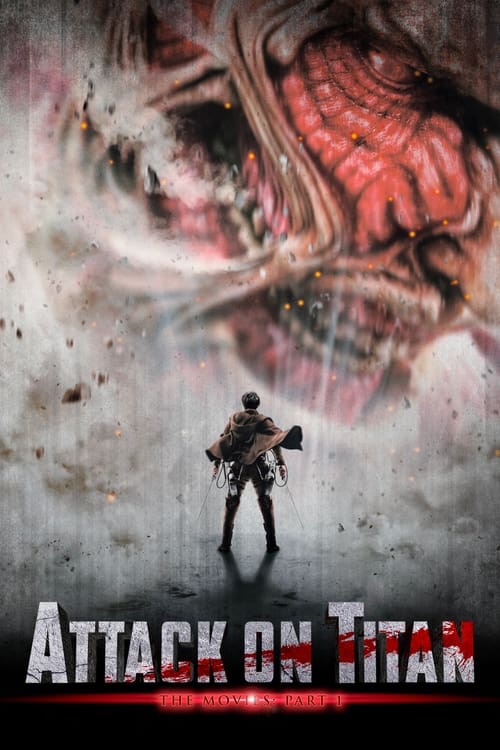
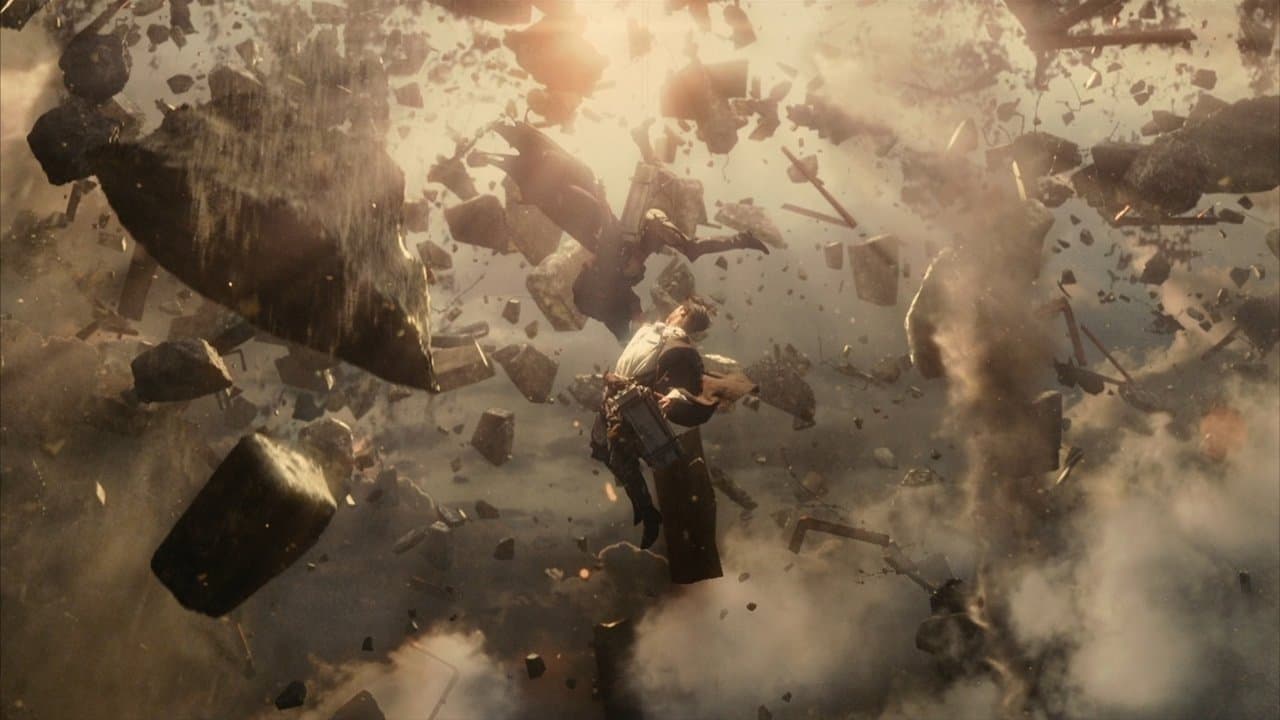
Attack on Titan II: End of the World picks up the relentless momentum of its predecessor, thrusting viewers back into a world where humanity clings to survival behind crumbling walls. When a massive breach opens in the outer wall, Eren Yeager volunteers to lead a desperate mission to seal it before the Titans pour through. What begins as a strategic repair operation quickly spirals into chaos. Eren and his companions come under overwhelming assault from the man-eating Titans—there's no negotiation, no mercy, just the primal terror of being hunted by creatures that dwarf human soldiers. The situation deteriorates rapidly. Eren finds himself cornered, outmatched, and facing what seems like certain death until Shikishima arrives to pull him back from the brink. But survival isn't salvation; it's just a momentary reprieve. The Titans never stop attacking, pressing their advantage with relentless hunger, and Eren—now injured and desperate to protect his friend Armin—is swallowed whole by one of the massive creatures. Then something unprecedented happens. A Titan with black hair emerges from the chaos and begins expelling the other Titans, though whether this creature is savior or new threat remains deliberately ambiguous.
Behind the Making of Attack on Titan II: End of the World
Attack on Titan II: End of the World arrived in 2015 as a live-action continuation of one of manga's most explosive franchises—a bold bet that Japanese studios Kodansha, TOHO, and Nikkatsu were willing to make. The film's production involved a sprawling coalition of major media companies: dentsu, AMUSE, Horipro, Hakuhodo DY Media Partners, jeki, KDDI, Yomiuri Shimbun Company, Nippan Group Holdings, GYAO, Tokyo FM, and The Asahi Shimbun all contributed resources and creative input. That's a lot of hands in the pot, and it shows—the film carries the weight of massive corporate expectations. At 87 minutes, the sequel doesn't waste time on exposition or character building; it's pure kinetic storytelling. The box office return, however, tells a different story: the film earned just $305,934, a modest figure that suggests the live-action adaptation struggled to capture the fervent anime fanbase or mainstream crossover audiences. It wasn't rated by the MPAA, which in the live-action anime space often signals direct-to-streaming or limited theatrical release. Despite the commercial disappointment, the production values and scale of the creature sequences reveal the ambition behind the project—this wasn't a low-budget cash grab, but a genuine attempt to translate manga's visual spectacle to live action.
What Makes Attack on Titan II: End of the World Stand Out
Here's where the film gets interesting: critics and audiences remain divided. Rotten Tomatoes gave it a 50% rating—that's the definition of split-the-room cinema—while IMDb's 4.7/10 from over 6,350 votes suggests a fanbase that either loved it or couldn't forgive its departures from the source material. What's striking is that the film doesn't try to be a faithful panel-by-panel adaptation. Instead, it commits fully to the giant-monster horror angle. The tagline—"The world is merciless"—isn't just marketing speak; it's the film's entire thesis. There's no triumphant hero moment, no clean victory, just humans getting brutalized by forces they can't comprehend or control. That's genuinely unsettling in a way that some viewers found refreshing and others found frustrating. The performances carry the weight of that bleakness without ever tipping into melodrama, which is harder to pull off in live action than it sounds. What I keep coming back to is the central conceit: watching Eren struggle not just against the Titans but against his own powerlessness. He's supposed to be special, humanity's secret weapon—except he isn't, or at least not in the way anyone expected. The film's willingness to leave that ambiguous, to end on genuine uncertainty rather than triumph, is either bold or unsatisfying depending on your tolerance for open-ended survival narratives.
How to Stream Attack on Titan II: End of the World
If you're ready to dive into this chaotic live-action take on the franchise, the film is available across major OTT platforms—check the "Where to Watch" widget at the top of this page to see current availability in your region. Movie OTT tracks streaming availability across services in real time, so you won't waste time hunting for where it's actually streaming today. The 87-minute runtime makes it a manageable watch even if you're skeptical about live-action anime adaptations. Since it's not rated, you won't run into certification restrictions, though the giant-monster violence and body horror are decidedly not for young kids. Whether you're a completist working through the live-action Attack on Titan series or a curious viewer wondering how the manga translates to live action, the film's availability on major platforms means there's no friction between curiosity and actually watching it.
Frequently Asked Questions
Q: Is Attack on Titan II: End of the World a sequel, and do I need to watch the first film?
Yes, it's the direct sequel to the 2015 live-action Attack on Titan. You'll want to watch the first film to understand the world, the characters, and why the walls matter so much—jumping straight into the sequel will leave you confused about the stakes and relationships.
Q: How does Attack on Titan II: End of the World compare to the anime series?
The live-action version takes significant liberties with character arcs, plot points, and tone. It's darker and more focused on horror and survival than the anime, which tends toward more character development and political intrigue. Think of it as an alternate interpretation rather than a direct adaptation.
Q: Is Attack on Titan II: End of the World based on the manga?
Yes, it's based on the manga series by Hajime Isayama, though the live-action film doesn't follow the manga's story beats precisely. The core concept—humanity trapped behind walls, hunted by giant man-eating Titans—remains the same, but the execution diverges significantly.
Q: What's the runtime, and is it worth watching if I didn't like the first film?
The film runs 87 minutes, so it's a quick commitment. If you didn't connect with the first live-action film, this one doesn't fundamentally change the formula, so your mileage may vary—but the escalated action and higher stakes might win you over.
Q: Where can I watch Attack on Titan II: End of the World right now?
The film is available on major OTT services. Use the "Where to Watch" widget above to find which platform has it in your region, since availability changes regularly and varies by location.
Final Thoughts on Attack on Titan II: End of the World
Attack on Titan II: End of the World isn't perfect, and it won't convert skeptics into live-action anime believers. But it's earnest in its commitment to the material—it doesn't wink at the camera or apologize for its giant monsters and existential dread. If you're drawn to survival horror, if you can tolerate ambiguous endings, or if you're simply committed to experiencing everything Attack on Titan has to offer across formats, it's worth the 87-minute investment. The world really is merciless here.