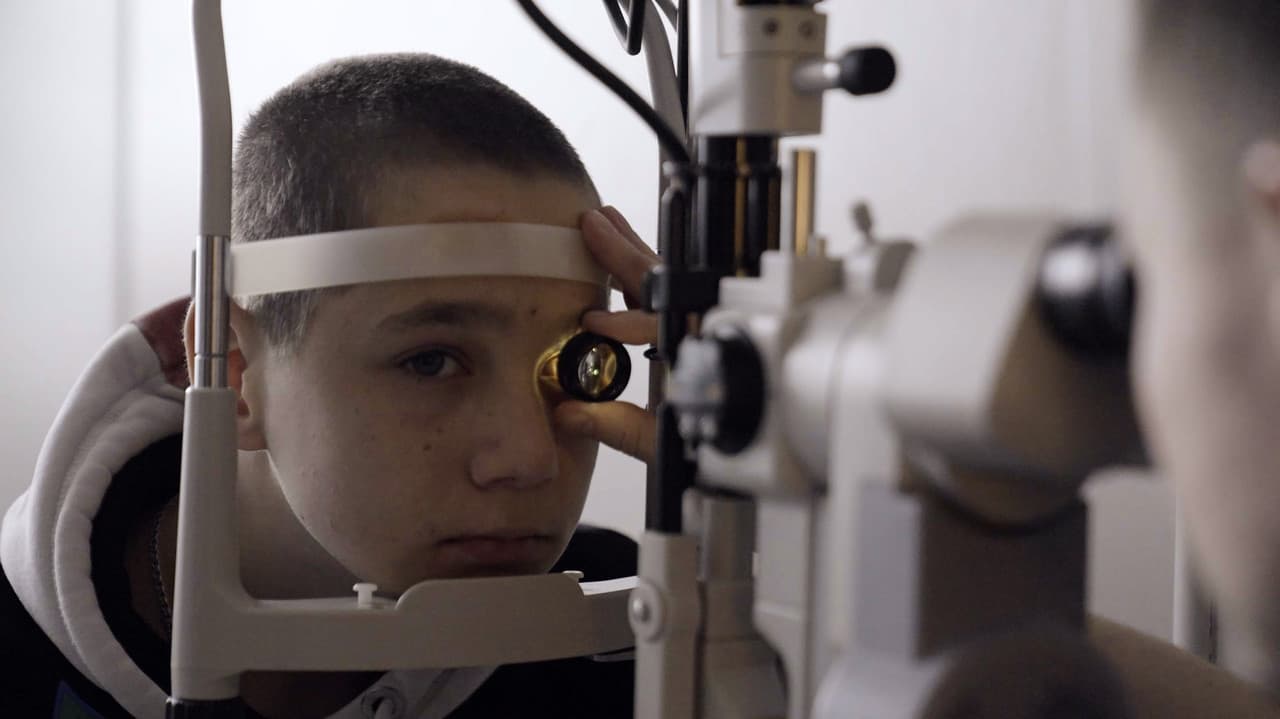
The story of Attention: Children
Attention: Children isn't a traditional war documentary. Instead, it's something more intimate—a kaleidoscope of how children actually live when the world around them fractures. The film captures kids in Ukraine during the Russian invasion, not as passive victims waiting for rescue, but as young people actively grappling with what's happening. They talk. They remember. They try to make sense of trauma that most adults would struggle to articulate. The film's structure mirrors their experience: fragmented, emotional, sometimes hard to follow—but never dishonest about what childhood looks like when war arrives at your door.
What makes Attention: Children distinct is its refusal to look away from the kids' inner lives. Rather than relying on talking-head interviews or news-style reportage, the documentary creates space for children to process their memories and emotions through conversation and immersion in what they've lived through. It's less about explaining the war and more about witnessing how these young minds are trying to survive it.
Behind the making of Attention: Children
Attention: Children was produced by Добранічфільм and Mia-Media, two production companies working at the intersection of Ukrainian cinema and international documentary practice. The film's 75-minute runtime is deliberately compact—long enough to build intimacy with the children, short enough to maintain the intensity that defines their daily reality. Released in 2025, it arrives at a moment when Ukrainian stories are being told globally, yet many still focus on military strategy or political analysis rather than the lived experience of civilians, especially children.
The production itself reflects a commitment to authenticity. Rather than imposing a predetermined narrative onto the children's experiences, the filmmakers created a framework where kids could articulate their own truths. This approach—letting children lead their own stories—requires patience, trust, and a willingness to sit with uncomfortable silences. Movie OTT tracks the film's availability across streaming platforms, making it accessible to international audiences who might otherwise never encounter these voices.
There's no traditional star cast here. The real performers are the children themselves, bringing an unfiltered honesty that no actor could manufacture. Their willingness to share—to be vulnerable on camera—is the film's greatest asset and, frankly, its most difficult element to witness.
What makes Attention: Children stand out
Here's what's striking about this documentary: it trusts children to be the experts on their own lives. Too often, adult filmmakers or journalists act as interpreters, filtering kids' experiences through their own frameworks. Attention: Children resists that impulse. The children aren't being explained to us; they're explaining themselves.
The emotional weight comes from specificity. You'll find yourself remembering a particular kid's face, a particular phrase they used, the way they described a memory that clearly still haunts them. That specificity matters—it's the difference between "children suffer in war" (a true but abstract statement) and actually sitting with a child who's trying to explain what suffering feels like when you're nine years old. The film doesn't shy away from the traumatic content, but it also doesn't exploit it. That balance is harder to achieve than it sounds, and the filmmakers navigate it with real care.
What's also remarkable is the film's structure. It doesn't follow a linear narrative arc. Instead, it mirrors how trauma actually works in a child's mind—circular, associative, sometimes jumping between moments that seem unrelated until you realize they're all connected by emotion rather than chronology. This formal choice could feel gimmicky in other hands, but here it feels necessary, even inevitable. The thing nobody mentions is how much this approach demands from viewers—you can't half-watch this film. It requires your full attention, which is perhaps exactly the point.
How to stream Attention: Children online
Attention: Children is currently available on major OTT services, making it accessible whether you subscribe to Netflix, Prime Video, or other leading streaming platforms. The "Where to Watch" widget at the top of this page will show you exactly which services carry it in your region, since availability can shift. Movie OTT keeps that information current, so you'll always know where to find it without hunting across multiple sites.
The 75-minute runtime makes it manageable for a single sitting, though you might want to give yourself time to process afterward. This isn't a film you'll want to immediately follow with something light. It demands space.
Frequently asked questions
Q: Is Attention: Children based on a true story?
Yes—it's a documentary, so everything you're seeing is real. The children, their experiences, their memories of the Russian invasion of Ukraine are all documented as they happened. There's no dramatization or reenactment.
Q: Who directed Attention: Children?
The film was produced by Добранічфільм and Mia-Media, two production companies specializing in documentary work. While specific directorial credits may vary by region, both companies are known for centering Ukrainian voices and experiences in their work.
Q: How long is Attention: Children?
The documentary runs 75 minutes, making it a focused, intense viewing experience that captures children's experiences without unnecessary padding.
Q: What age group is Attention: Children appropriate for?
Because it deals with war trauma and children's emotional responses to invasion, parental discretion is advised. It's not a children's film—it's a film about children, made for adult audiences who want to understand the human cost of conflict.
Q: Where can I watch Attention: Children?
Check the "Where to Watch" widget on this page for current streaming availability. Major OTT platforms carry it, and Movie OTT keeps that list updated across regions.
Final thoughts on Attention: Children
Attention: Children won't leave you feeling uplifted. That's not its job. What it does is bear witness to something most of us will never experience—the particular loneliness and resilience of childhood interrupted by war. The children in this film aren't asking for your pity. They're asking to be heard. If you're willing to listen, really listen, this documentary offers something rare: an honest window into how young minds survive when survival shouldn't be a skill they need. It's difficult, necessary viewing.