


The story of Au Bonheur des Dames and its portrait of Parisian ambition
Au Bonheur des Dames tells the story of Denise, a young woman who arrives in Paris with little more than hope and a family connection. She's orphaned, unmoored, and searching for stability—the kind that only steady work promises. Her uncle runs a small shop in the neighborhood, a modest business that's been part of the fabric of his street for years. But across the way stands something else entirely: the department store of the same name, a gleaming monument to modern commerce that's already begun to swallow the smaller retailers around it. Denise finds herself drawn into this new world, taking a position at the store and discovering that the glamorous facade of retail success masks something far more complicated—ambition, desire, and the slow dissolution of everything her uncle represents.
The film doesn't announce itself with grand gestures. Instead, it moves through Denise's eyes as she navigates the hierarchies and intrigues of the store's vast floor, where saleswomen compete for commissions and favor, where the owner's gaze can make or break a career. It's a world of surfaces and depths at once—beautiful to look at, treacherous to navigate.
Behind the making of Au Bonheur des Dames and its literary roots
Au Bonheur des Dames arrived in 1930 as a film adaptation of Émile Zola's 1883 novel, the eleventh installment in his sprawling Rougon-Macquart series. Zola's original work had been serialized in the periodical Gil Blas from December 1882 to March 1883 before its publication in novel form, making it a work of considerable cultural weight when filmmakers turned to it nearly five decades later. By 1930, cinema had matured enough to capture the psychological texture of Zola's prose—the way he'd observed Parisian society with the precision of a naturalist documenting specimens.
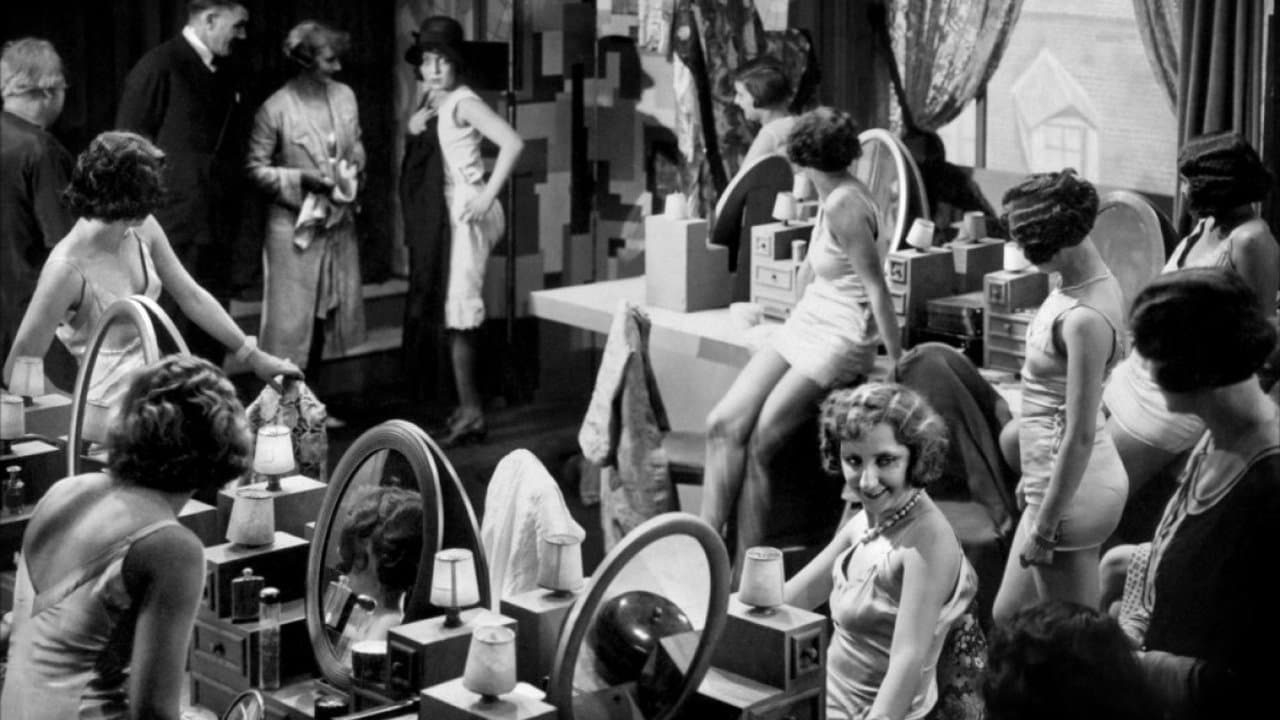
The film was produced by Le Film d'art, a French studio with a track record of adapting literary classics for the screen. At 95 minutes, the film compresses Zola's expansive narrative into something more intimate, focusing the sprawling department store drama through Denise's personal journey. The production design captures the era's visual language—the geometry of the store's displays, the fabric and fashion that signal class and aspiration. What's striking is how the filmmakers understood that Zola's real subject wasn't just commerce or romance, but the machinery of desire itself. The department store, in his vision and in this adaptation, functions as a kind of character—seductive, consuming, indifferent to the individual lives it shapes.
What makes Au Bonheur des Dames stand out as a period drama
There's something about watching a 1930 film adapt a novel written about the 1860s that creates an odd temporal layering. You're not quite seeing Zola's Paris, and you're not quite seeing the 1930s either—you're watching one era's interpretation of another, filtered through silent cinema's visual grammar. The film works because it doesn't try to hide this distance. Instead, it leans into the formal beauty of the compositions, the way light falls across the store's counters, the careful staging of scenes that build tension through proximity and glance rather than dialogue.
What's equally compelling is how the film treats its female characters as subjects with real interior lives, not just ornaments in a commercial landscape. Denise isn't simply a victim of circumstance, nor is she a triumphant heroine in any simple sense. She's someone navigating a system that offers opportunity and exploitation in equal measure, and the film respects the complexity of her choices—even the ones that don't feel entirely free. The performances carry this weight without melodrama. There's a restraint here, a refusal to oversimplify, that feels almost modern. I keep coming back to how the film captures the exhaustion of retail work, the way a shift on your feet can wear down your spirit as much as your body, and how that exhaustion becomes the true subject beneath all the romance and intrigue.
How to stream Au Bonheur des Dames on major OTT platforms
Au Bonheur des Dames is currently available across major OTT services, making it accessible whether you're a silent film enthusiast or a curious newcomer to Zola adaptations. You can check the "Where to Watch" widget at the top of this page to see which platforms in your region are currently streaming it—availability shifts regularly, and Movie OTT keeps those listings up to date across Netflix, Prime Video, and other major services. Because this is a 1930 French film, it's the kind of title that tends to cycle through classic film collections and art-house streaming tiers, so if you don't see it on your primary subscription, it's worth checking a few times over the coming months. The film's runtime of 95 minutes makes it perfect for an evening watch—substantial enough to feel like a real experience, short enough that you won't need to carve out your entire weekend.
Frequently asked questions
Q: Is Au Bonheur des Dames based on a book?
Yes. It's an adaptation of Émile Zola's 1883 novel of the same name, the eleventh book in his Rougon-Macquart series. Zola's original work was serialized in Gil Blas before its publication in novel form, and it remains one of the most celebrated depictions of modern commerce in nineteenth-century literature.
Q: Who directed Au Bonheur des Dames?
The film was produced by Le Film d'art, a significant French studio known for literary adaptations. The 1930 version represents the studio's approach to bringing Zola's naturalism to the screen during the late silent era.
Q: What's the plot of Au Bonheur des Dames in simple terms?
An orphaned girl named Denise moves to Paris hoping to work at her uncle's small shop, but instead finds herself employed at a massive, glamorous department store across the street that's driving her uncle out of business. The film follows her life within this new world of ambition, romance, and moral complexity.
Q: How long is Au Bonheur des Dames?
The film runs 95 minutes, a runtime that allows for a complete, character-driven narrative without excessive length.
Q: What's the IMDb rating for Au Bonheur des Dames?
The film holds a 6.3 out of 10 rating on IMDb, reflecting a mixed but respectful critical and audience reception for this period adaptation.
Final thoughts on Au Bonheur des Dames as essential cinema
Au Bonheur des Dames won't appeal to everyone. It's a 1930 film made from an 1880s novel, and that double distance from our moment can feel like a barrier. But if you're willing to meet it halfway—to sit with the pacing, to notice the subtle performances, to let the film's formal beauty work on you—there's something genuinely moving here. It's a film about systems and people, about how desire gets manufactured and sold back to us, about the particular loneliness of being a young woman trying to make your way in a world that's designed to extract your labor and your hope in equal measure. That's not a small thing. Stream it when you can find it, and don't expect it to shout at you. It won't. But it'll stay with you.