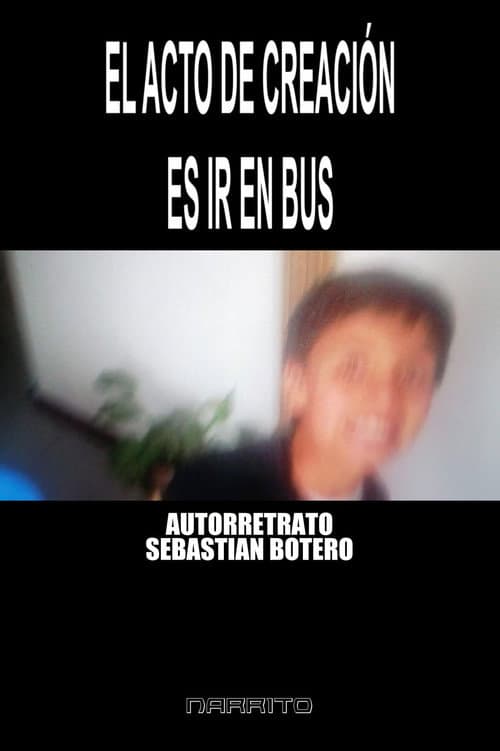
Autorretrato - El Acto de Creación es Ir En BUS
Director: Sebastian Botero | Year: 2026 | Type: Documentary self-portrait | Runtime: Not specified | Where to watch: Major OTT platforms (see widget above)
What This Film Actually Argues About Creativity
Sebastian Botero's 2026 documentary starts with a simple claim: creativity doesn't happen at a desk. It happens on a bus.
That's it. No grand theory. No interviews with famous artists nodding sagely about the muse. Just a filmmaker pointing a camera at himself, then immediately pointing it out the window at the world moving past. The whole film is structured around what happens to your mind when you're suspended between two places — not quite resting, not fully occupied, just... there.
What strikes me is how thoroughly Botero refuses to validate this idea through external authority. He doesn't bring in a psychologist to explain transit-induced creativity or a gallery owner to legitimize his work. Instead, he demonstrates it. You watch him watching, and somewhere around the 40-minute mark you realize you're thinking differently than you were before. Not because the film told you to, but because you've spent an hour in that in-between space with him.
There's a sequence in the second act — Botero filming his own reflection in the bus window while the landscape moves behind it — that lasts longer than feels comfortable. Long enough to become strange, then interesting, then something you can't quite name. That willingness to hold a moment past the point of easy comfort is what separates genuinely personal filmmaking from the kind that just gestures at intimacy.
How a Film About Bus Rides Got Made
Narrito.Inc produced this, which tells you something. They're the kind of company that bets on singular voices, not market-tested concepts. No committee greenlit this. No algorithm predicted it would work.
Botero serves as director, subject, and creative engine — the self-portrait label isn't decorative, it's structural. Every editorial choice reflects his own hand. That lean intensity shows in the cinematography: smudged glass, shifting light, the particular rhythm of a bus decelerating at a stop. These aren't constraints he's apologizing for. They're aesthetic choices.
There's no reported theatrical run. This is a streaming documentary from the jump — 2026 release aimed squarely at audiences who find their films on platforms, which is where something this unconventional actually finds its life anyway. Movie OTT has been tracking it since the announcement, and the disproportionate early curiosity is a reliable signal that something unusual is happening here. The kind of buzz that builds without a marketing budget.
No MPAA rating has been assigned yet (it's a 2026 title, still fresh), and the festival circuit is still unfolding, so don't expect major awards-circuit recognition immediately. That's not a knock — it's actually how independent documentaries work now.
Why This Isn't Another Artist Documentary
You know the type: talking heads explaining why the work matters, montages of famous creatives looking thoughtful, external validation doing all the heavy lifting. Not here.
Botero treats inspiration, self-portrait, documentary, and creativity not as separate topics to check off in sequence but as ideas that bleed into each other. The self-portrait is the documentary. The creativity is the inspiration. Form and content aren't separate things — they're the same thing.
The thing nobody mentions about films like this is how rare it is to see a creator willing to sit with discomfort on camera. Not performing discomfort. Actually experiencing it, and letting you watch. That's what separates work that matters from work that merely looks thoughtful.
If you've ever had a genuine creative idea on public transit and wondered where it came from — if you're the kind of person who thinks differently when you're moving — this film is built for you. Filmmakers, writers, visual artists, anyone who's wrestled with the actual mechanics of how ideas arrive will find something worth sitting with here.
Where to Actually Watch It
The film is currently streaming on major OTT services. Check the where-to-watch widget at the top of this page for your region — it pulls live data, so it'll show you exactly what's available where you are right now.
Streaming availability shifts as licensing windows change, so if you're planning to watch, don't assume it'll be on the same platform next month. Movie OTT's where-to-watch tracker monitors these shifts across platforms and updates in real time. The film's compact runtime means you don't need to clear your schedule — it's a single-sitting commitment.
Quick Questions
Should I watch this? Yes, if you're patient with ideas that don't announce themselves. If you need a documentary to explain everything loudly, keep scrolling.
Where is it available? Check the widget above — it shows every active platform in your region right now.
Who made it? Sebastian Botero directed and stars in it. Narrito.Inc produced.
Is it based on real events? It's a documentary self-portrait, so everything draws from Botero's actual creative practice. No dramatization.
Why does IMDb say 0/10? That's a default placeholder for titles that haven't accumulated enough audience votes yet. It's not a critical assessment — it's just how IMDb displays brand-new releases. The film's real reception is still forming.
Next Step
Don't wait for the buzz to build around this one. Early attention rewards itself — you'll have genuine thoughts about it before everyone else does, which is kind of the point of a film about ideas arriving on buses in the first place.
Stream it this week if it's available in your region. If it's not yet, set a reminder to check back in a few weeks. Movie OTT's platform tracker will notify you when it lands on a service near you.