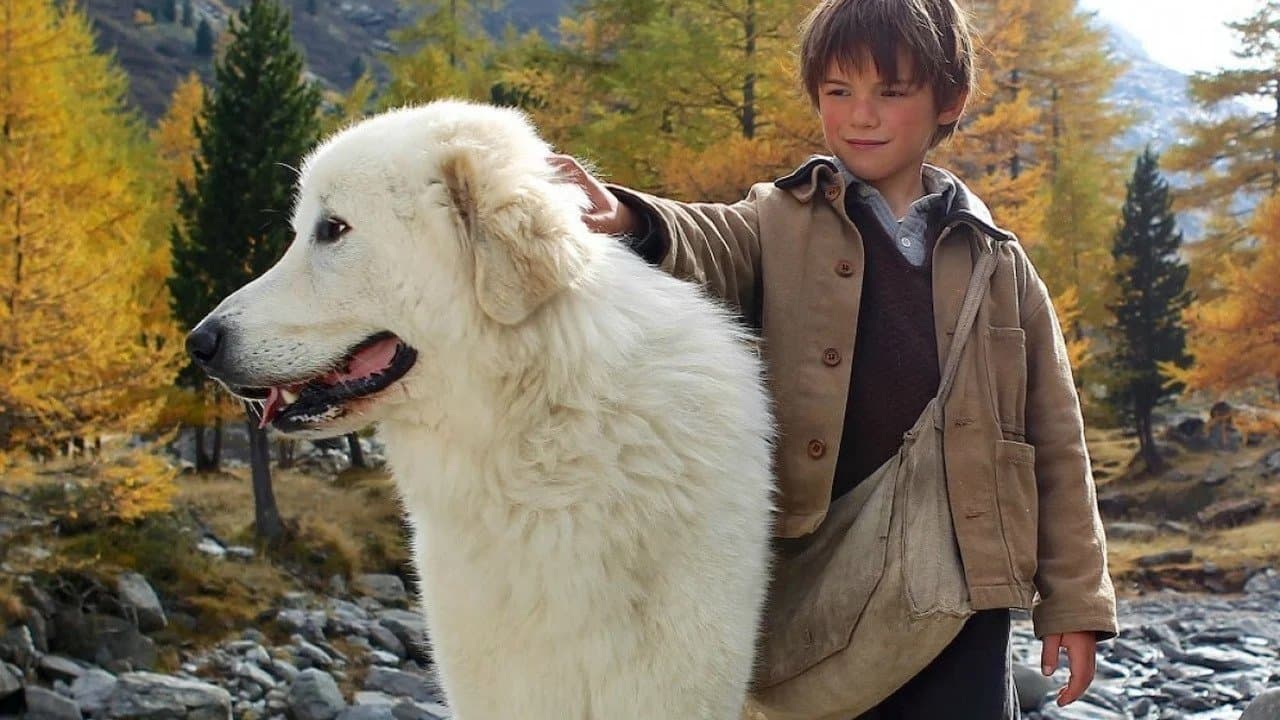
The story of Belle and Sebastian
Belle and Sebastian follows a resourceful young boy named Sebastian who lives in the remote, snow-covered peaks of the Alps during the Second World War. The region is gripped by fear—villagers blame a wild, enormous mountain dog for the recent deaths of their livestock, and they've labeled the creature "the beast." But Sebastian sees something different. He befriends the dog, whom he names Belle, and discovers that beneath her fearsome reputation lies a gentle, intelligent companion. What unfolds is a quietly powerful story about connection, courage, and the bond between a child and an animal—set against the backdrop of one of history's darkest periods. The film captures something rare: a child's perspective on wartime without dwelling on the violence itself, instead focusing on resilience, friendship, and the small acts of kindness that matter most.
Behind the making of Belle and Sebastian
Director Nicolas Vanier brought this 2013 film to life with a production that spanned multiple French production houses, including Gaumont, Radar Films, and Epithète Films, with support from regional cultural institutions across Auvergne-Rhône-Alpes. The film was adapted from Cécile Aubry's 1966 novel "Belle et Sébastien," which itself had been adapted into a French television series in 1965—so by the time Vanier's film arrived, the characters were already embedded in French popular culture. That legacy didn't weigh the film down; instead, it gave the production a clear emotional north star. The 104-minute runtime allows the story to breathe, giving both the Alpine setting and the relationship between boy and dog the space they deserve. What's striking is that this wasn't meant to be a standalone venture—the film's success led to two sequels: "Belle & Sebastian: The Adventure Continues" in 2015 and "Friends for Life" in 2018, forming a complete trilogy that deepened the mythology around these characters. The film earned solid audience appreciation, with an IMDb rating of 6.9/10, reflecting its appeal to families and adventure enthusiasts alike.
What makes Belle and Sebastian stand out
There's something about films set in the Alps that invite a particular kind of magic—think of the enduring charm of "Heidi"—and Belle and Sebastian taps into that same well of wonder. What I keep coming back to is how the film manages to be a children's adventure without ever feeling condescending or overly sentimental. The performances ground the story in genuine emotion; the child actor carries the weight of Sebastian's isolation and gradual transformation with a maturity that feels earned rather than precocious. The cinematography doesn't just use the snowy landscape as a backdrop—it's a character itself, beautiful but unforgiving, mirroring the harshness of wartime and the warmth of the bond that forms between boy and dog. Critics and audiences have responded to the film's refusal to shy away from the wartime setting while keeping the focus on human (and canine) connection rather than conflict. It's a film that works for kids because it respects their intelligence, and it works for adults because it taps into something universal about loneliness and belonging. The central relationship never feels manipulative—which is no small feat in a story built entirely on the appeal of a child and an animal.
Where to stream Belle and Sebastian online
Finding Belle and Sebastian is straightforward—the film is currently available on major OTT services, and you can check the "Where to Watch" widget at the top of this page to see exactly which platforms carry it in your region right now. Streaming availability shifts regularly, so Movie OTT keeps a live tracker of where this title and thousands of others are streaming. Whether you're planning a family movie night or revisiting the film after years, you'll want to confirm availability before settling in—especially if you're hoping to follow up with the sequels, which may be on different platforms. The good news is that Belle and Sebastian has maintained strong availability across the streaming landscape, making it accessible to the broad audience it deserves.
Frequently asked questions
Q: Is Belle and Sebastian based on a true story?
No, it's based on Cécile Aubry's 1966 French novel of the same name, which was itself adapted into a television series in 1965. While the story is fictional, the wartime Alpine setting and themes of resilience during WWII give it a grounded, historically aware quality.
Q: Who directed Belle and Sebastian?
Nicolas Vanier directed this 2013 film. He brought a visual sensitivity to the material, using the snowy Alps as both setting and emotional landscape throughout the 104-minute runtime.
Q: Is there a sequel to Belle and Sebastian?
Yes—actually two of them. "Belle & Sebastian: The Adventure Continues" arrived in 2015, followed by "Belle and Sebastien: Friends for Life" in 2018, forming a complete trilogy that continues the adventures of the boy and his dog.
Q: What age group is Belle and Sebastian suitable for?
The film is designed as a family adventure and works well for children and adults alike. Its wartime setting is handled thoughtfully without graphic violence, focusing instead on the emotional and emotional resilience of its young protagonist.
Q: Where can I watch Belle and Sebastian right now?
Check the "Where to Watch" widget on this page—it shows all current streaming platforms carrying the title in your region, as availability changes frequently across different services.
Final thoughts on Belle and Sebastian
Belle and Sebastian isn't trying to reinvent the adventure film or say something shocking about childhood or war. Instead, it does something quieter and more enduring: it tells a story about two beings finding each other when they're both alone. The film trusts its audience—young and old—to understand that sometimes the most profound adventures aren't about grand gestures but about showing up, being brave enough to befriend the thing everyone else fears, and discovering that kindness works even when the world is falling apart. It's exactly the kind of film that deserves a second viewing, or a third.