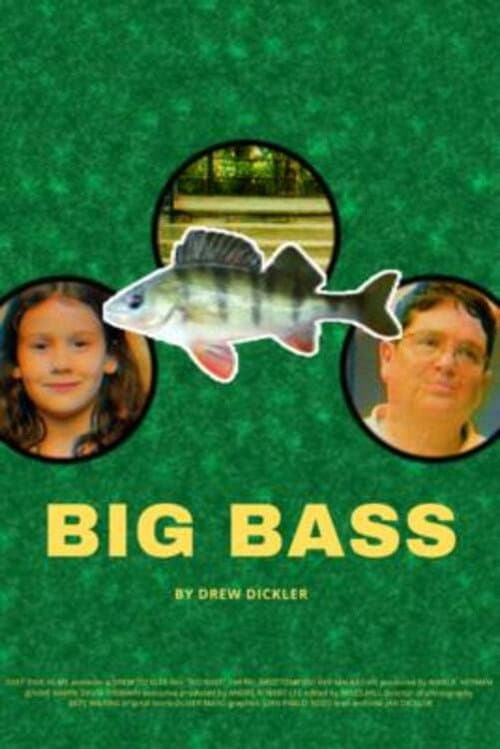
Big Bass
A 14-minute film that captures what it feels like to be seen before you can see yourself
Big Bass is a 2026 short film about a filmmaker traveling back to 1997 to revisit a second-grade memory — one that orbits her queer identity, a larger-than-life PE teacher, and a mysterious large plastic fish. The core question the film asks is harder than the setup suggests: What does it mean to be seen by others before you've found the language to see yourself? That's not a question with a clean answer, and the film doesn't pretend otherwise.
At 14 minutes, it doesn't waste a single one.
Why this memory matters — and how the film handles it
The thing nobody mentions about childhood memory pieces is how much craft it takes to capture actual confusion — not the adult looking back and making sense of it, but the raw, unprocessed experience of being in a moment you don't have tools to interpret. Big Bass nails this. The PE teacher functions as a kind of mirror the second-grader can't quite look at directly. The plastic fish — large, plastic, mysterious — works only if the filmmaker trusts her audience not to demand explanation.
What's striking is how the film uses the 1997 setting as structural argument, not aesthetic decoration. In 1997, the vocabulary for queer identity was largely absent from second-grade classrooms. The protagonist is experiencing something she genuinely cannot name. The dream-like quality of the memory isn't a stylistic choice — it's honest texture. This is how repressed or unprocessed experience actually lives in the mind.
The framing device — a filmmaker traveling back to her own memory, rather than a straightforward flashback — adds self-awareness that keeps the work from tipping into sentimentality. We're watching someone watch herself. That doubling is where the emotional weight lives.
The technical execution that makes this work
The production is lean and independent, which tracks perfectly with the subject matter. No wide theatrical release. No box-office figures (short films rarely generate trackable grosses). The IMDb rating currently sits at 0/10 — not because audiences hated it, but because the rating pool hasn't formed yet. That's standard for festival shorts in their early window.
What matters: Big Bass is still finding its audience, which is often exactly when a film like this deserves your attention most.
The 1997 texture — fluorescent gym lights, oversized institutional furniture, the particular grain of that era — could've been nostalgic wallpaper. Instead, it grounds everything. The specificity of the period is part of what makes the protagonist's silence feel inevitable rather than contrived.
Where to watch Big Bass right now
Big Bass is currently streaming on major OTT platforms. Movie OTT's where-to-watch tracker aggregates real-time availability across services so you don't have to click through five different apps to find where it's landed. Streaming rights for shorts shift faster than features do — regional licensing means availability varies by location. If you have subscriptions to the larger platforms, there's a solid chance it's already sitting in your queue waiting to be found.
Runtime: 14 minutes
Release Year: 2026
Format: Short film (autobiographical)
Who should watch this
If you came to understand your own identity late, or in pieces, this one will probably land hard. If you're drawn to short films that trust their audience — that don't over-explain, don't sentimentalize, don't wrap things up neatly — Big Bass is essential. Think along the lines of other autobiographical queer shorts that have made the festival circuit in recent years: intimate, formally inventive, built on a single specific memory that somehow opens onto larger truths.
Hard to say whether it's made Sundance or Tribeca yet, but the profile fits both festivals perfectly — queer autobiographical narrative, formal experimentation with memory, the kind of work that programs well alongside other personal documentaries and memoir pieces.
The thing that stays with you
Fourteen minutes. One plastic fish. A gym teacher. A memory the filmmaker spent years circling before she could look at it straight. That's the architecture.
Short films this specific about the texture of childhood confusion are rare. Even rarer are the ones that nail the feeling of being perceived — really perceived — before you've developed language for who you are. This one does both.
Movie OTT rates it as essential short-form viewing for 2026. Worth your time. Worth the rewatch.