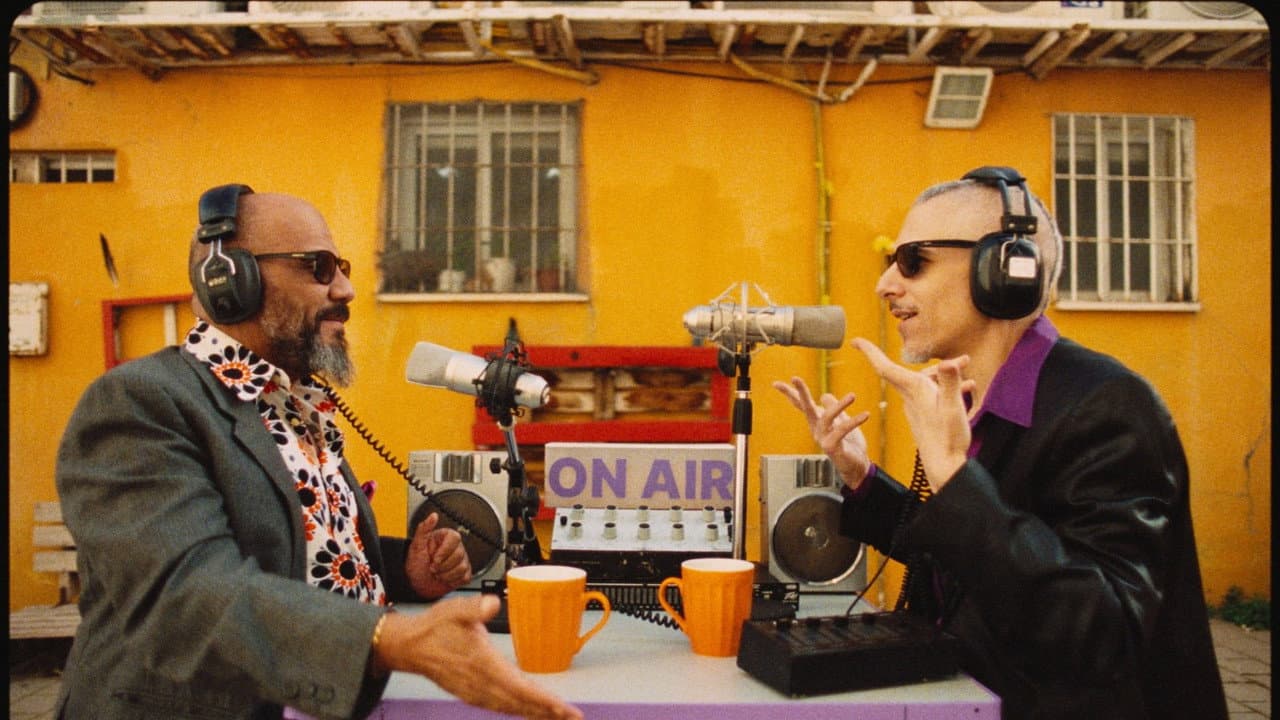
What Black Gold: The Story of Israeli Hip Hop is about
Black Gold: The Story of Israeli Hip Hop is a 2026 documentary that charts the rise of hip hop culture in Israel — not as a music-industry success story, but as something far more personal and politically charged. The film's logline, "Hip-Hop in the Holy Tongue," positions this as a story about what happens when a global art form collides with one of the world's oldest languages, and the people caught in that collision. At 81 minutes, it doesn't overstay its welcome. The documentary frames hip hop not as entertainment but as a survival language — a way for young Israelis to articulate experiences that mainstream culture either couldn't hold or didn't want to. Identity, displacement, belonging, and the question of who gets to speak in a society defined by contested narratives. That's the territory this film is working in.
How Black Gold: The Story of Israeli Hip Hop came together
The production behind Black Gold: The Story of Israeli Hip Hop is a coalition of Israeli cultural institutions that signals the film was made with serious intent and institutional backing. The producers include Green Productions alongside the Rabinovich Film Fund Cinema Project, The New Fund for Cinema and TV, Mifal HaPais, and The Kadar Foundation for the Advancement of Culture, Art and Science — a lineup that reads less like a commercial venture and more like a cultural preservation effort. That kind of multi-fund support is common in Israeli documentary filmmaking, where state-adjacent arts bodies help bring stories to screen that the market alone wouldn't greenlight.
The film had its Israeli festival premiere at Docaviv, screening at the Tel Aviv Cinematheque in June 2026. Docaviv is Israel's premier documentary festival, and a slot there carries real weight — it's where the country's most significant non-fiction work tends to surface first. The Cinematheque setting also matters: this isn't a film that premiered at a commercial multiplex. It was placed deliberately within a context that values documentary as art and argument.
Beyond the Docaviv listing and a catalog entry on MUBI, widely documented details about the director and specific interview subjects haven't surfaced yet in major English-language sources — which is honestly not unusual for a festival documentary in its early months of circulation. Hard to say if that changes once international distribution picks up. The film is also listed on Letterboxd, where fans are already tracking it, though formal critical aggregator scores from Rotten Tomatoes or Metacritic aren't yet published. The IMDb page exists but carries no rating as of this writing.
Why Black Gold: The Story of Israeli Hip Hop stands out among music documentaries
What's striking is how the film's framing resists the standard music-documentary template. Most genre entries follow a familiar arc: humble origins, breakthrough moment, cultural impact, legacy. Black Gold: The Story of Israeli Hip Hop appears to be doing something different — centering language itself as the protagonist. Hebrew hip hop isn't just a regional curiosity; it's a genuinely strange and generative phenomenon, because Hebrew is a language that was revived from near-extinction in the 20th century and then handed to a generation that had to figure out how to make it feel alive, urgent, and street-level.
That tension — between a language loaded with religious and nationalist weight and a musical form born from Black American resistance culture — is the kind of contradiction that makes for compelling documentary material. The film's MUBI logline describes it as "raw and heartbreaking," which suggests the filmmakers aren't softening that contradiction into a feel-good story about cultural fusion. You get the sense, from the framing, that the artists featured paid real costs to do this work.
Honestly, the 81-minute runtime feels right for this material. Long enough to develop its subjects with care, short enough to stay disciplined. Music documentaries that run past 100 minutes often lose the thread; this one seems to know what it's about and when to stop. Movie OTT tracks titles across the documentary and music genre space, and the combination of festival pedigree and institutional production backing here puts this film in a category of documentary work that tends to find its audience — even if slowly.
Where to stream Black Gold: The Story of Israeli Hip Hop online
Black Gold: The Story of Israeli Hip Hop is currently available on major OTT services — check the Where-to-Watch widget at the top of this page for the most current platform lineup, since streaming availability shifts faster than any editorial can keep pace with. The film was listed on MUBI at one point, though availability there has been noted as inactive. Movie OTT aggregates real-time streaming data across platforms so you don't have to check each service individually. If you're outside Israel and wondering whether this has landed on a service you already subscribe to, that widget is your fastest answer. Movie OTT monitors catalog changes across major streaming platforms and updates listings when titles go live or rotate off — worth bookmarking if you're following this film's distribution rollout.
Frequently asked questions
Q: Where can I watch Black Gold: The Story of Israeli Hip Hop?
The film is currently available on major OTT services. Check the Where-to-Watch widget on this page at movieott.com for the most up-to-date streaming platform information, as availability can change.
Q: When was Black Gold: The Story of Israeli Hip Hop released?
Black Gold: The Story of Israeli Hip Hop is a 2026 documentary. It had its Israeli festival premiere at Docaviv, screening at the Tel Aviv Cinematheque in June 2026.
Q: How long is Black Gold: The Story of Israeli Hip Hop?
The film runs 81 minutes — a tight, focused runtime typical of festival documentaries that prioritize argument over spectacle.
Q: Who produced Black Gold: The Story of Israeli Hip Hop?
The film was produced by Green Productions in association with several Israeli cultural funding bodies, including the Rabinovich Film Fund Cinema Project, The New Fund for Cinema and TV, Mifal HaPais, and The Kadar Foundation for the Advancement of Culture, Art and Science.
Q: Is Black Gold: The Story of Israeli Hip Hop based on a true story?
Yes — it's a documentary, so it's grounded entirely in real events and real people. The film traces the actual history of hip hop in Israel, told through the experiences of artists who built the scene.
Who should watch Black Gold: The Story of Israeli Hip Hop
If you care about music as a political act — not just a cultural product — Black Gold: The Story of Israeli Hip Hop is worth your 81 minutes. It's made for viewers who understand that a song can be an argument, that a language carries history in its bones, and that belonging is never as simple as geography. Fans of music documentaries that go beyond the backstage pass will find something here that lingers. And for anyone curious about Israeli culture beyond the headlines, this is a rare, ground-level view. Movie OTT will keep its streaming availability updated as the film's distribution expands.


![G-DRAGON IN CINEMA [Übermensch]](https://storage.googleapis.com/movieott-media/movies/g-dragon-in-cinema-bermensch-1478082/poster-portrait.webp)
