Black Men in Uniform
Directed by: Emunah La-Paz | Runtime: 60 minutes | Available on: Plex (free with ads), Eventive, select streaming platforms | Genre: Documentary, History
Start here: What this documentary actually does
Black Men in Uniform opens with Pata Seca—a real man, born in 1828, whose scarred back and haunted eyes carry the weight of something almost too brutal to describe plainly. He was forced to father more than 200 children to sustain his enslaver's plantation. That image doesn't let go. It's the kind of opening that signals this documentary isn't interested in comfortable distance or sanitized history lessons.
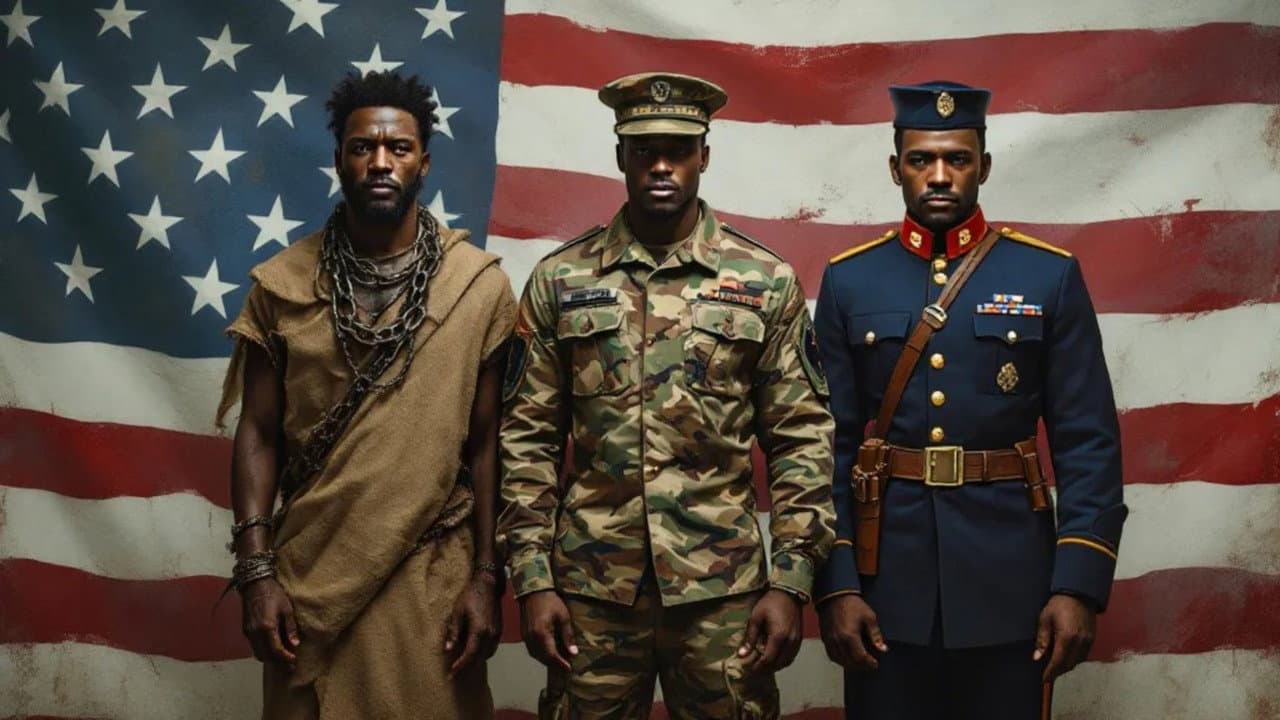
From there, the film traces a through-line across more than a century — from enslaved men conscripted into someone else's idea of freedom, through the Civil War, World War II, and all the way to Vietnam — asking a question that's harder than it sounds: what does it mean to fight for a country that doesn't fully recognize your humanity?
The documentary's tagline doubles as a thesis: "From The Plantation To The Battle Field, History Can't Be Erased." It's not metaphorical. The film means it.
Who made it, and where to actually find it
Written and directed by Emunah La-Paz, with production by Daniel Hubbard under Little Ant Productions LLC, the film draws on testimony from Vicki Hubbard, Douglas Lee Williams, Sue Chang Williams, and Yla Eason — each grounding the historical sweep in something immediate and personal. It's not a household name film, and it didn't get a traditional wide theatrical release. Instead, it's found its audience through curated channels: Eventive's festival programming, Plex's free-with-ads catalog, and educational streaming contexts where serious short-form nonfiction actually gets watched (rather than scrolled past).
Here's the thing about documentary shorts that skip the awards circuit — they often have more staying power than prestige dramas because they're built for repeat viewing and classroom use, not one-time festival glory.
You can track current availability across platforms using Movie OTT's where-to-watch aggregator, which updates as titles shift between free and subscription tiers. Documentary shorts move around a lot, so checking before you sit down is worth thirty seconds.
Why it stands apart from other military history documentaries
What's striking is how the film refuses to treat Black military service as a footnote that finally deserves recognition. That framing — the "better late than never" narrative — can accidentally reinforce the exact hierarchies it's trying to challenge. Black Men in Uniform takes a different approach entirely.
It weaves authentic narratives from the 1800s alongside original images and footage, and it explicitly connects the historical record to Hollywood representation. The film asks: how has the image of Black men in uniform been shaped, distorted, or erased by the culture industries? That's a question most military documentaries never touch.
The Pata Seca sequence is the clearest example of this method. Rather than simply stating that slavery was brutal — a statement that can slide past you — the documentary grounds that brutality in a specific person, a specific year, a specific economic practice: forced breeding. Then it traces how the men who survived that system, or descended from it, were later asked to pick up rifles for the same nation. That juxtaposition doesn't require voiceover. It just sits there.
The documentary doesn't perform outrage. It presents evidence and trusts you. That restraint is rarer than it should be, especially now (when nearly every documentary feels compelled to tell you what to think).
What actually happens in the 60 minutes
The film isn't structured like a traditional talking-heads documentary. Instead, it moves between historical periods — starting with the antebellum era and Pata Seca's story — then forward through the Civil War, where Black men fought for a country that hadn't yet legally recognized them as human. The arc continues through subsequent military conflicts, pausing to examine how Hollywood has represented (or failed to represent) these stories on screen.
It's a specific argument about the relationship between historical erasure and cultural representation. The documentary suggests that you can't separate the battlefield from the film industry — that both institutions shaped how Black men in uniform are remembered, if they're remembered at all.
Honestly, I keep coming back to that opening. Most documentaries bury their hardest material. This one leads with it. That choice tells you everything about what the filmmakers believe you can handle.
Who should actually watch this
Anyone with a genuine stake in African American history, military history, or how stories get told — and which ones don't — owes this their time. It's not comfortable. It's not supposed to be. But it's rigorous, specific, and honest in a way that most nonfiction filmmaking isn't.
Students and educators will find it invaluable for classroom discussion (the 60-minute length fits a single class period). If you've watched documentaries like 13th or The Two Mr. Clintons, you'll recognize the same commitment to historical specificity and visual argument. This one operates at that level.
If you want to pair it with similar titles, Movie OTT's documentary section has curated collections of African American history and military nonfiction that work well as a double feature or week-long viewing series.
How to watch it right now
Plex: Free with ads. This is the lowest-friction option if you don't have a streaming subscription.
Eventive: Festival and curated screening contexts. Check if your local library or school has access (many do).
Availability elsewhere: Shifts regularly. The where-to-watch widget or Movie OTT's current listings will show you what's active in your region this week.
60 minutes is short enough to watch in one sitting, long enough that it doesn't feel rushed. Don't do it while scrolling. This documentary is built for attention.
FAQ
Q: Is Black Men in Uniform based on a true story?
Yes. The documentary uses real historical figures and events — Pata Seca is documented history, as is the forced breeding practice and the subsequent military service of Black men from the Civil War through Vietnam. The film incorporates authentic narratives and original imagery from the period.
Q: Who directed it?
Emunah La-Paz wrote and directed the film, with production by Daniel Hubbard.
Q: How long is it?
60 minutes. Long enough to develop its argument with depth. Short enough for a single viewing session.
Q: Where can I watch it?
Plex (free with ads) and Eventive are the primary current platforms. Check Movie OTT for the most up-to-date listing of where it's streaming in your region.