







The story of Boiling Point: One night, everything falls apart
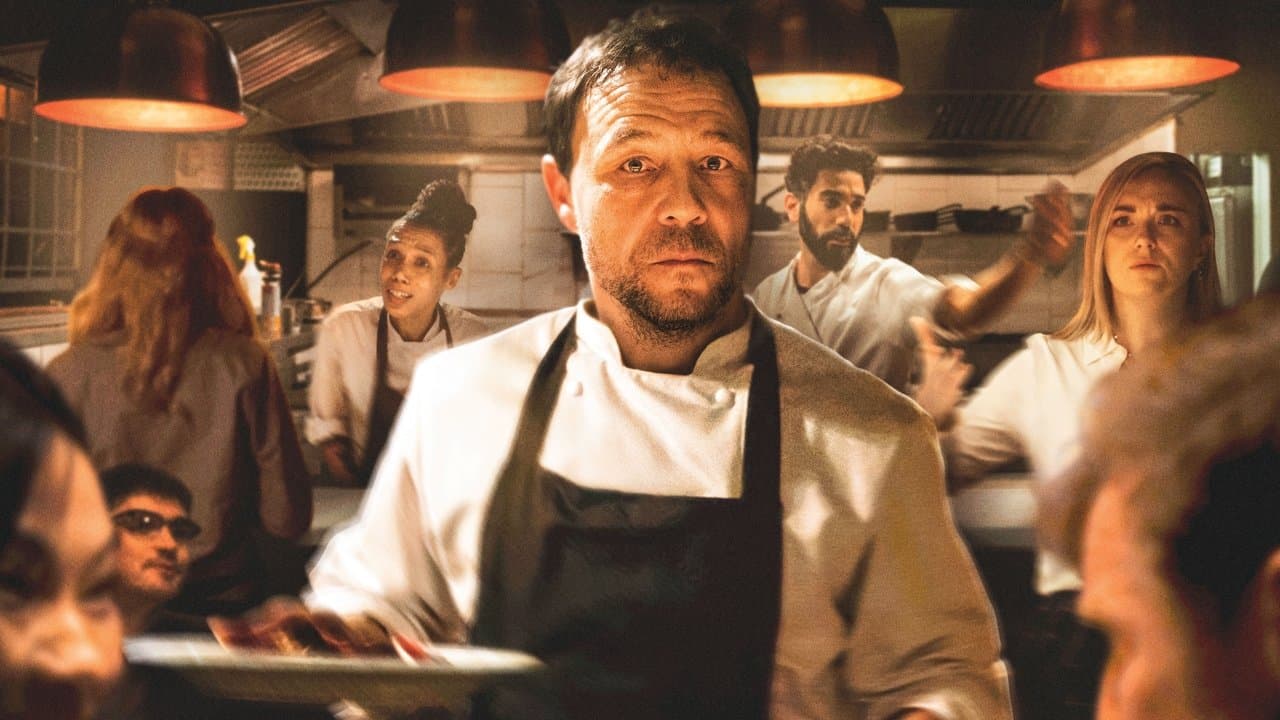
Boiling Point follows Andy Jones, a head chef at a high-end London restaurant, as he navigates a perfect storm of crises—professional, personal, and psychological—during a single evening service. The film opens on what seems like a routine night, but Andy's already dealing with back-of-house politics, staff shortages, a food critic lurking somewhere in the dining room, and demons of his own that won't stay buried. There's no room for mistakes, as the tagline warns. And yet, mistakes pile up. What makes the premise so gripping isn't that it's unfamiliar—anyone who's worked in hospitality knows this feeling—but that director Philip Barantini refuses to look away from it.
The narrative unfolds in real time, immersing you in the pressure cooker of a professional kitchen where one burned dish or one moment of lost composure can trigger a cascade of failures. Andy's juggling staff egos, a difficult service, financial worries, and his own fragile mental state. His team—including a waitress (Vinette Robinson) and bartender (Ray Panthaki) who've got their own struggles—are depending on him to hold it together. But holding together is getting harder. Much harder.
Behind the making of Boiling Point: From short film to BAFTA contender
Boiling Point began as a 2019 short film, which director Philip Barantini and co-writer James Cummings expanded into this feature-length thriller. The production brought together an impressive roster of companies—Ascendant Films, Burton Fox Films, Three Little Birds Pictures, Matriarch Productions, and several others—to realize a deceptively simple but technically demanding concept: a narrative told in what appears to be a single, unbroken shot.
Stephen Graham anchors the ensemble with a performance that's earned him widespread recognition across his career in productions like Save Me and beyond. The supporting cast—Vinette Robinson, Ray Panthaki, Hannah Walters, and Jason Flemyng among them—brings authenticity and depth to roles that could easily feel like kitchen stereotypes in less capable hands. The film earned an R rating, which isn't surprising given the language and emotional intensity that comes with the territory.
The film's critical and awards recognition has been substantial. It holds a 99% Fresh rating on Rotten Tomatoes, a 73 Metascore, and boasts an impressive 7.5/10 on IMDb from nearly 50,000 votes. More tellingly, Boiling Point received four BAFTA nominations and has accumulated nine wins and 16 nominations across major awards bodies—recognition that speaks to both its craft and its emotional impact. For a film about the chaos of a restaurant kitchen, it's achieved something rare: mainstream critical validation without sacrificing its raw, unglamorous vision.
What makes Boiling Point stand out: The one-shot technique and what it actually does
Here's the thing about the one-shot gimmick—and I say gimmick deliberately, because it could be just that in weaker hands. But Barantini doesn't use it as a trick. He uses it as a philosophy. By refusing to cut, refusing to give you a moment of relief, the film forces you into Andy's headspace in a way traditional editing simply can't achieve. You're not watching a story unfold; you're experiencing a collapse in real time. One viewer noted that the technique brings you closer to the characters, making you feel like part of the restaurant itself—stressed, overwhelmed, implicated.
What's striking is how the film captures the specific texture of professional kitchens: the hierarchy, the precision required, the way a single mistake cascades through the entire operation. It's not just about cooking. It's about the fragile psychology of people working under extreme pressure, the way addiction and mental health struggles don't take a night off, the way Christmas (when this service takes place) can feel like a deadline nobody asked for. The performances—especially Graham's—feel lived-in rather than acted. You see his face tighten, his patience fray, his composure crack. It's exhausting to watch. That's the whole point.
The film also doesn't shy away from depicting depression, alcoholism, and the particular loneliness of being responsible for other people's livelihoods. These aren't subplots; they're the engine of the entire narrative. Critics and audiences have responded to this unflinching approach, recognizing that Boiling Point treats its subject matter with the seriousness it deserves. The Rotten Tomatoes consensus reflects genuine appreciation for a film that refuses easy answers or cathartic resolutions.
Where to stream Boiling Point online
Boiling Point is available on major OTT streaming platforms, and Movie OTT tracks where the film is currently streaming so you can watch it immediately. The "Where to Watch" widget at the top of this page will show you which services carry it in your region—availability changes regularly, so checking there before you sit down is worth a minute of your time. Given the film's intensity and the immersive nature of its one-shot approach, watching on a larger screen with good audio will genuinely enhance the experience. You'll want the sound design of the kitchen, the clatter and hum, to feel as present as possible.
Frequently asked questions
Q: Is Boiling Point based on a true story?
No, it's an original screenplay by Philip Barantini and James Cummings, though it draws on authentic details of restaurant culture and the pressures chefs face daily. The specificity of the details makes it feel lived-in even though the story itself is fictional.
Q: Who directed Boiling Point?
Philip Barantini wrote and directed the film, expanding it from a 2019 short film he also made. This is a distinctly personal vision—you can feel his understanding of kitchen dynamics throughout.
Q: Is the entire film really one continuous shot?
Essentially, yes—it's designed to feel like a single take, which is part of what makes it so viscerally exhausting to watch. The technical achievement is real, even if there may be imperceptible cuts (filmmakers rarely claim true one-shots anymore).
Q: What's the film's rating, and is it appropriate for all ages?
Boiling Point is rated R for language and some drug use. The language in particular reflects authentic kitchen culture—people don't speak politely under this kind of pressure—so the rating is well-earned.
Q: How long is Boiling Point?
The film runs 92 minutes, which is lean and purposeful. There's no padding; every minute serves the mounting tension.
Final thoughts on Boiling Point: Who should watch this film
If you've ever worked in hospitality, you'll recognize yourself in Boiling Point's chaos. If you haven't, you'll gain a visceral understanding of why kitchen workers often seem wound tight. This isn't comfort viewing. It's not meant to be. But it's also not gratuitously bleak—it's honest. The film respects its characters enough to show them struggling, failing, and still showing up. That's something. For anyone interested in character-driven drama that uses formal innovation (the one-shot) to deepen emotional truth rather than distract from it, Boiling Point is essential. It's a film that trusts its audience and its cast, and that trust pays off.