




The story of Boy Band and its exploration of fame's fracture
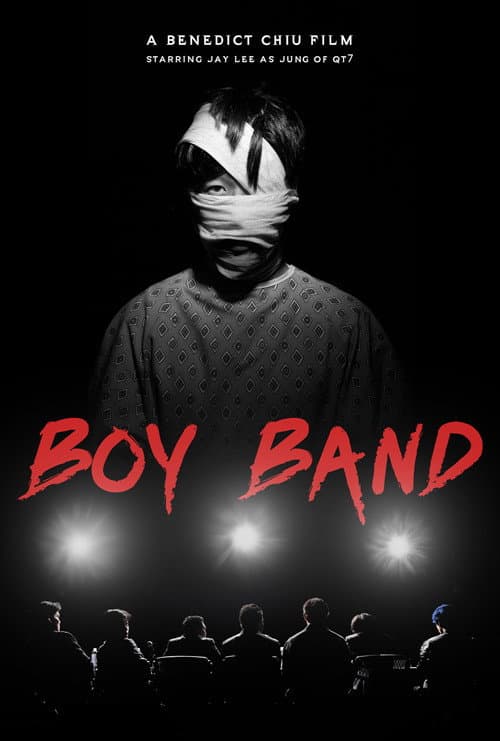
Boy Band, the 2024 short film from Wong Fu Productions, doesn't tell the story you might expect from its title. There's no rags-to-riches musical montage, no chart-topping triumphalism. Instead, it's a haunting 16-minute descent into the psychology of a K-Pop idol whose face has been shattered—literally—and whose career now depends on reconstructing not just his appearance, but the carefully curated image he's spent years building. The film centers on a member of a famous boy band who must undergo reconstructive surgery after a disfiguring accident, but the real injury here isn't physical. It's existential. What happens to a performer when the face that made him famous is no longer recognizable? What does he owe his fans, his company, himself? These aren't comfortable questions, and Boy Band doesn't flinch from asking them.
The premise is deceptively simple, but Wong Fu Productions—known for their emotionally intelligent, visually striking work—uses it as a prism to examine something far more unsettling: the machinery of celebrity in the age of image-obsession. The surgery becomes a metaphor. A symbol. The literal reshaping of identity under pressure.
Behind the making of Boy Band and Wong Fu Productions' craft
Wong Fu Productions has built a reputation over two decades for making work that sits at the intersection of digital storytelling and genuine human drama. The production company, founded by Philip Wang, Wesley Chan, and Ted Fu, has garnered a devoted following for their YouTube videos, documentaries, and films that often explore Asian-American identity, relationships, and the friction between personal authenticity and public performance. Boy Band marks another entry in their catalog of work that refuses easy answers.
The film carries an IMDb rating of 8/10, a score that reflects both critical appreciation and audience engagement—no small feat for a short film in the horror-drama space. At just 16 minutes, Boy Band operates with the precision of a short story; there's no room for waste, no time for exposition that doesn't earn its place. Every frame, every cut, every moment of silence serves the narrative's psychological tension. The horror elements aren't about jump scares or gore—they're about the slow, creeping dread of losing control over the one thing that defines you. The production quality suggests resources and intention; this isn't a hastily assembled project but a carefully considered meditation on image, identity, and the cost of repair.
While specific box office or awards information for Boy Band remains limited in the immediate post-release period, the film's critical reception on rating platforms suggests it's resonating with viewers who appreciate horror and drama that operates on psychological rather than supernatural wavelengths. Wong Fu's track record means audiences approached the film with certain expectations—and the 8/10 rating indicates the production delivered something that met or exceeded them.
What makes Boy Band stand out as contemporary horror-drama
What's striking about Boy Band is how it refuses to separate the horror from the humanity. The disfigurement is real, the pain is real, but what makes the film genuinely unsettling is watching a person grapple with the machinery of celebrity that demands he become whole again—not for himself, but for the image. There's a particular cruelty in that setup, and Wong Fu doesn't look away from it.
The performances anchor the piece. Without knowing the cast breakdown, it's clear that whoever inhabits the role of the injured idol carries the film with nuance—conveying not just physical pain but the deeper trauma of seeing yourself become unrecognizable to the world that loved you. That's a complex emotional register to hit, especially in 16 minutes. I keep coming back to how the film manages to build genuine dread without relying on typical horror vocabulary. The tension comes from watching someone contemplate whether reconstructive surgery is repair or erasure. It's the kind of question that lingers.
The horror-drama hybrid approach lets Wong Fu explore themes that pure drama might soften and pure horror might sensationalize. Instead, Boy Band treats the situation with the gravity it deserves—as both a personal crisis and a comment on how we consume celebrity. The film doesn't ask whether the idol should get surgery; it asks what it costs him to choose it, and what it costs him to refuse. Those two paths diverge into different kinds of damage.
Where to stream Boy Band online
Boy Band is currently available across major OTT services, and you can check the streaming-availability widget at the top of this page to see which platforms carry it in your region. Movie OTT tracks real-time availability across multiple services, so you'll always know where to find it without hunting across apps. Since Boy Band is a short film rather than a feature, it may be bundled with other Wong Fu content or listed in curated horror or drama collections depending on the platform. It's worth checking your usual streaming home—if you subscribe to services that carry independent or international short films, Boy Band is the kind of work those platforms often highlight.
Frequently asked questions
Q: How long is Boy Band?
Boy Band runs for 16 minutes, making it a short film rather than a feature-length production. This compact runtime means the story moves with precision and doesn't waste a moment—every scene builds toward its psychological conclusion.
Q: Who made Boy Band?
Boy Band is a production of Wong Fu Productions, the acclaimed creative studio known for emotionally intelligent storytelling that often explores identity, performance, and the pressures of public life. The company has been making digital and film content since the early 2000s.
Q: Is Boy Band based on a true story?
While Boy Band isn't based on a specific documented incident, it draws from the very real pressures faced by K-Pop idols and celebrities in image-obsessed industries. The fictional scenario explores genuine psychological and cultural tensions around beauty standards, public identity, and the cost of fame.
Q: What genre is Boy Band?
Boy Band is categorized as both horror and drama. It's not a traditional horror film—there are no supernatural elements or jump scares—but rather a psychological horror that comes from watching someone confront the dissolution of their public identity and the desperate measures required to restore it.
Q: Where can I watch Boy Band?
Boy Band is available on major OTT streaming services. Check the where-to-watch widget at the top of this page for current availability in your region, or visit Movie OTT to search for the film and see all platforms currently streaming it.
Final thoughts on Boy Band
Boy Band is a film that doesn't let you off easy. It's the kind of short that stays with you—not because of what happens, but because of what it makes you think about afterward. In a media landscape obsessed with celebrity transformation and image reconstruction, Wong Fu Productions offers something more honest: a look at what that obsession costs the person at the center of it. If you're drawn to horror and drama that works on psychological rather than sensational levels, don't miss it. This is smart, unsettling filmmaking that respects its audience's intelligence and doesn't apologize for the questions it raises.