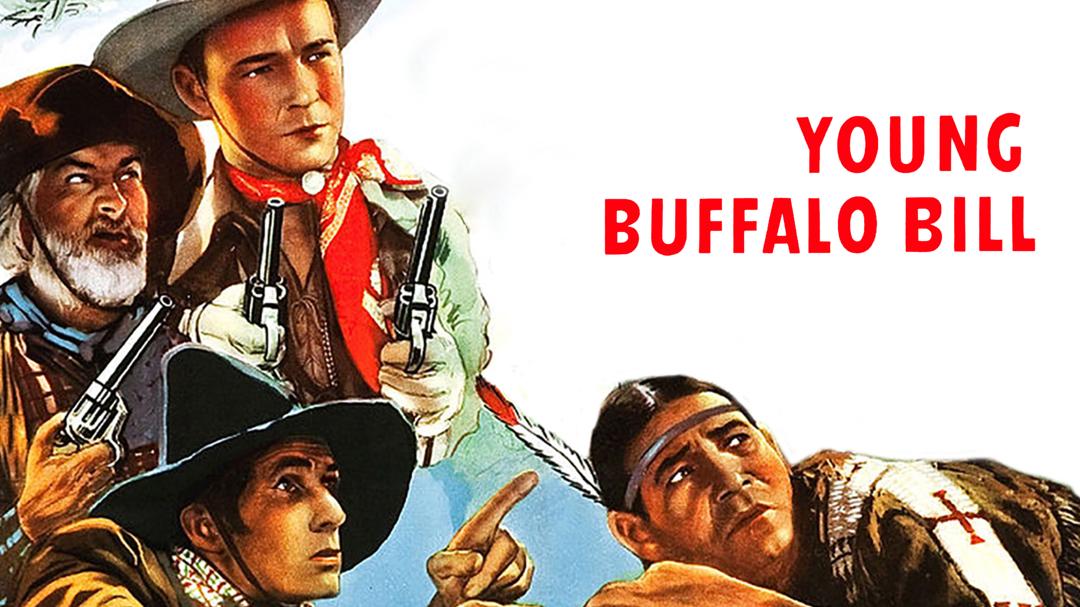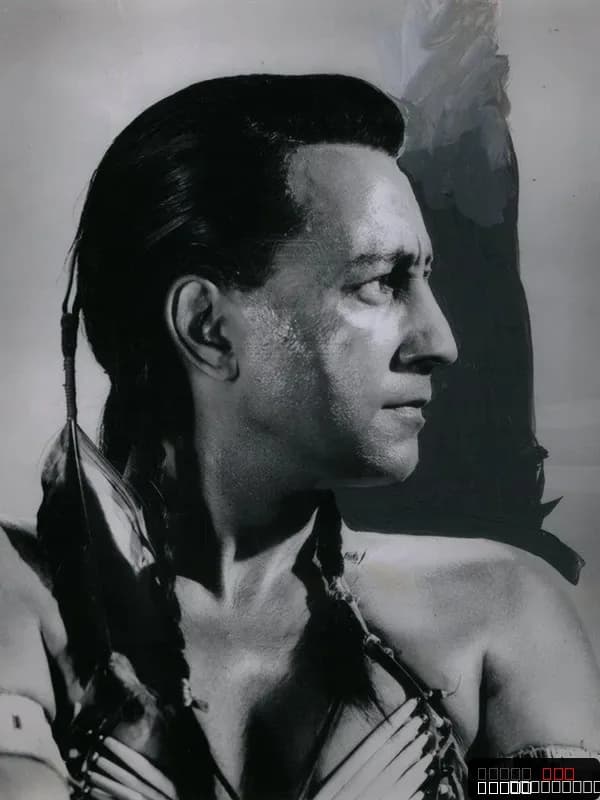
The story of Buffalo Bill in Tomahawk Territory
Buffalo Bill in Tomahawk Territory unfolds as a straightforward diplomatic Western—one where the hero doesn't arrive with six-guns blazing but with cattle and a peace offering. The federal government sends Buffalo Bill (Clayton Moore) to Dakota Territory with a herd and a mission: negotiate peaceful coexistence with Chief White Cloud (Rodd Redwing) and his Sioux tribe. It's a premise that, on paper, sounds refreshingly different from the typical cavalry-versus-Indians shoot-'em-up formula that dominated 1950s Westerns. What follows is a 66-minute journey across horseback, wagon trains, and open country where the real conflict isn't between good guys and bad guys—it's between two cultures trying to find common ground, or at least trying to avoid bloodshed. The film plays with the caravan concept, moving the action from settlement to settlement, punctuated by fistfights, narrow escapes, and the ever-present threat of misunderstanding spiraling into violence.
Behind the making of Buffalo Bill in Tomahawk Territory
Director Bernard B. Ray helmed this modest production in 1952, a year when Hollywood was still figuring out how to tell stories about the American frontier without defaulting to simplistic good-versus-evil narratives. Ray, who'd spent decades in B-picture and serial production, brought a utilitarian approach to the material—no wasted takes, no elaborate set pieces, just forward momentum. Clayton Moore, who'd become famous as The Lone Ranger on television by the mid-1950s, was still building his Western credentials when he took this role, and his presence lends the picture a certain earnestness that might otherwise feel quaint. The supporting cast included Native American actors and consultants like Chief Yowlachie and Chief Thundercloud, whose participation reflected a minor but real shift in 1950s casting—studios were beginning to cast actual Indigenous performers in Indigenous roles rather than relying solely on white actors in makeup (though the practice remained far from universal). The production itself was lean, the kind of picture that cost a fraction of a major studio's A-list Westerns yet aimed to entertain the Saturday matinee crowd. Box office data for such B-Westerns of this era is spotty, but the film found its audience in small-town theaters and drive-ins across America. No major awards came its way—that wasn't the expectation for a picture of this budget and scope—yet it represents a particular moment in American cinema when even low-budget Westerns carried the weight of Cold War diplomacy anxieties and post-war attempts at reconciliation.
What makes Buffalo Bill in Tomahawk Territory stand out
What's striking about this film, especially when viewed through the lens of 1952 Hollywood politics, is its willingness to treat Native Americans as negotiating partners rather than obstacles. Moore's Buffalo Bill doesn't arrive to "civilize" or "convert" the Sioux; he arrives to listen. That's a subtle but genuine departure from the genre's usual playbook, even if the film doesn't push the idea far enough to satisfy modern sensibilities. The action sequences—fistfights in saloons, pursuits on horseback, an arrow through a hat that doesn't quite kill the wearer—are shot with a brisk, unpretentious style that gets in and out without lingering on brutality. Ray's direction favors clarity over artistry; you always know where everyone is and what they're doing, which sounds like faint praise until you realize how many Westerns of this vintage muddy their action scenes with sloppy editing and unclear geography. Moore himself carries the picture with a straightforward decency that works well for a character tasked with bridge-building. He doesn't wink at the camera or play for laughs; he simply embodies a man caught between two worlds, trying to keep a peace offering from becoming a funeral pyre. The supporting players—Slim Andrews, Charles Harvey, and the ensemble of Sioux extras—fill out the world convincingly enough. What I keep coming back to is the film's central tension: it wants to be a story about understanding, yet it's still very much a product of its era's assumptions about who gets to speak and whose voice matters most in negotiating peace.
Where to stream Buffalo Bill in Tomahawk Territory online
If you're curious about this oddball slice of 1952 Americana, you can catch Buffalo Bill in Tomahawk Territory on Prime Video, where it's currently available for streaming. The platform's Western catalog has grown substantially in recent years, and titles like this one—overlooked B-pictures with genuine historical and cultural interest—have found new life in the streaming era. Movie OTT tracks where films like this one are currently available across all major platforms, so you can verify streaming status before you sit down. The picture's 66-minute runtime makes it an easy watch for a weeknight; it doesn't demand hours of commitment, which is part of its charm. The print quality on Prime is decent enough for a film of this age and budget, and you're not missing much by watching it on a television rather than a theatrical screen—this was always meant to be accessible, unpretentious entertainment.
Frequently asked questions
Q: Who directed Buffalo Bill in Tomahawk Territory?
Bernard B. Ray directed this 1952 Western. Ray was a prolific director of B-pictures and serials, known for his efficient, no-frills approach to filmmaking that prioritized moving the story forward over stylistic flourishes.
Q: What is the plot of Buffalo Bill in Tomahawk Territory?
The film follows Buffalo Bill as he's sent by the U.S. government to Dakota Territory with a cattle herd as a peace offering to Chief White Cloud and the Sioux tribe, navigating diplomatic tensions and physical dangers along the way.
Q: Who stars in Buffalo Bill in Tomahawk Territory?
Clayton Moore leads the cast as Buffalo Bill, with Rodd Redwing as Chief White Cloud and supporting performances from Slim Andrews, Charles Harvey, and Native American actors including Chief Yowlachie and Chief Thundercloud.
Q: Is Buffalo Bill in Tomahawk Territory based on a true story?
The film is a fictional narrative inspired by the historical figure of Buffalo Bill, though the specific plot about a cattle-driven peace mission is a Hollywood invention rather than documented history.
Q: How long is Buffalo Bill in Tomahawk Territory?
The film runs 66 minutes, making it a brisk, economical Western that doesn't overstay its welcome—typical of B-Westerns from this period.
Q: What streaming platform has Buffalo Bill in Tomahawk Territory?
You can watch Buffalo Bill in Tomahawk Territory on Prime Video, where it's currently available to stream.
Final thoughts on Buffalo Bill in Tomahawk Territory
Buffalo Bill in Tomahawk Territory won't blow your mind—it's got a 4.1 rating on IMDb for a reason, and it absolutely carries the limitations of its era and budget. But there's something to be said for a 1952 Western that tries, however imperfectly, to imagine peace instead of perpetual conflict. The film's willingness to center Native American characters and concerns, even within the constraints of a B-picture formula, marks it as a curiosity worth watching if you're interested in how Hollywood grappled with these themes in the post-war years. For genre enthusiasts and film historians, it's the kind of overlooked title that streaming platforms like Prime Video have made accessible again. Don't expect high art. Do expect honest entertainment and a window into how one corner of American cinema saw the frontier, diplomacy, and the possibility of coexistence.