What Carnival of Souls Is Really About
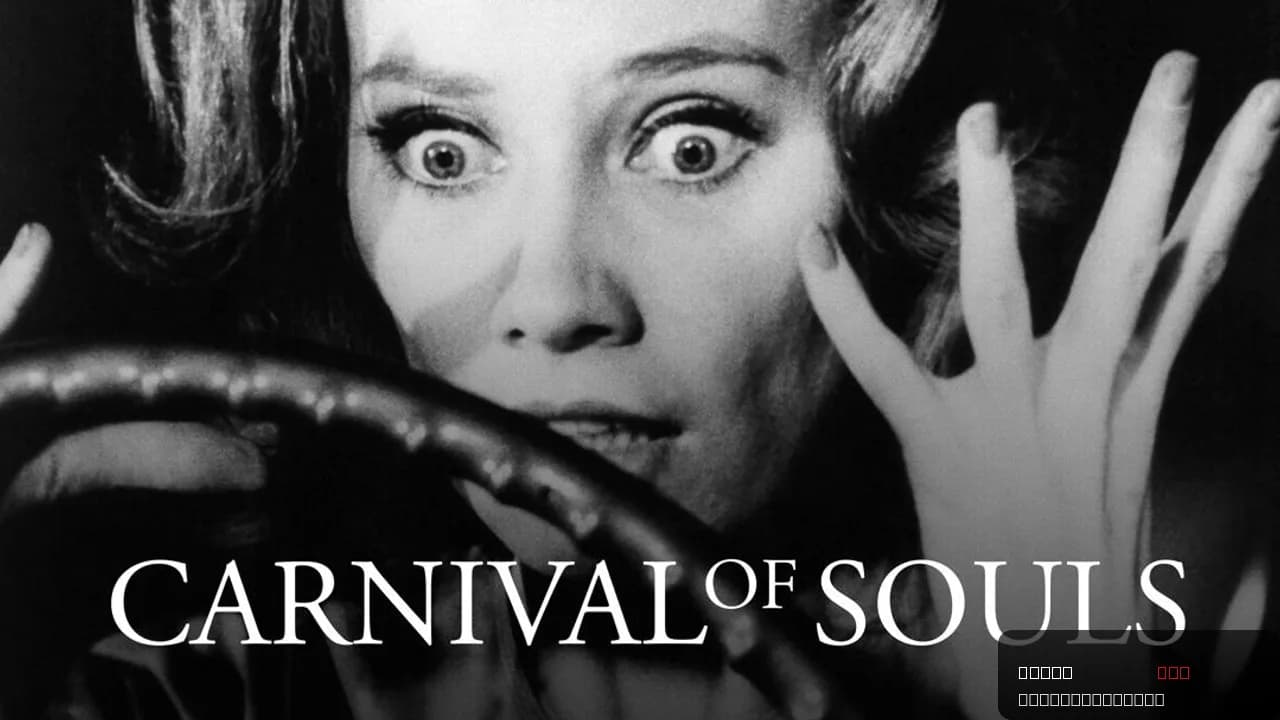
Carnival of Souls tells the story of Mary Henry, a young woman whose life takes a dark turn after surviving a devastating car accident. She's the sole survivor when her vehicle plunges off a bridge during a casual drag race with friends—a traumatic moment that sets everything in motion. After her recovery, Mary relocates to a new town to take a job as a church organist, hoping for a fresh start. But something's wrong. People around her seem distant, almost unaware of her presence, and she's plagued by visions of a ghoulish stranger and an irresistible pull toward the decaying pavilion of an abandoned carnival by the Great Salt Lake. What starts as a story about rebuilding after tragedy gradually becomes something far more unsettling, as the line between the living world and something else entirely begins to blur.
Behind the Making of Carnival of Souls
Carnival of Souls emerged from an unlikely source: director Herk Harvey, a Kansas-based industrial filmmaker who'd spent years making corporate and educational shorts, decided to venture into feature filmmaking with writer John Clifford. The duo crafted this low-budget production on a shoestring—the kind of scrappy, determined indie project that simply wouldn't exist in today's risk-averse studio landscape. Shot in black and white on location around Lawrence, Kansas, and the Great Salt Lake region, the film carries the gritty authenticity of someone making exactly the movie they wanted to make, budget constraints be damned. Harvey didn't just direct; he also appears on screen as the haunting specter who stalks Mary throughout, giving the film an unsettling intimacy that's hard to shake. The film's atmospheric organ score by Gene Moore becomes almost a character itself—moody, discordant, deeply unsettling in ways that modern horror soundtracks often miss. At just 77 minutes, it's a lean, purposeful film that doesn't waste a frame, and it's the kind of lean, purposeful film that doesn't waste a frame. Though it initially struggled to find an audience, Carnival of Souls has since become a foundational text in American horror cinema, influencing everything from George Romero's work to contemporary indie horror.
Why Carnival of Souls Still Haunts Audiences
What's striking about Carnival of Souls is how it manages to be genuinely unsettling without relying on gore or jump scares—tools that didn't really exist in the horror toolkit of 1962. Instead, Harvey builds dread through atmosphere, through the performances, through long stretches of uncomfortable silence and social isolation. Candace Hilligoss, in the lead role, carries the entire film with a naturalistic performance that makes Mary's growing alienation feel lived-in and real rather than theatrical. There's something about watching her navigate scenes where other characters seem to look through her, where she can't quite connect, that taps into a primal anxiety most people have felt at some point. The carnival itself—that decrepit, abandoned pavilion—becomes a symbol of something just beyond rational explanation, and the film's refusal to neatly explain what's happening is actually its greatest strength. Critics and audiences have consistently noted that the film plays like an extended episode of The Twilight Zone, which is exactly right; it's got that same sense of creeping wrongness, that same willingness to leave you uncomfortable and questioning what you've just watched. The black-and-white cinematography gives everything a dreamlike, slightly unreal quality that modern color filmmaking struggles to achieve. I keep coming back to the fact that this film, made on a negligible budget by a director best known for industrial films, somehow created something that's endured and influenced generations of horror filmmakers—that's not luck, that's craft.
Where to Stream Carnival of Souls Online
Carnival of Souls is currently available on Prime Video, making it easily accessible for anyone looking to experience this cult classic. The Where to Watch widget at the top of this page will show you all the platforms currently streaming it, so you can jump in immediately. If you're browsing Movie OTT for horror recommendations, you'll find Carnival of Souls consistently ranked among the essential viewing list—and for good reason. The film's restoration and availability on modern streaming platforms means you're getting a much cleaner picture than previous home video releases, which really helps you appreciate the cinematography and those carefully composed black-and-white frames. Movie OTT tracks streaming availability across all major platforms, so if it moves to another service in your region, you'll want to check back here to see where it's landed.
Frequently asked questions
Q: Who directed Carnival of Souls?
Carnival of Souls was directed by Herk Harvey, an industrial filmmaker who made his feature directorial debut with this 1962 horror film. Harvey also appears in the film as the ghostly stranger who haunts the protagonist.
Q: Is Carnival of Souls based on a true story?
No, Carnival of Souls is a fictional story written by John Clifford and Herk Harvey. While it's set in real locations like Kansas and the Great Salt Lake region, the plot and characters are entirely original creations.
Q: How long is Carnival of Souls?
The film runs 77 minutes, making it a lean and focused horror experience that doesn't overstay its welcome.
Q: What's the IMDb rating for Carnival of Souls?
Carnival of Souls has an IMDb rating of 6.8 out of 10, reflecting its status as a cult classic that's appreciated by horror enthusiasts and critics even if it doesn't appeal to mainstream audiences.
Q: Where can I watch Carnival of Souls?
Carnival of Souls is available to stream on Prime Video. Check the Where to Watch widget on this page for current availability and any other platforms it may be on in your region.
Final Thoughts on Carnival of Souls
Carnival of Souls deserves a place in any serious horror fan's viewing rotation—not as a curiosity or a historical artifact, but as a genuinely effective piece of filmmaking that still works today. It's the kind of film that rewards patient viewing, that trusts its audience to sit with discomfort and ambiguity rather than spelling everything out. Don't expect answers. Do expect to feel unsettled for days afterward. If you're looking for horror that prioritizes atmosphere and psychology over spectacle, this 1962 classic is absolutely worth your time.