








The Story of Cattle Call
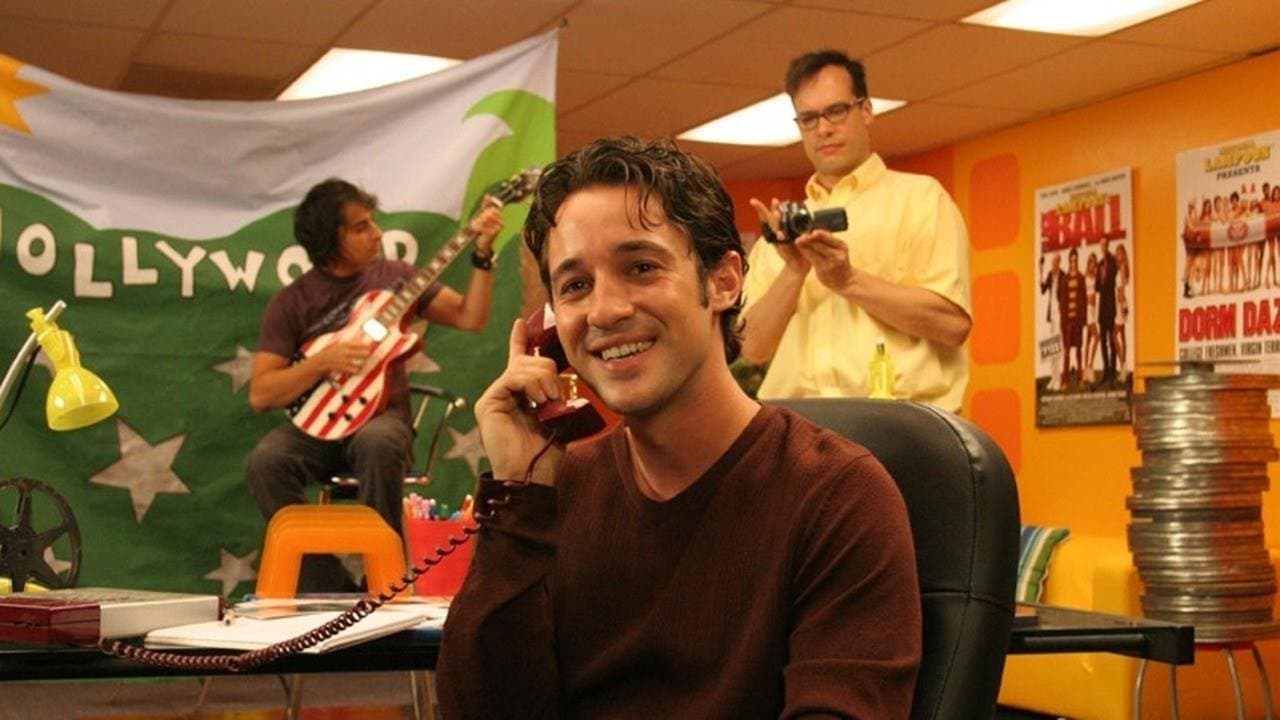
Cattle Call follows a deceptively simple premise: what if you started a fake casting agency not to scam aspiring actors, but to meet your ideal woman? That's the setup driving this 2006 National Lampoon production, where the protagonist's misguided scheme becomes the engine for a comedy rooted in the absurdity of Hollywood's casting culture. The film doesn't pretend to be anything other than what it is—a low-budget, direct-to-video venture built on the idea that desperation and delusion can be funny when handled with enough irreverence. It's the kind of premise that only works if you're willing to accept the film's own ridiculous logic from frame one.
Behind the Making of Cattle Call
Cattle Call arrived as a National Lampoon production written and directed by Martin Guigui, released direct-to-video by Lionsgate Home Entertainment on May 13, 2008—nearly two years after its original 2006 completion. The cast included Thomas Ian Nicholas in the lead role, with Jenny Mollen, Nicole Eggert, and Diedrich Bader rounding out the ensemble. What made the project notable at the time wasn't the star power, but rather that it marked Chelsea Handler's feature film debut. Before she became a household name through her talk show and stand-up career, Handler appeared in Cattle Call, lending her comedic timing to a film that would remain largely forgotten by mainstream audiences. The production also secured cameo appearances from veteran actors Paul Mazursky and Jonathan Winters, both lending their credibility to a project that needed all the help it could get. The film's journey from production to release—sitting on the shelf for two years before reaching home video—hints at the studio's own uncertainty about its commercial viability. Movie OTT tracks where films like this eventually land across streaming platforms, and Cattle Call's path to digital availability reflects how National Lampoon properties often find their second life online rather than in theaters.
What Makes Cattle Call Stand Out
Honestly, what's striking about Cattle Call is how committed it remains to its central joke without much interest in broader satire. The film doesn't try to dissect Hollywood's corruption or the predatory nature of the casting couch—the tagline "The casting couch just got caught" suggests a sharper critique than the movie actually delivers. Instead, it's content to play the absurdity straight: a guy runs a fake agency, women show up hoping for roles, chaos ensues. The humor lands intermittently, depending largely on how much you're willing to surrender to the film's logic. What's less forgiving is the IMDb rating of 4.086 out of 10, which speaks to how audiences have responded over time. This isn't a film that's been reassessed or rediscovered—it's remained consistently obscure, which says something about its comedic durability. That said, the performances from Nicholas, Eggert, and Bader suggest actors who understood the assignment and weren't above playing the material for maximum absurdist effect. They're not phoning it in, even if the script doesn't always give them much to work with. The brief runtime of 83 minutes works in the film's favor; it doesn't overstay its welcome, and there's something to be said for a comedy that knows when to get out.
Where to Stream Cattle Call Online
Cattle Call is currently available across major OTT services, making it accessible to anyone curious enough to track down this oddball National Lampoon entry. The film's availability has expanded since its initial 2008 direct-to-video release, and if you're searching for where it's streaming right now, the "Where to Watch" widget at the top of this page will show you every platform carrying it. Whether you're a completist working through the National Lampoon catalog or simply stumbled upon it while browsing, you won't need to hunt through multiple subscription services—Movie OTT aggregates current streaming data so you can find it immediately. The convenience of digital availability means that a film that once required a trip to the video store (or worse, special ordering) is now just a few clicks away.
Frequently asked questions
Q: Is Cattle Call based on a true story?
No, Cattle Call is an original fictional comedy written by director Martin Guigui. The premise about a fake casting agency is purely a comedic invention designed to explore absurdist humor around Hollywood's casting culture.
Q: Who directed Cattle Call?
Martin Guigui both wrote and directed Cattle Call. It was his feature film, and the project represents his singular entry into the National Lampoon catalog.
Q: Was Cattle Call a theatrical release?
No. Cattle Call was released direct-to-video by Lionsgate Home Entertainment on May 13, 2008, skipping theatrical distribution entirely. This was common for many National Lampoon productions in the 2000s.
Q: What is Chelsea Handler's role in Cattle Call?
Chelsea Handler makes a cameo appearance in the film, marking her feature film debut before she went on to host her late-night talk show and establish herself as a prominent comedian and producer.
Q: How long is Cattle Call?
The film runs 83 minutes, making it a relatively brief comedy that doesn't linger on any single joke or subplot.
Final Thoughts on Cattle Call
Cattle Call won't change your life, and it's not a hidden gem waiting to be rediscovered. It's a forgettable direct-to-video comedy from the 2000s that had its moment and faded. But there's something oddly endearing about its shamelessness—it knows exactly what it is and doesn't apologize for it. If you're in the mood for low-stakes, absurdist humor and don't mind a film that swings and misses more often than it connects, it's worth ninety minutes of your time. Sometimes the best reason to watch something isn't because it's good; it's because you're curious.