








TL;DR: Cha-Cha - A Deceptive Romance (2024)
Cha-Cha, a 2024 romance-drama, isn't your typical love story. It starts sweet, but quickly veers into unsettling territory, exploring a free-spirited artist (Cha-Cha) and her relationship with Raku, whose behavior grows increasingly problematic. The film's a visual trick, using rom-com aesthetics to smuggle in something much darker. It currently holds a divisive 4.3/10 on IMDb, reflecting an audience split right down the middle. Don't expect a feel-good movie; this one's for viewers who like their genre conventions twisted. Movie OTT's where-to-watch widget has the latest streaming availability.
Cha-Cha's Dark Heart: When Rom-Coms Go Rogue
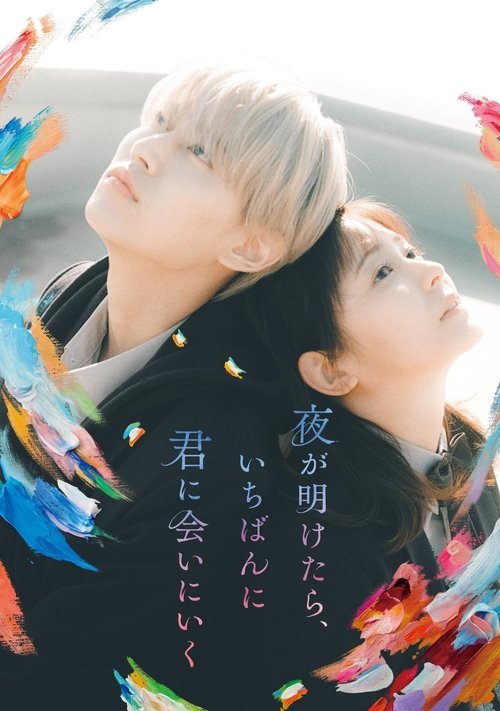
Don't let the whimsical colors fool you: Cha-Cha isn't the romantic comedy it pretends to be. Released in 2024, this film — a drama-romance hybrid — quickly establishes its central conflict. At its core, it's the love story of Cha-Cha, an artist whose vibrant energy and warmth could probably light up a small city, and Raku, a young man whose tastes and actions become steadily more questionable. We're talking about impulses that are genuinely hard to defend as the narrative progresses. On the surface? Stolen glances, sun-drenched visuals, all the romantic trappings. But director Rina Kuri's 108-minute runtime is doing something far sneakier than that opening act suggests, layering in tonal shifts that absolutely catch you off guard if you came in expecting a straightforward, heartwarming tale. The world they inhabit feels deliberately painted in soft, inviting hues — until it doesn't. And then it hits you.
What's striking is how much of Cha-Cha's tension lives in the negative space. It's in what characters don't say, or how the camera might linger on a face just a beat too long. There's a scene midway through, for instance, where Cha-Cha is deep in her painting, and Raku watches her from across the room. His expression? The film refuses to decode it for you. Is it admiration? Is it something closer to possession? The movie keeps its hand firmly hidden, and that ambiguity is either its greatest strength or its most frustrating quality, depending on your tolerance for unresolved character psychology. For me, I kept thinking about that blank stare long after the credits rolled.
Behind the Camera: Crafting Cha-Cha's Unsettling Vibe
Cha-Cha landed in 2024 as part of a string of romantic dramas that lean heavily into genre subversion. These are films that borrow the visual language of romantic comedies to smuggle in something thornier, something a bit unsettling. The production design here is a big part of that; it leans hard into Cha-Cha's identity as an artist. Her living space, her canvases, even her wardrobe function almost as character exposition, suggesting a director and production team who thought carefully about how environment communicates personality before a single line of dialogue is spoken. You really get a sense of her world before Raku starts to unravel it.
The casting choices are also central to the film's divided reactions. Whoever plays Raku has an unenviable job: making a character with increasingly questionable behavior watchable without letting him slip into cartoonish villainy. It's a tightrope walk, and how well you think the film pulls it off will shape your entire experience of it. The lead playing Cha-Cha, meanwhile, shoulders the emotional weight almost entirely. She's in nearly every scene, and the camera is rarely not watching her face for clues about what she knows, or what she's choosing to ignore. It’s an exhausting performance, I'm sure.
The cinematography does real work here. Warm, almost overexposed lighting in the early romantic sequences gives way to something cooler and more clinical as Raku's behavior escalates. It's a visual shift you might not consciously register on a first watch, but it feels obvious in retrospect. The score, similarly, uses cheerful melodic motifs that gradually get pulled apart, notes dropped, tempos slowed, until what started as a love theme sounds faintly wrong. Honestly, it's brilliant.
The Scorecard: Why a 4.3/10 Isn't the Whole Story
On the awards circuit, Cha-Cha hasn't accumulated major hardware. Its IMDb rating of 4.3 out of 10 reflects a viewer base that's genuinely divided rather than simply indifferent. Hard to say if that score captures the full picture, though, because films that provoke discomfort often get punished in crowd-sourced scores in ways that don't always reflect craft or artistic intention. No major MPAA rating data was confirmed at time of writing,