



The Story of Changing Lanes
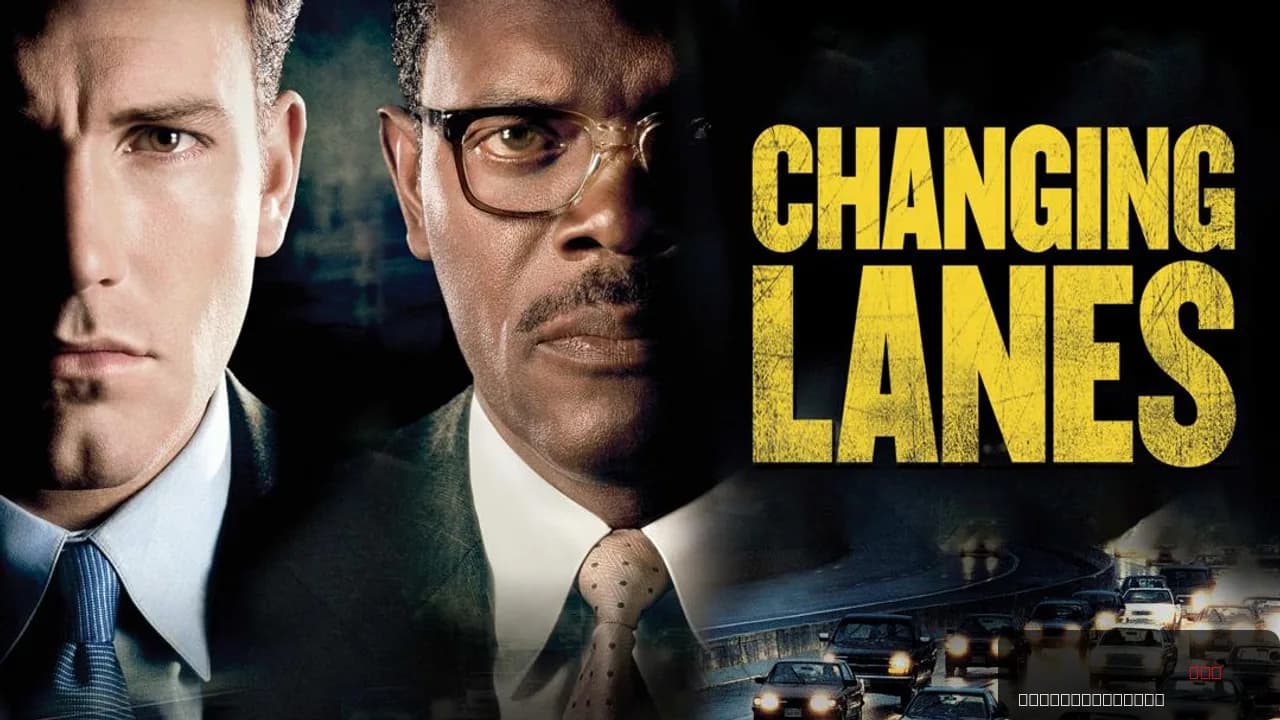
Changing Lanes opens with a premise so deceptively simple it almost feels like a setup for a joke: two men, two cars, one Los Angeles morning commute. Ben Affleck plays Gavin Baileigh, a high-powered attorney racing against the clock to reach court—his career, his reputation, everything hinges on getting there on time. In a parallel lane, Samuel L. Jackson's Doyle Gipson is also fighting the clock, though his stakes are just as real and far more personal: he needs to make it to family court before losing custody of his children. A moment of inattention, a swerve, metal crunching against metal. The accident itself is almost forgettable. What happens after it—that's where the film finds its teeth.
Instead of exchanging information like civilized adults, Affleck's character abandons the scene, leaving Jackson's character stranded. It's a small act of selfishness that'll spiral into something neither man can control. What's striking is how the film doesn't treat this as a crime-and-punishment story; it's something messier, more philosophical. Both men start playing dirty, each convinced the other deserves whatever comes next. Revenge, it turns out, doesn't need a grand justification—just a reason and an opportunity.
Production, Cast, and the Making of Changing Lanes
Changing Lanes arrived in 2002 under the direction of Roger Michell, a British filmmaker known for his sharp eye for character-driven drama (he'd later direct Notting Hill and become a fixture in prestige television). The film brought together a cast that, on paper, looked like a prestige ensemble: Affleck and Jackson as the leads, with supporting turns from William Hurt, Sydney Pollack, and Toni Collette. Collette, in particular, delivers the kind of performance that reminds you why she's one of cinema's most underrated actors—playing Affleck's wife with a quiet moral clarity that contrasts sharply with her husband's unraveling ethics.
The film was produced by Paramount Pictures and released in April 2002, landing in theaters during a crowded season. Box office performance was modest—it didn't become a runaway hit, which might explain why it's faded from casual conversation over the past two decades. That said, the film found its audience among viewers who appreciate character studies wrapped in thriller packaging. The runtime clocks in at 98 minutes, tight enough to keep momentum but long enough to develop the psychological dimensions of both characters. Affleck was still riding the wave of Armageddon and Pearl Harbor success, while Jackson had already cemented himself as one of Hollywood's most bankable and versatile actors. The pairing promised real chemistry—and, mostly, it delivers. IMDb ratings hover around 6.4/10, which tells you something: this isn't a universally beloved classic, but it's got passionate defenders who see something deeper in its moral ambiguity.
What Makes Changing Lanes Stand Out as a Moral Thriller
Here's the thing about Changing Lanes that separates it from your standard revenge thriller: it's genuinely interested in the philosophy underneath the plot. Both men are, in their own ways, sympathetic. Affleck's character isn't a cartoon villain—he's a guy trying to keep his life together, and he's willing to bend rules to do it. Jackson's character isn't a saint waiting for redemption; he's a recovering alcoholic with a genuine shot at getting his life back on track, and Affleck's abandonment threatens everything. The film's central question—who's really the victim here?—doesn't have an easy answer, and that ambiguity is what makes it work.
Samuel L. Jackson delivers what might be his most controlled performance, playing a man trying desperately not to let rage override his better judgment. There's a scene where he's sitting in his car, hands gripping the wheel, and you can see the internal struggle playing out on his face without a word being spoken. It's acting that trusts the audience to fill in the blanks. Affleck, meanwhile, plays a character whose moral compass is spinning wildly—he starts out almost sympathetic (a guy in a rush) and gradually becomes someone you don't recognize. The film doesn't shy away from showing how quickly privilege can curdle into cruelty when someone feels threatened.
What's less successful is the film's broader ensemble. William Hurt and Sydney Pollack, both tremendous actors, feel somewhat sidelined in roles that don't quite justify their presence. Toni Collette fares better, though even she isn't given enough to do with her character's potential arc. The film is really a two-hander, and when it strays from that dynamic, it loses focus. Audience reactions have been mixed—some viewers find the escalation gripping and the moral questions genuinely unsettling; others feel the film doesn't quite stick the landing, that it builds momentum but then doesn't quite know where to take it.
Where to Stream Changing Lanes Online
Changing Lanes is currently available on Netflix, making it easy to catch if you're already subscribed to the platform. The film's relatively modest runtime means you can fit it into an evening without committing to an epic viewing session. If you're hunting for where to watch it across multiple services, Movie OTT tracks current streaming availability in real time, so you can see which platforms have it on any given day—availability shifts, and what's on Netflix today might move to another service next month. The "Where to Watch" widget at the top of this page will show you all the current options, so you don't have to hunt around.
Given that Changing Lanes isn't a massive blockbuster, it doesn't rotate between services quite as aggressively as Marvel movies or prestige releases. Netflix seems to be a stable home for it right now, which is convenient for the streaming audience. The film's lean 98-minute runtime also makes it ideal for the streaming era—substantial enough to feel like a real movie, not so long that you need to carve out your whole evening.
Frequently asked questions
Q: Who directed Changing Lanes?
Roger Michell directed the film. He's a British filmmaker known for character-driven dramas, and Changing Lanes showcases his ability to extract nuanced performances from his leads while maintaining narrative momentum throughout the 98-minute runtime.
Q: Is Changing Lanes based on a true story?
No, Changing Lanes is an original screenplay, not adapted from real events or existing source material. The premise—a car accident spiraling into mutual destruction—is fictional, though the moral questions it raises feel grounded in real human behavior.
Q: What's the movie's rating?
Changing Lanes carries an IMDb rating of 6.4/10, which reflects mixed but generally positive audience reception. It's the kind of film that has passionate defenders who appreciate its moral complexity, even if it didn't achieve universal acclaim.
Q: How long is Changing Lanes?
The film runs 98 minutes, making it a relatively compact thriller that doesn't overstay its welcome. The tight runtime keeps the escalating conflict moving without unnecessary padding.
Q: Where can I watch Changing Lanes right now?
Changing Lanes is currently streaming on Netflix. Check the "Where to Watch" widget on this page for the most up-to-date availability across all platforms, as streaming rights can shift over time.
Final Thoughts on Changing Lanes
Changing Lanes won't blow your mind, and it's not a film you'll probably revisit multiple times. But it's a genuinely solid thriller that respects its audience's intelligence—it doesn't pretend there are easy answers to hard questions about morality, privilege, and how quickly we can rationalize our worst impulses. The two lead performances carry the weight, and Roger Michell keeps things moving with enough style to justify the premise. If you're looking for something that's a step above the usual streaming fare—a film that's interested in actual character and moral ambiguity rather than just plot mechanics—it's worth the 98 minutes. Just don't expect to feel great about humanity afterward.