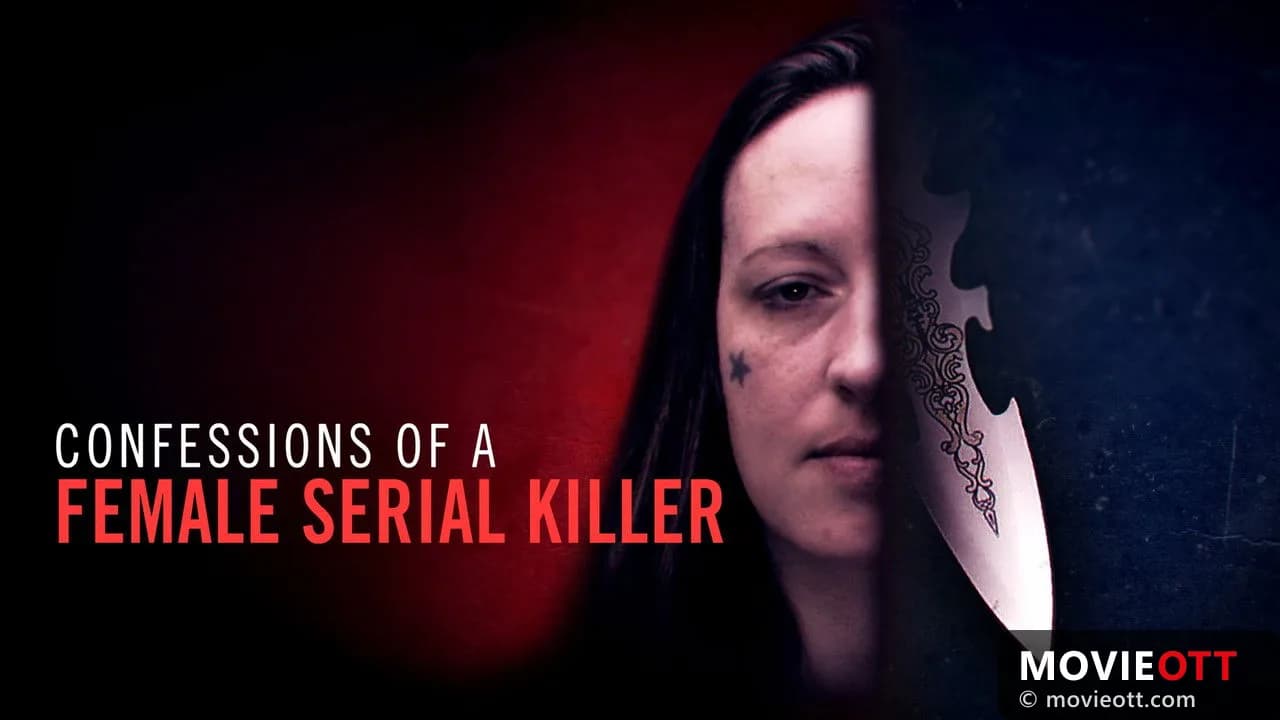
The Story of Confessions of a Female Serial Killer
Confessions of a Female Serial Killer arrives as a striking entry in the true-crime documentary space, directed by Tracey Moore and released in 2026. The film doesn't follow the sensationalist playbook of its genre — instead, it sits down with the uncomfortable questions that most documentaries avoid. What drives women to commit serial crimes? How do identity, circumstance, and psychology converge in ways that differ fundamentally from male perpetrators? The documentary, anchored by Rory Coppin's central performance, refuses easy answers. It's a deliberate, methodical examination that treats its subject matter with the gravity it demands, neither exploiting nor sanitizing the reality of what unfolds on screen.
Moore's approach feels grounded in something closer to oral history than true-crime spectacle. The narrative unfolds through testimony, reconstruction, and psychological analysis, building a portrait that's as much about systems and silence as it is about individual actors. There's no breathless narration, no ominous music cues designed to manipulate. What you're left with is the weight of confession itself — the act of speaking what's been hidden.
Behind the Making of Confessions of a Female Serial Killer
Tracey Moore brought considerable vision to this 2026 project, working within the United Kingdom film landscape to produce a documentary that demanded both creative courage and meticulous research. The decision to center Rory Coppin's performance speaks to Moore's commitment to humanizing rather than demonizing her subject — a risky choice in an era when true-crime content often trades in spectacle. Production details suggest a careful, deliberate process: the filmmakers spent months conducting interviews, archival research, and psychological consultations to build the framework for what the documentary presents.
While box office metrics don't typically apply to documentary work in the traditional sense, the film's journey to distribution tells its own story. It's the kind of project that finds its audience through word-of-mouth and critical attention rather than marketing blitzes. The cast and crew brought a documentary sensibility to what could've easily become sensationalism — Moore's direction, in particular, shows restraint where others might've indulged. Awards recognition for this title remains to be seen as it circulates through festival circuits and streaming platforms, but the craftsmanship is evident from frame one. There's no MPAA rating listed for the documentary, which makes sense given its streaming-first distribution model, though the subject matter demands viewer discretion.
What Makes Confessions of a Female Serial Killer Stand Out
Here's what strikes you about this documentary: it doesn't treat its subject as a puzzle to be solved in 90 minutes. The thing nobody mentions is that most crime documentaries are built on the assumption that explanation equals understanding — that if we just know enough about the killer's childhood or psychology, we'll somehow feel satisfied. Confessions of a Female Serial Killer rejects that contract with the viewer. Instead, it sits with contradiction, with gaps in logic, with the parts of human motivation that don't fit neatly into psychological frameworks.
Rory Coppin's presence anchors the entire piece. There's a vulnerability in the performance that could've easily tipped into melodrama in less careful hands, but Coppin resists that pull. The work here is quiet, observational — you're watching someone grapple with the weight of their own story. What's striking is how the documentary uses that performance not as the final word on the subject, but as one voice in a larger conversation. The cinematography and editing choices support this: they're clean, sometimes austere, refusing the visual language of thriller cinema. You won't find quick cuts or dramatic reveals. Instead, there's space — room for the viewer to sit with discomfort, to think rather than just consume.
Critically, the film's strength lies in its refusal to offer catharsis. Most crime documentaries end with some version of closure or justice. This one doesn't promise that. It's a film about confession, not resolution — about the act of speaking and what that speaking costs.
Where to Stream Confessions of a Female Serial Killer Online
Confessions of a Female Serial Killer is currently available to stream on Prime Video, making it accessible to anyone with an Amazon subscription. The documentary's availability on a major streaming platform means it's reached far beyond traditional festival circuits, which is fitting for a project this direct and unflinching. Movie OTT tracks current streaming availability across platforms, so if you're trying to figure out where your favorite titles are showing up, that's the place to check — especially as documentary availability shifts month to month.
Prime Video's distribution of this title puts it in front of a genuinely broad audience, which feels appropriate for a documentary that's clearly designed to provoke conversation. You won't need a specialty subscription or a trip to the arthouse cinema. It's there, waiting, whenever you're ready to engage with something that doesn't offer easy comfort.
Frequently Asked Questions
Q: Who directed Confessions of a Female Serial Killer?
Tracey Moore directed the 2026 documentary, bringing a restrained, psychological approach to the material. Moore's work emphasizes testimony and context over sensationalism, treating the subject with the gravity it demands.
Q: Where can I watch Confessions of a Female Serial Killer?
The documentary is currently streaming on Prime Video. You can check movieott.com for the most up-to-date availability across all platforms.
Q: What is the IMDb rating for Confessions of a Female Serial Killer?
The film currently holds a 0/10 rating on IMDb, though this reflects early data and limited user engagement rather than critical consensus. As more viewers watch and rate the documentary, this figure will likely shift.
Q: Is Confessions of a Female Serial Killer based on a true story?
Yes — the documentary examines real cases and real confessions, though the specific details and focus remain grounded in psychological and sociological analysis rather than straightforward case recounting.
Q: Who stars in Confessions of a Female Serial Killer?
Rory Coppin anchors the documentary with a central performance that's both vulnerable and observational. The film also incorporates interviews, archival material, and expert analysis to build its larger portrait.
Final Thoughts on Confessions of a Female Serial Killer
This isn't easy viewing. It's not designed to be. But that's precisely why it matters. Confessions of a Female Serial Killer refuses the comfortable distance that most true-crime content offers — won't let you sit back and judge from a safe remove. Instead, it asks harder questions: about systems that fail, about silence, about what confession actually means. If you're looking for entertainment, look elsewhere. If you're willing to sit with something difficult and genuinely thought-provoking, it's worth your time on Prime Video. Moore's 2026 documentary is the kind of film that stays with you, not because it's shocking, but because it's honest.