





The Story of Dagon: Isolation and Ancient Worship
Dagon opens with a premise that feels almost mundane—a boating accident off the coast of Spain—before it spirals into something far stranger and more disturbing. Paul and his girlfriend Barbara wash ashore in Imboca, a village that seems frozen in time, populated by locals who move with unsettling purpose and regard the newcomers with something between curiosity and hunger. What starts as a search for help becomes a descent into nightmare as night falls and people begin to vanish. The film doesn't waste time with exposition; instead, it lets dread accumulate through strange sightings, whispered conversations, and the growing realization that Paul and Barbara aren't in an ordinary place. They've stumbled into a community bound by an ancient pact—one that demands sacrifice to Dagon, a monstrous god of the sea whose unholy offspring now walk among the village streets. Running for his life, Paul uncovers the horrifying truth: Imboca's entire existence revolves around appeasing a creature that shouldn't exist.
Behind the Making of Dagon: Stuart Gordon and Spanish Horror
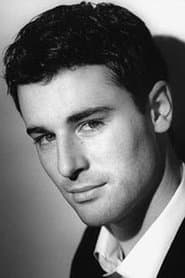
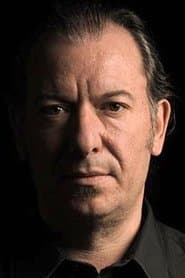
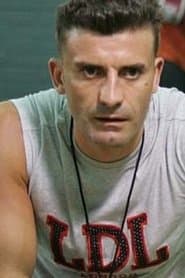
Dagon is a fully Spanish production, which might surprise viewers expecting a Hollywood affair, though it was directed by American Stuart Gordon and written by Dennis Paoli—both veterans of adapting H.P. Lovecraft's work. The film draws from two of Lovecraft's seminal texts: the 1919 short story "Dagon" and the 1936 novella "The Shadow Over Innsmouth," blending elements from both into something that feels both faithful and distinctly its own. The production brought together Castelao Productions, Estudios Picasso, and support from TV3, TVG, Vía Digital, and the Xunta de Galicia, creating a genuinely international collaboration that shot across Spanish locations with an English-language script performed by actors including Ezra Godden, Francisco Rabal, and Raquel Meroño. The 95-minute runtime keeps the tension wound tight without overstaying its welcome. Released in 2001 and rated R for gore and horror violence, Dagon earned eight award nominations, though it never became a mainstream blockbuster—a fate that befell many Lovecraft adaptations before the recent surge in cosmic horror popularity. What's striking is that despite its modest budget and regional origins, the film punches well above its weight in terms of creature design and atmosphere. Movie OTT tracks where this cult classic is currently streaming across major platforms, making it easier than ever to experience Gordon's vision without hunting through obscure channels.
Why Dagon Still Unsettles: Performance and Practical Effects
The film works because it commits to its grotesque premise without winking at the audience. Ezra Godden carries the picture as Paul, a man whose sanity frays in real time as he watches the world around him reveal its true nature. He's not a wisecracking action hero—he's terrified, confused, and increasingly desperate, which makes his journey feel earned rather than contrived. Francisco Rabal, as one of the village elders, brings a quiet menace that's far more effective than any monologue could be. What really separates Dagon from lesser horror fare, though, is the commitment to practical creature effects. The mutated villagers—those caught between human and something far older—aren't hidden in shadow or suggested through editing. They're there, grotesque and wrong, with designs that suggest what prolonged exposure to Dagon's corruption actually looks like. The film received a 71% Fresh rating on Rotten Tomatoes and a respectable 6.2/10 on IMDb from over 22,000 votes, which tells you it's found its audience even if mainstream critics didn't unanimously embrace it. I keep coming back to the scene where Paul realizes the extent of the village's transformation—not because of a jump scare, but because the film trusts you to understand the horror of what's happened to these people. They're not monsters by choice; they're victims of something far larger than themselves, and that moral complexity is what elevates Dagon beyond typical creature-feature territory.
Where to Stream Dagon Online
Finding Dagon has become much simpler in recent years as streaming services have expanded their horror catalogs. The film is currently available on major OTT platforms, and you can check the "Where to Watch" widget at the top of this page to see exactly which services are carrying it in your region right now. Streaming availability shifts regularly, so that widget provides real-time accuracy rather than outdated information. Whether you're subscribed to one of the major services or willing to rent it digitally, Dagon is accessible without the need to hunt down physical media or sketchy third-party sites. For those who want to own it permanently, the film has been released on both DVD and Blu-ray, though the streaming route offers the most convenience.
Frequently asked questions
Q: Is Dagon based on a true story?
No. Dagon is an adaptation of H.P. Lovecraft's 1919 short story and the 1936 novella "The Shadow Over Innsmouth," both works of cosmic horror fiction. The village of Imboca and the sea god Dagon are entirely fictional creations from Lovecraft's imagination.
Q: Who directed Dagon and what else has he made?
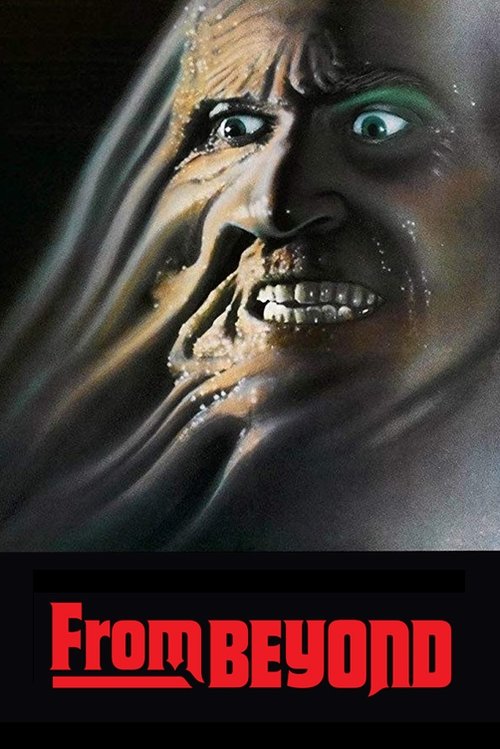
Dagon was directed by Stuart Gordon, an American filmmaker known for his earlier Lovecraft adaptations including "Re-Animator" (1985) and "From Beyond" (1986). Gordon has spent much of his career bringing weird fiction to the screen, making him an ideal fit for this material.
Q: What's the connection between Dagon and The Shadow Over Innsmouth?
Both are H.P. Lovecraft works dealing with cursed coastal communities and hybrid human-creature beings. Director Stuart Gordon and writer Dennis Paoli synthesized elements from both stories into Dagon's screenplay, creating a narrative that honors Lovecraft's themes while standing as its own film.
Q: Why is Dagon rated R?
The film carries an R rating for gore and horror violence. The creature effects and moments of body horror are genuinely disturbing rather than cartoonish, and the film doesn't shy away from showing the cost of Dagon's influence on human flesh.
Q: Is Dagon a Spanish film or an American film?
It's a fully Spanish production despite being directed by Americans and performed largely in English. The funding came from Spanish production companies and regional broadcasters, making it a genuine international co-production that happens to be set on the Spanish coast.
Final Thoughts on Dagon
Dagon doesn't try to be a crowd-pleaser, and that's precisely why it works. It's a film about sacrifice and corruption, about communities built on lies, about what happens when ancient things demand payment. The tagline—"A cursed people... an ancient cult... a nightmare come true"—understates how thoroughly the movie commits to its premise. If you're drawn to horror that trusts atmosphere over jump scares, creature design over CGI shortcuts, and moral ambiguity over easy answers, Dagon deserves your time. It's not a perfect film, but it's a genuinely strange one, and that strangeness lingers.