





The Story of Dark Cities and Its Fractured Narrative
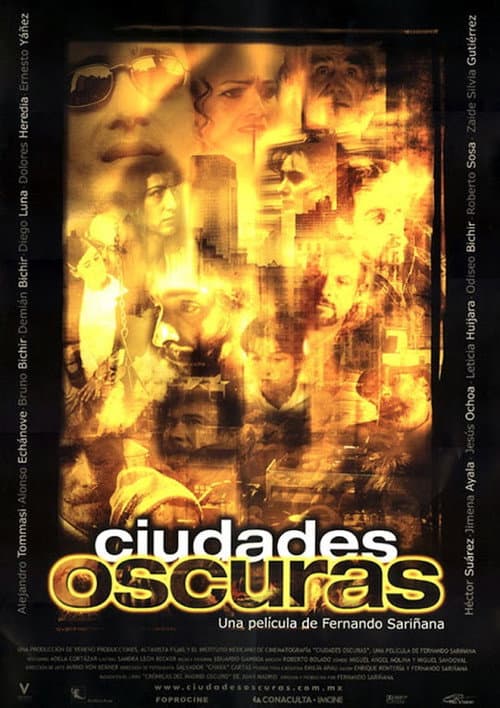
Dark Cities isn't your typical linear narrative—it's something messier, more human. Directed and adapted by Fernando Sariñana from Juan Madrid's stories, the film plunges into the seedy underbelly of Mexico City through the eyes of multiple characters whose lives intersect in ways both obvious and oblique. You've got Lola, a sex worker trying to keep her head above water; her drug-addicted son Fede; Zeze, Lola's friend navigating her own survival; and a rotating cast of junkies, corrupt cops, and ordinary people telling their stories to a bartender who listens but can't save anyone. The 113-minute runtime moves between these perspectives with the kind of restless energy that mirrors the city itself—never settling, always hungry, occasionally brutal. What Sariñana does here is resist the temptation to make any single character "the" story. Instead, he trusts that the texture of their overlapping struggles will tell you something true about desperation and complicity in urban Mexico.
Behind the Making of Dark Cities and Its Production Context
Dark Cities arrived in 2002 as a product of Altavista Films, a Mexican production company working in the tradition of gritty realist cinema that was gaining traction in Latin American filmmaking at the time. Sariñana's adaptation of Madrid's work was a deliberate choice—Madrid's stories already had that fragmented, interconnected quality, so the jump to screen felt natural. The ensemble cast included Diego Luna as Fede, bringing the kind of intensity he'd become known for in later roles; Dolores Heredia as Lola, anchoring the film with a performance that doesn't ask for sympathy so much as recognition; and Odiseo Bichir as the "good cop" caught between the system and his conscience. The film didn't become a major international box-office draw—it was never designed to be—but it circulated through festival circuits and art-house venues, finding audiences who appreciated its refusal to sentimentalize poverty or addiction. On the IMDb scale, it sits at 5.375/10, which honestly tells you more about how audiences rate films than about the film itself; crowd-sourced ratings tend to punish slow burns and ensemble pieces that don't resolve neatly. The production values reflect a mid-budget Mexican film of the early 2000s—not glossy, not trying to hide the city's texture, which is exactly the point.
What Makes Dark Cities Stand Out Among Urban Dramas
What's striking about Dark Cities is how it refuses the savior narrative. You won't find a detective cracking the case or a social worker fixing lives. Instead, you get a bartender listening to stories—a device that's deceptively simple but forces the viewer to sit with the weight of what's being said rather than watch a plot resolve. The performances don't telegraph emotion; they live in the space between desperation and routine. Heredia's Lola isn't tragic in the way Hollywood would frame her—she's tired, sometimes angry, sometimes resigned, and occasionally you catch something almost like hope before it gets swallowed again. Luna's Fede is a junkie without the romanticization that sometimes attaches to addiction in cinema. The two corrupt cops (Alejandro Tommasi and Jesus Ochoa) aren't cartoonish villains; they're men who've made compromises until compromise became their whole identity. What I keep coming back to is how the film trusts its audience to understand that these lives don't resolve because real lives don't resolve—they just keep moving forward or they don't. The structure itself becomes a kind of argument about how we understand urban poverty: not as a problem with a solution, but as a condition that contains multitudes. Critics and serious viewers have recognized this restraint as a strength, even if mainstream audiences sometimes mistake it for slowness.
Where to Stream Dark Cities Online
Dark Cities is available on major OTT services—you can check the Where to Watch widget at the top of this page to see exactly which platforms are currently carrying it in your region. Streaming availability shifts, so Movie OTT keeps those listings updated in real time. Since this is a 2002 film with a modest initial theatrical footprint, it's found a second life on streaming platforms where viewers hunting for something beyond the mainstream can actually find it. If you're using Movie OTT to track where films are streaming, you'll notice that older international dramas like this one tend to rotate between services more than blockbusters do. The advantage is that you don't have to hunt through three different sites to figure out where to watch—just check the widget, and you're set.
Frequently asked questions
Q: Who directed Dark Cities?
Fernando Sariñana directed and adapted Dark Cities from stories by Juan Madrid. Sariñana's approach to the material emphasizes ensemble storytelling over a central protagonist, which is part of what makes the film distinctive.
Q: What's the runtime of Dark Cities?
Dark Cities runs 113 minutes, giving Sariñana enough space to develop multiple character threads without rushing the narrative. It's not a quick watch, but it's not bloated either.
Q: Is Dark Cities based on a true story?
Dark Cities is adapted from stories by Mexican writer Juan Madrid rather than a single true story. The film captures the texture and reality of Mexico City's underworld without being tied to specific real-world events, which gives it a kind of universal urgency.
Q: What year was Dark Cities released?
Dark Cities came out in 2002, positioning it within a wave of Latin American realist cinema that was gaining international attention during that period.
Q: Where is Dark Cities set?
The film takes place in Mexico City, specifically in the city's poorer neighborhoods and shadow economy—the spaces where sex work, drug addiction, and police corruption intersect.
Final Thoughts on Dark Cities
Dark Cities won't appeal to everyone—it's deliberately unsentimental, structurally demanding, and offers no easy catharsis. But if you're tired of films that wrap everything up neatly or reduce poverty to a backdrop for a hero's journey, this one's worth your time. It's a film that respects its characters enough not to save them, and that restraint is its own form of dignity. The ensemble cast carries you through without false notes, and the city itself becomes almost another character—not romantic, not villainous, just there, indifferent and grinding on.