What Das Haus in der Dorotheenstraße is about
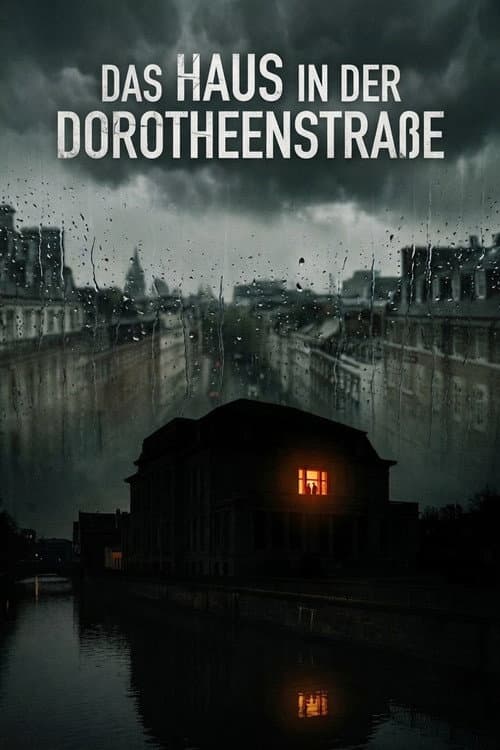
Das Haus in der Dorotheenstraße is a slow-burn psychological drama rooted in the corrosive power of suspicion — and how a marriage can quietly hollow itself out before either partner fully notices. The story follows Gottfried Klausen, a Berlin-based journalist whose relationship with his wife Xenia was, by most outward measures, stable. Then he travels abroad for work. Distance does what distance often does: it warps perception, amplifies silence, turns ordinary gaps in communication into evidence of something darker. What Gottfried can't shake — and what makes this story so unsettling — is a single evening at the theatre, watching Shakespeare's Othello, after which his jealousy stops being vague and starts becoming a framework he imposes on everything. The titular house on Dorotheenstraße isn't just an address. It's a psychological anchor, a place freighted with meaning that Gottfried can no longer read clearly.
How Das Haus in der Dorotheenstraße came together as a 2026 production
Produced by AFMMP, Das Haus in der Dorotheenstraße arrives in 2026 as one of the more quietly ambitious German-language projects to make the jump from literary source to screen. The source material — Hartmut Lange's novella of the same name, first published in a Diogenes Verlag collection in 2013 — has spent over a decade accumulating a devoted readership, particularly among students and scholars of contemporary German literature. According to study resources on the text, the novella is notable for its compressed, precise prose and its refusal to deliver moral clarity, which makes it a genuinely difficult property to adapt — the kind of thing that can fall apart the moment you try to externalize what's almost entirely interior.
AFMMP's decision to take it on signals real confidence. Adapting Lange means trusting an audience to sit with ambiguity, to watch a man construct his own psychological prison without the film ever fully confirming whether his fears are grounded. That's a hard sell commercially, and it's worth acknowledging that Das Haus in der Dorotheenstraße isn't positioning itself as a mainstream thriller. The 2026 release date puts it in a crowded landscape of European prestige drama, where it will need to carve space on the strength of craft rather than spectacle. Box office figures and festival awards hadn't been formally announced at the time of writing — Hard to say if the production pursued a festival circuit rollout or went straight to streaming — but Movie OTT will update this page as distribution details confirm. What we do know is that the IMDb listing currently sits at an unrated status, which is typical for a title this close to its release window.
Why Das Haus in der Dorotheenstraße stands out among 2026 psychological dramas
Honestly, what's striking about this adaptation is how much it leans into the theatrical dimension of Lange's source material. The Othello sequence — the moment Gottfried watches Shakespeare's tragedy and something in him shifts — isn't just a plot device. It's the film's emotional thesis. We're watching a man who can't distinguish between a story he's consuming and the story he's living, and the production reportedly leans into that blurring with formal choices that keep the viewer slightly off-balance.
As detailed in literary analyses of Lange's novella, the phrase "Put out the light" — borrowed directly from Othello — functions as a kind of dark refrain throughout the text, and if the film handles that motif with the same restraint Lange does on the page, it could land as one of the more memorable uses of intertextuality in recent German cinema. The performances carry enormous weight here. Gottfried isn't a villain. He's a man losing his grip on reality in increments, and playing that without tipping into melodrama requires a particular kind of stillness. Xenia, meanwhile, is the more thankless role — she's often reacting to a threat she can't fully see — but the best interpretations of her character find agency in that position rather than victimhood. The thing nobody mentions enough about adaptations of this kind is how much depends on what the camera chooses not to show.
Where to stream Das Haus in der Dorotheenstraße online
Das Haus in der Dorotheenstraße is currently available on major OTT services, making it reasonably accessible for viewers across different regions and subscription tiers. The "Where to Watch" widget at the top of this page has the most current platform breakdown — streaming rights for European titles can shift quickly, and that widget pulls live data. Movie OTT tracks availability across platforms including Netflix, Prime Video, and regional services, so if your preferred platform isn't showing it today, it's worth checking back. Streaming windows for titles like this — prestige, limited-audience, literary adaptations — tend to consolidate over the first few months post-release rather than spread thin across dozens of services.
Frequently asked questions
Q: Where can I watch Das Haus in der Dorotheenstraße in 2026?
Das Haus in der Dorotheenstraße is available on major OTT services in 2026. The Where-to-Watch widget at the top of this Movie OTT page lists current platforms with real-time availability, since streaming rights can vary by region.
Q: Is Das Haus in der Dorotheenstraße based on a book?
Yes. The film is adapted from Hartmut Lange's novella of the same name, first published in a Diogenes Verlag collection in 2013. The novella is a staple of contemporary German literary study, known for its psychological precision and morally open ending.
Q: What is the significance of the Othello reference in Das Haus in der Dorotheenstraße?
Shakespeare's Othello functions as a psychological catalyst for the protagonist Gottfried Klausen — after watching the play while abroad, his latent jealousy about his wife Xenia becomes structured and obsessive. The phrase "Put out the light," drawn from Othello, recurs as a thematic motif throughout the story, linking Gottfried's unraveling to the tragedy he's consumed.
Q: Who produced Das Haus in der Dorotheenstraße?
The 2026 film was produced by AFMMP. Specific director and cast credits were not yet widely published at the time this editorial was written, and movieott.com will update this page as verified production details become available.
Q: Is Das Haus in der Dorotheenstraße suitable for all audiences?
The film deals with themes of marital breakdown, psychological obsession, and jealousy — drawn faithfully from Lange's source material. It's not graphic, but the emotional weight and ambiguous resolution make it better suited to adult viewers comfortable with open-ended, character-driven drama rather than plot-driven narratives.
Who should watch Das Haus in der Dorotheenstraße
Das Haus in der Dorotheenstraße is the kind of film that rewards patience. Not a thriller in the conventional sense. Not a romance. Something closer to a character study with a slow bleed. If you're drawn to European psychological drama — the kind that trusts silence over exposition — this one belongs on your list. Viewers who responded to films like Toni Erdmann or The Worst Person in the World will find familiar territory here, even if the emotional register is darker. Movie OTT rates it as a strong pick for fans of literary adaptations and German-language cinema specifically.