Dead Parents Club
A 2026 hybrid documentary that weaponizes the orphan trope against itself.
Dead Parents Club runs 77 minutes and does something genuinely rare: it takes one of storytelling's most overworked narrative shortcuts — the dead parent — and asks whether it's actually helping us process grief, or just giving us permission to stop thinking about it.
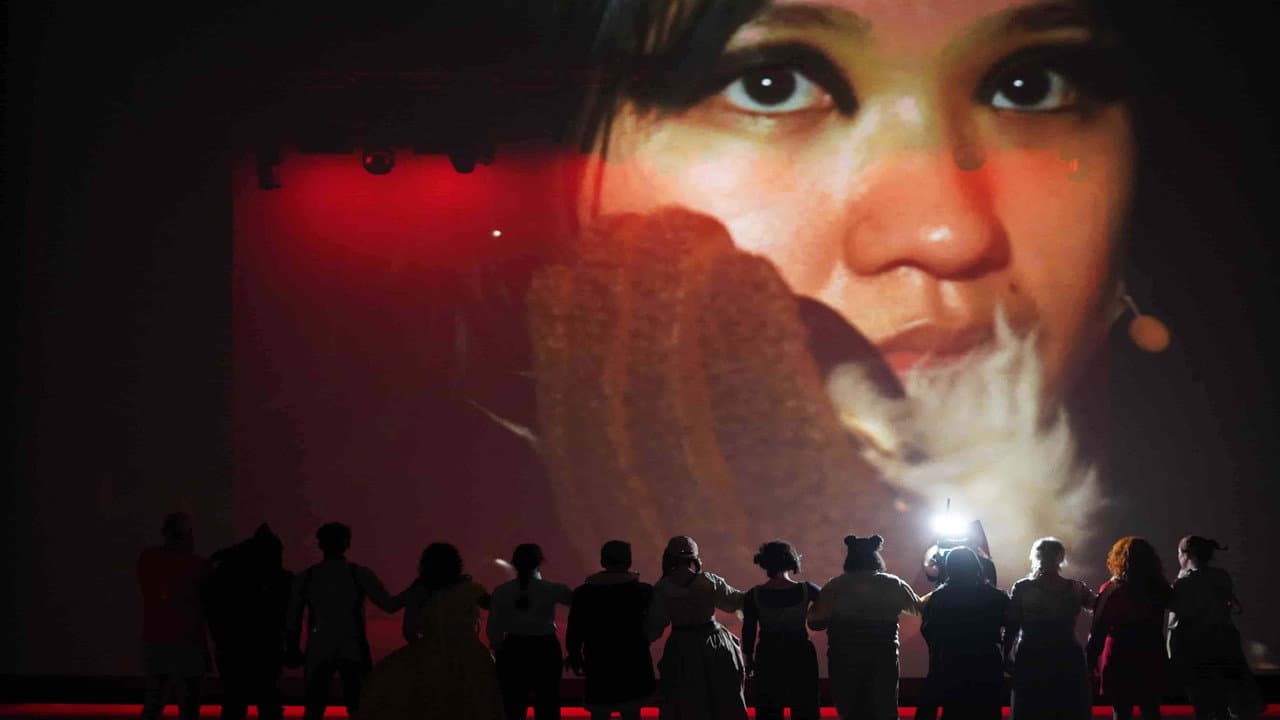
Produced by Melbourne-based performance company APHIDS, the film follows real people who've lost parents as they build a live theatre piece, stepping into the roles of fictional orphans like Simba and Frodo. These are characters whose parentless childhoods were engineered by screenwriters to manufacture plot momentum. What emerges from watching this process unfold — the rehearsals, the discomfort, the moments where personal testimony bleeds into performance — isn't a grief memoir. It's something weirder and more unsettling. A film that's genuinely absurd at times.
The setup sounds like a TED talk waiting to happen. But APHIDS doesn't work that way.
Why the orphan trope actually matters (and why most films get it wrong)
The Lion King, Frozen, Finding Nemo — they all use parental death the same way. Clean trigger. Narrative ignition switch. Character loses parent, character discovers independence, character gets a character arc. Roll credits.
What's striking is how effective this formula has been, and how little anyone questions it. You grow up watching Simba lose Mufasa and learn that grief should be transformative, purposeful, resolvable. The lived reality — and this is what Dead Parents Club spends 77 minutes proving — is messier and stranger and often much funnier than that. It's also more circular. Less redemptive. Definitely less cinematic.
The film doesn't argue that films shouldn't use parental loss. It argues that we've inherited a script for grief that doesn't actually match the experience of grieving. And once you see that gap, you can't unsee it. Not in Disney films, not in your own life.
How APHIDS built this (and why it couldn't have been made any other way)
APHIDS has spent years making work that sits uncomfortably between disciplines — theatre, visual art, film, community practice. Dead Parents Club grew out of a live performance in Melbourne before it became a documentary, and that matters. The film isn't a recording of a finished product. It's an artifact of a process. You can feel the rehearsal room in it — the false starts, the moments where someone's personal history collides with a scripted line and everything goes sideways.
The cast (if you can call them that) are the real participants, not professional actors. That blur between performance and testimony isn't a flaw. It's the whole point. And honestly, it's what makes the film work.
Movie OTT editors noted early on that this is the kind of title that benefits from going in cold, without heavy framing. The Melbourne experimental theatre tradition values audience disorientation as a feature, not a bug. That ethos carries straight through into the documentary form. You won't get a conventional grief narrative. You'll get something that refuses to be mournful in the way you'd expect — and that's the film's real achievement.
Where to watch Dead Parents Club (and how availability actually works)
Dead Parents Club is currently on major OTT platforms, though availability shifts by region. The where-to-watch widget at the top of this page — pulled from Movie OTT's real-time streaming database — shows you exactly which services are streaming it in your location right now. That widget updates automatically, which matters for documentary titles like this one that tend to move between services more frequently than studio blockbusters.
If you're outside Australia and wondering whether this Melbourne-rooted film has made it to your catalogue: check the widget. Movie OTT aggregates that data in real time across regions, so you don't have to manually hunt through five platforms. For a 2026 release with experimental pedigree, the distribution picture is still developing. Worth checking back if it's not immediately available in your territory.
No traditional MPAA rating exists for this one, which tracks — it's not the kind of film hunting for a PG-13 stamp. Think extended art installation rather than conventional documentary. The 77-minute runtime is a deliberate creative choice. The film doesn't pad its argument.
Why you should watch (and why you probably won't until someone tells you to)
Come to this if you've watched a Disney film after a real loss and felt, somewhere in the back of your mind, that something doesn't add up. Come if you're interested in experimental documentary, Melbourne's arts scene, or the strange intersection of performance and genuine trauma.
Don't come expecting catharsis. You won't get one. Come ready to sit with something genuinely odd — and genuinely moving. There's a moment where a participant delivers lines from a recognizable children's narrative while clearly processing something entirely personal, and the effect is neither parody nor tragedy. It's both, simultaneously, in a way that's hard to categorize. That's what stays with you.
If you're the type who watches films like Tickled or The Act of Killing — documentaries that refuse to look away from discomfort — Dead Parents Club is already on your list. If you aren't sure, start there. Check what's available on your region via the widget. Seventy-seven minutes. No wasted frames.
FAQs
Where can I actually watch Dead Parents Club? Check the where-to-watch widget on this page — it tracks real-time availability across all major OTT platforms in your region. Availability varies by location and changes frequently.
Who made this and where was it made? APHIDS, a Melbourne-based experimental performance company, produced it. The documentary roots itself in the Melbourne arts scene and captures a live theatre production developed within that community.
Is it based on a true story? Yes. The participants are real people who've experienced parental loss. Their stories aren't dramatized — they're woven directly into the theatrical performances. The grief is genuine. The format is experimental.
How long is it? 77 minutes. Lean. Intentional.
What's the orphan trope, exactly? The storytelling convention common in films like The Lion King, Frozen, and Finding Nemo — using parental death as a plot device to force character independence. Dead Parents Club challenges that convention by showing how the lived reality of losing a parent is far more ambiguous and unresolved than those narratives suggest.
Is it heavy? Like, will I need to cry? It's not what you'd expect from a grief documentary. There are moments of genuine sadness, but also absurdity and dark humor. It doesn't feel manipulative, which is probably the strangest thing about it.
TL;DR: A 2026 experimental documentary that deconstructs how films use dead parents as plot devices, starring real people who've lost parents. 77 minutes. Stream it via the widget above. For viewers who want documentary filmmaking that actually takes a risk.