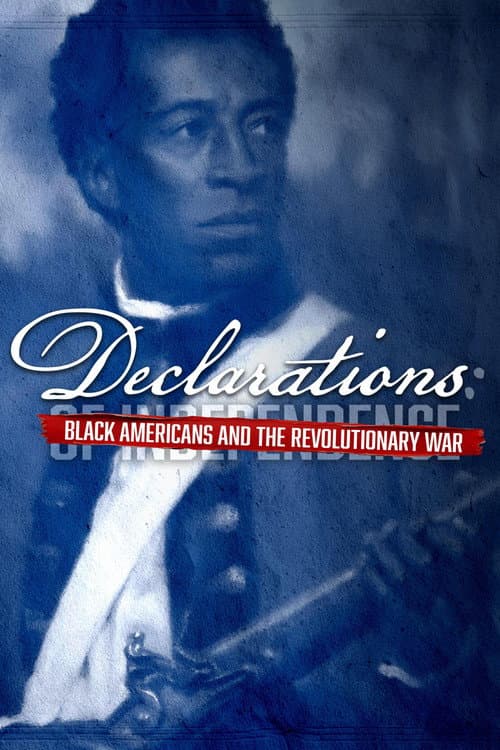
Declarations: A New Look at Black Americans and the Revolution
Coming in 2026 for the 250th anniversary of American independence, Declarations: Black Americans and the Revolutionary War isn't just another historical documentary. It's a vital re-examination of how Black people—enslaved and free—claimed the promise of "all men are created equal" during the nation's founding. The film argues that when Thomas Jefferson penned those iconic words, Black people in the colonies heard them too, recognizing them as their own declaration of inherent rights. This isn't a comfortable re-framing for many, nor was it meant to be. Instead, it traces how individuals and entire communities fought for these tenets of democracy for themselves, their families, and their future.
The Scholars Behind the Story: Why This Film Matters
This documentary, produced by Virginia Public Media and PBS, arrives precisely when we're asking harder questions about who the Founders were actually talking about when they declared freedom. The decision to produce this film from Virginia, a state where slavery was absolutely foundational to its colonial economy and culture, isn't incidental. It's pointed.
The film's strength lies in its tight focus and its impressive lineup of historians and scholars: Leslie Alexander, Danielle Allen, Edward Ayers, Christopher L. Brown, and Woody Holton, among others. Look — this isn't just a panel of talking heads. These are academic heavyweights. Danielle Allen, a MacArthur Fellow and Harvard political philosopher, for instance, spent years arguing in her book Our Declaration that the document's equality clause was far more radical than most Americans realize. Woody Holton's work, on the other hand, consistently centers the experiences of ordinary people, including enslaved individuals, rather than solely focusing on the elite Founders. Having both of them, in conversation with the archival record, gives Declarations an intellectual backbone most anniversary documentaries simply don't have. It's rare for a film to bring this much academic rigor to a popular audience.
Its Unique Perspective: Beyond the Footnotes
What truly makes Declarations stand out is its steadfast refusal to treat Black Revolutionary-era Americans as mere footnotes to someone else's story. Most popular history — films, textbooks, museum exhibits — often positions Black people in this period as either passive victims of the founding contradiction or as a problem the Founders failed to solve. This film pushes back against that framing hard.
The historians on screen describe Black Americans who actively petitioned for freedom using the Declaration's own language, who fought on both sides of the war with specific strategic calculations about which side offered a better chance at liberty, and who built community institutions around the idea that democratic ideals were inherently theirs to claim. I keep coming back to one powerful sequence where a historian reads aloud from an actual freedom petition. The camera holds on the handwriting long enough that you start thinking about the person who wrote it, the immense risk they took, the sheer nerve it required. It’s a moment that makes you feel the weight of individual human decisions, not just sweeping historical forces.
How Long Is It? And Who Should Watch?
Clocking in at 60 minutes, Declarations is a tightly edited documentary. This isn't the kind of sprawling, two-hour-plus streaming feature that often loses its way. That runtime forces editorial discipline, ensuring every minute earns its place.
Anyone who thought they knew the story of the American Revolution should watch this. Not as a corrective lecture — the film doesn't have that tone — but because the version most of us learned genuinely left out a significant portion of what was happening. Students, educators, and history enthusiasts will find it substantively rigorous. But Declarations: Black Americans and the Revolutionary War also works for the curious general viewer who wants something that earns its run time. Movie OTT rates it as one of the more intellectually serious documentary releases of the anniversary year. Don't skip it.
Streaming Declarations: Your Guide to Watching Online
Wondering where to watch Declarations: Black Americans and the Revolutionary War? Since it’s a PBS production, your first stop should likely be PBS's own streaming infrastructure — often available through the PBS app or website. Beyond that, the film will be available on major OTT streaming services when it releases in 2026.
Streaming availability can shift, of course, but Movie OTT tracks streaming rights changes across platforms, so if you bookmark this page, you’ll always have accurate, up-to-date information. Movie OTT’s where-to-watch tracker, for example, will detail the current platform breakdown for viewers in the US, Canada, and beyond, ensuring you won't be chasing a title that's moved. Its tight 60-minute length means you can easily watch it in a single sitting. Perfect for a weeknight.
Frequently Asked Questions
Q: Where can I watch Declarations: Black Americans and the Revolutionary War? A: When it releases in 2026, Declarations: Black Americans and the Revolutionary War will be available on PBS's streaming platforms and major OTT streaming services. Check Movie OTT for the most current platform listings once it's out.
Q: How long is Declarations: Black Americans and the Revolutionary War? A: The documentary runs 60 minutes. It's a focused length — long enough to cover the subject with real depth, short enough to watch in one sitting without any pacing issues.
Q: Who are the historians featured in the film?
The film features insights from Leslie Alexander, Danielle Allen, Edward Ayers, Christopher L. Brown, and Woody Holton. These are prominent academics specializing in Revolutionary-era and African American history.
Q: Is Declarations: Black Americans and the Revolutionary War based on a true story? A: Yes, it's a documentary firmly grounded in historical record. The film draws on archival documents, petitions, and scholarly research to reconstruct how Black Americans engaged with the ideals of the Declaration of Independence during the Revolutionary War period.