What Deep Sea Exploration: The Last Frontiers on Earth is actually about
Deep Sea Exploration: The Last Frontiers on Earth sets its premise in the first few minutes and doesn't let go — somewhere between 200 and 6,000 metres below the ocean surface, where light simply stops existing, there's an entire world that most of us will never see and that science has barely begun to map. The film follows a 45-day scientific mission aboard the French research vessel Le Pourquoi pas! and the crewed submersible Le Nautile, tracking researchers as they document abyssal ecosystems that host a staggering share of global marine biomass. What the scientists find isn't just strange life — it's a living system that quietly regulates Earth's climate through carbon cycling and ocean chemistry. The official tagline puts it plainly: "Embark on a scientific mission to discover abyssal life!" And that's exactly what this film does, without flinching from the uncomfortable subplot that industrial mining interests are already circling the same territory the researchers are trying to understand.
How Deep Sea Exploration: The Last Frontiers on Earth came together
The film is directed by Stéphane Huonic and Alwin Courcy and produced by Grand Angle Productions in co-production with ARTE and SVT — a Franco-Swedish public broadcaster partnership that tends to greenlight exactly this kind of serious, science-forward documentary work. According to Gad Distribution, the film's international sales agent, the project was slated for delivery in January 2026, which places it firmly in the early wave of the year's documentary slate. Running at 53 minutes, it's built for television — classified as a TV Movie across the Documentary and Family genres — and that format suits the material well. You don't need two hours to feel the weight of what's at stake down there.
Huonic and Courcy aren't working with a cast in the traditional sense. The "performances" here come from the scientists themselves — researchers who clearly know they're being filmed but who, in the footage captured aboard Le Nautile, seem too absorbed in what they're seeing to perform for the camera. That's a directing choice worth noticing. Getting scientists to stop narrating and just react is harder than it looks. The production doesn't yet carry major festival awards on its record — post-release data for the film remains sparse given its early 2026 delivery window — but the pedigree of the co-producers (ARTE in particular has a strong track record with environmental documentary work) suggests this wasn't a rushed commission. Hard to say if it'll land on the awards circuit, but the craftsmanship visible in the footage argues it deserves consideration. Movie OTT will be tracking any festival or critic recognition as it emerges, so check back as the year develops.
Why Deep Sea Exploration: The Last Frontiers on Earth stands out from other ocean documentaries
Honestly, the ocean documentary space is crowded. Between BBC Earth productions, Netflix's various blue-chip natural history series, and the steady stream of climate-anxiety films, it's reasonable to ask what this one adds. The answer is specificity. Most ocean documentaries gesture vaguely at "the deep sea." This film commits to a single 45-day mission, a single vessel, a named submersible, and a scientific team with a defined research agenda — and that constraint turns out to be a strength rather than a limitation.
What's striking is the film's willingness to hold two things in tension at once: the genuine wonder of discovering organisms that have evolved in complete darkness, and the creeping dread of knowing that extinct hydrothermal vents — the geological structures these ecosystems cluster around — are exactly where mining companies want to extract polymetallic nodules and other mineral deposits. The film doesn't moralize heavily. It doesn't need to. Watching a researcher describe a microbial process that has been quietly sequestering carbon for millions of years, and then cutting to footage of industrial survey equipment, does the work without a narrator telling you how to feel.
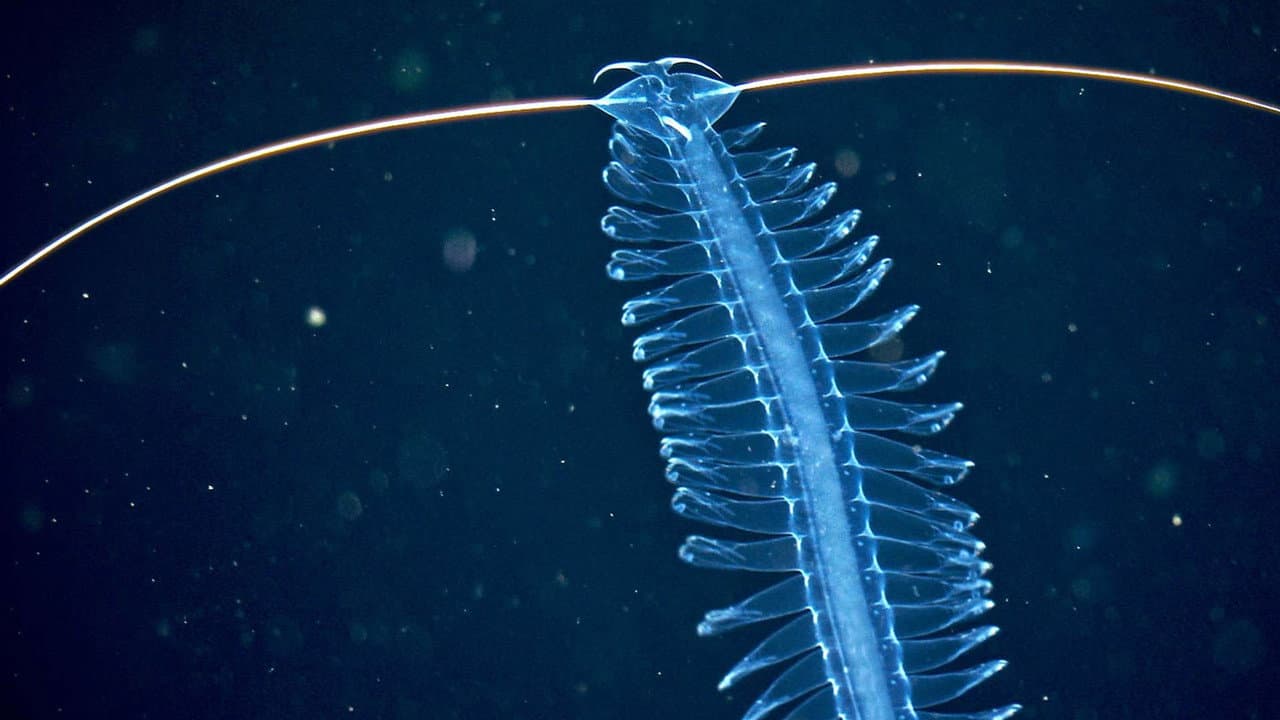
There's one sequence — filmed from inside Le Nautile as it descends past the photic zone into genuine blackness — where the submersible's exterior lights catch something translucent and slow-moving just at the edge of the frame. Nobody on screen identifies it immediately. That moment of "wait, what was that?" is worth the entire runtime on its own. As EarthX has noted in its coverage of deep-ocean exploration as a frontier comparable to space, we know more about the surface of Mars than we do about the ocean floor — and this film makes that fact feel visceral rather than abstract. Movie OTT's editorial team rates this among the more intellectually honest environmental documentaries of the year's early releases.
Where to stream Deep Sea Exploration: The Last Frontiers on Earth online
Deep Sea Exploration: The Last Frontiers on Earth is currently available on major OTT services, and the quickest way to find the right platform for your region is the Where-to-Watch widget at the top of this page — Movie OTT aggregates real-time availability across streaming services so you're not hunting through multiple apps manually. Given the ARTE co-production credit, European viewers may find it accessible through ARTE's own streaming platform, which makes a large portion of its documentary catalogue available internationally. The film's TV Movie classification also makes it a natural fit for documentary-focused streaming tiers. Availability windows shift, so the widget above reflects the most current picture. If you're planning a family watch — the film carries a Family genre tag alongside Documentary — it's worth noting the runtime is a tight 53 minutes, which makes it genuinely manageable for younger viewers with an interest in science.
Frequently asked questions
Q: Who directed Deep Sea Exploration: The Last Frontiers on Earth?
The film was directed by Stéphane Huonic and Alwin Courcy, working under Grand Angle Productions in co-production with ARTE and SVT. It was slated for delivery in January 2026.
Q: Where can I watch Deep Sea Exploration: The Last Frontiers on Earth?
The documentary is available on major OTT platforms — check the Where-to-Watch widget at the top of this page on Movie OTT for live, region-specific streaming options, since availability can vary by country and change over time.
Q: Is Deep Sea Exploration: The Last Frontiers on Earth suitable for children?
Yes — it's classified under the Family genre alongside Documentary, and at 53 minutes it's a manageable length for curious younger viewers. The content focuses on scientific discovery and environmental stakes rather than anything disturbing.
Q: What research vessel is featured in Deep Sea Exploration: The Last Frontiers on Earth?
The documentary follows scientists aboard the French research vessel Le Pourquoi pas! and the crewed submersible Le Nautile over a 45-day scientific mission documenting abyssal ecosystems and their role in Earth's carbon cycle.
Q: Does Deep Sea Exploration: The Last Frontiers on Earth cover deep-sea mining?
It does — one of the film's central tensions is the growing industrial interest in extracting minerals from near extinct hydrothermal vents, the same areas that host the fragile ecosystems the scientists are studying. The film frames this as an urgent conservation issue without turning into a polemic.
Who should watch Deep Sea Exploration: The Last Frontiers on Earth
Deep Sea Exploration: The Last Frontiers on Earth is the kind of documentary that rewards patient, curious viewers — people who don't need explosions or manufactured drama to stay engaged. Science enthusiasts, families looking for something genuinely educational, and anyone who's ever stared at the ocean and wondered what's actually happening down there will find this worth 53 minutes of their time. It's not a comfortable watch in the environmental sense — the threat to these ecosystems is real and documented — but it's never hopeless. The scientists aboard Le Nautile are clearly still driven by discovery. That energy is contagious. Find it through the streaming options listed at movieott.com and watch it before the news cycle makes the subject feel old.