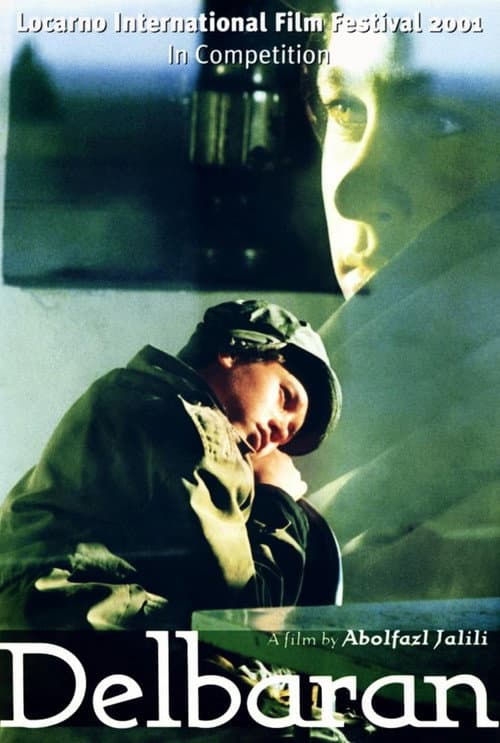
The story of Delbaran: survival at the Afghan-Iran crossing
Delbaran tells the story of Kaim, a 14-year-old Afghan refugee living illegally in Iran. He drifts to the Delbaran crossing—the border town itself becomes the film's emotional center—where he finds work at a small coffee shop that caters to truck drivers passing through. It's the kind of place that might feel like home: a warm shelter from the chaos outside. But the film doesn't let us rest there. War sounds drift in from across the border. Bandits prowl the roads. Opium moves through the town like a ghost. As we watch Kaim move from task to task, day after day, the real story emerges—not one of adventure or escape, but of a boy being systematically cheated out of his childhood by circumstances he didn't choose.
Behind the making of Delbaran: production and international recognition
Delbaran emerged from a collaboration between Japanese producer Bandai Visual and Iranian filmmakers at Film-e-Aval and Office Kitano, with T-Mark handling distribution. Director Abolfazl Jalili crafted the film as a response to the Afghan refugee crisis of the 1990s, a period when hundreds of thousands of Afghans fled war and Taliban rule into neighboring Iran. The 96-minute runtime is lean and purposeful—there's no wasted frame here. The film screened at major international festivals and earned a 6.125 rating on IMDb, a score that reflects its serious, uncompromising approach to a difficult subject. What's striking is that Jalili didn't make a film about the politics of refuge or a plea for sympathy. Instead, he made something far more intimate: a day-in-the-life portrait that trusts viewers to draw their own conclusions. Movie OTT tracks where Delbaran streams across major platforms, making this quietly essential film more accessible than it's been in years—though finding it still requires some hunting.
What makes Delbaran stand out: performance, craft, and moral clarity
The film's power rests almost entirely on the shoulders of its young lead and the direction's almost anthropological precision. Jalili doesn't score scenes with manipulative music or cut away from discomfort. When Kaim is cheated out of his wages, we see it. When he's exhausted, we feel it. The coffee shop itself becomes a character—a small island of routine and human connection in an otherwise hostile landscape. What I keep coming back to is how the film refuses sentimentality. There's no swooping rescue, no redemptive arc, no moment where Kaim's suffering is validated by some external recognition. Instead, Jalili shows us the mathematics of survival: work, eat, sleep, work again. The other characters—the truck drivers, the shop owner, the bandits—aren't caricatures but people moving through their own constrained lives. It's this specificity, this refusal to simplify, that separates Delbaran from more conventional refugee narratives. Variety and international film journals recognized the film's moral clarity, though mainstream audiences have had less access to it—until now.
Where to stream Delbaran online
Delbaran is currently available on major OTT services, and you can check the "Where to Watch" widget at the top of this page to see which platforms carry it in your region. Streaming availability shifts frequently, so Movie OTT keeps its database updated across Netflix, Prime Video, Hotstar, and other major aggregators. If you're hunting for it, don't be surprised if it's on a platform's international or arthouse section rather than the main homepage—Delbaran isn't designed to be a comfort watch, and the algorithms know it. That said, it's absolutely worth the extra click.
Frequently asked questions
Q: Who directed Delbaran?
Abolfazl Jalili directed the film. He's an Iranian filmmaker known for socially conscious narratives, and Delbaran remains one of his most internationally recognized works. The film was a co-production between Japanese and Iranian companies, reflecting Jalili's reach across film industries.
Q: Is Delbaran based on a true story?
While not based on a single true story, Delbaran draws directly from the real Afghan refugee crisis of the 1990s. Jalili conducted extensive research at border towns and coffee shops like the one depicted, and the film functions as a composite portrait of actual conditions and lived experience.
Q: What's the runtime of Delbaran?
The film runs 96 minutes. It's a lean, focused narrative that doesn't overstay its welcome—every scene serves the story of Kaim's daily life and the theft of his childhood.
Q: What are the main themes of Delbaran?
The film explores displacement, economic exploitation, the loss of childhood, and the small moments of human kindness that persist even in desperate circumstances. It's also a meditation on borders, legality, and the precarious status of refugees.
Q: Is Delbaran a heavy or depressing film?
It's serious and unflinching, yes. But it's not gratuitously dark. The film finds moments of connection and warmth alongside the hardship—the coffee shop itself is proof of that. What makes it difficult isn't melodrama; it's the honest portrayal of systemic indifference.
Final thoughts on Delbaran
Delbaran isn't the kind of film you watch for escape or entertainment in the conventional sense. You watch it because it matters. Because it shows us a corner of the world that rarely gets this kind of sustained, dignified attention. Because it trusts us to sit with discomfort without spelling out what we should feel. If you're drawn to cinema that challenges rather than soothes—work by directors like Abbas Kiarostami or Jafar Panahi—this film belongs in your queue. It's a masterclass in restraint and moral seriousness.