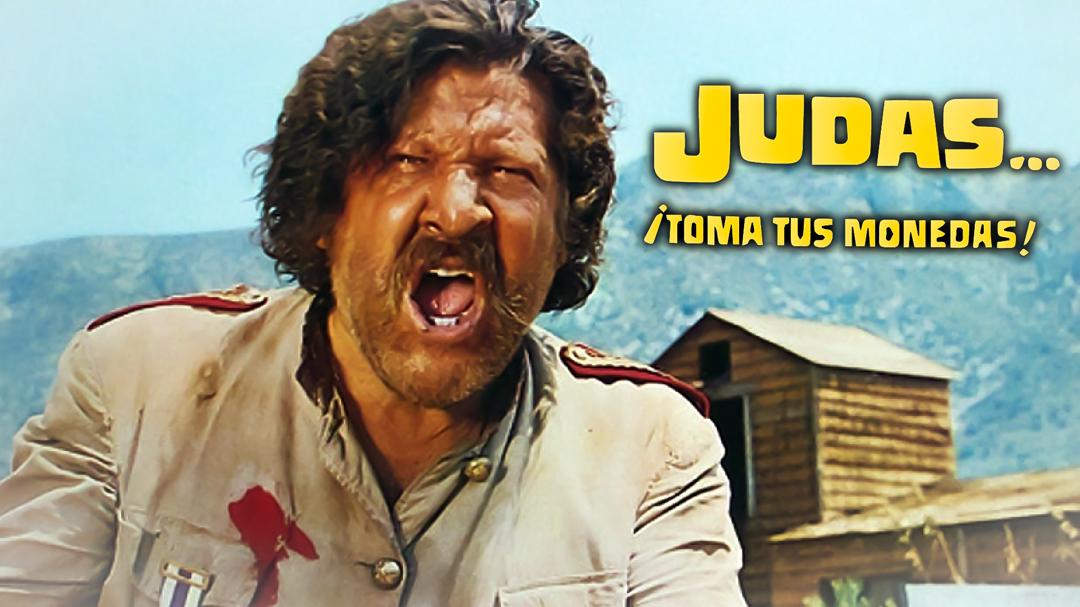
The story of Die Sklavenkarawane
Die Sklavenkarawane tells the story of a caravan moving through unforgiving desert terrain, where the line between survival and exploitation becomes impossible to ignore. The film centers on a group of people bound together by circumstance rather than choice — some driving the journey, others forced to endure it. What unfolds is less a straightforward adventure and more a moral reckoning wrapped in period costume and sand-swept landscapes. The narrative doesn't announce its themes loudly; instead, it lets the characters' choices speak for themselves as the caravan pushes deeper into hostile territory. Tensions simmer beneath the surface, waiting for the right moment to boil over.
Behind the making of Die Sklavenkarawane
Die Sklavenkarawane emerged from a co-production between Spanish and German studios in 1958, a time when European adventure films were still finding their footing in the post-war market. Director Georg Marischka helmed the project with a cast that included Viktor Staal, Georg Thomalla, and Theo Lingen — actors who'd built careers across European cinema. The ensemble also featured Spanish performers like Fernando Sancho, Mara Cruz, and José Guardiola, lending authenticity to the location-based storytelling. Marischka, working within the adventure genre, faced the challenge of balancing spectacle with substance — a difficult task when budgets were tighter than studio backers would've preferred. The film's production design reflects the constraints and ambitions of mid-century European filmmaking: ambitious in scope, practical in execution. While box office records from the era are fragmentary, the film found distribution across multiple territories, suggesting it had commercial legs at the time. Today, it sits at 5.1 on IMDb, a rating that likely reflects both the film's genuine strengths and the inevitable wear that six decades of cinema history inflicts on any picture that isn't actively championed by critics or streaming algorithms.
What makes Die Sklavenkarawane stand out
What's striking is how the film refuses to be a simple good-versus-evil narrative — that would've been easier, and frankly, less interesting. Instead, Marischka gives us characters who aren't villains so much as they're compromised, caught in systems larger than themselves. Viktor Staal's performance carries a weariness that suggests he's seen too much and can't quite bring himself to care anymore (though he's not quite there yet — that's the tension). The supporting cast, particularly Theo Lingen, brings a kind of world-weary pragmatism to their roles. Nobody's shouting about morality; they're just living through the consequences of choices made long before the camera started rolling. The desert itself becomes a character — not just backdrop but something that strips away pretense. When a caravan moves through that kind of landscape, you can't hide who you really are. The pacing is uneven by modern standards, sure, but that unevenness mirrors the rhythm of actual travel: long stretches of monotony punctuated by sudden danger. It's the kind of film that rewards patience, though I'll admit it won't be for everyone.
Where to stream Die Sklavenkarawane online
If you're curious about this piece of European cinema history, you can find Die Sklavenkarawane on Prime Video right now. The film's availability varies by region, so Movie OTT tracks where it's currently streaming in your area — check the Where to Watch widget at the top of this page for real-time updates. Prime Video's catalog includes a surprising number of older European adventure films that don't get much critical attention anymore, and Die Sklavenkarawane is a solid example of what's hiding in those deeper shelves. Streaming services don't always promote catalog titles from the 1950s, which is why sites like Movie OTT exist: to help you discover what's actually available rather than what the algorithm decides you should see.
Frequently asked questions
Q: Where can I watch Die Sklavenkarawane?
Die Sklavenkarawane is currently available on Prime Video. Streaming availability changes regularly by region, so check the Where to Watch widget on this page for the most current information.
Q: Who directed Die Sklavenkarawane?
Georg Marischka directed the film. He was an accomplished European director working across German and international productions during the 1950s.
Q: Is Die Sklavenkarawane based on a true story?
The film draws on historical elements of caravan travel and the darker chapters of that history, though it's a fictional narrative rather than a direct adaptation of specific events.
Q: What's the IMDb rating for Die Sklavenkarawane?
The film currently holds a 5.1/10 rating on IMDb, reflecting mixed audience reception over the decades since its 1958 release.
Q: Who stars in Die Sklavenkarawane?
The cast includes Viktor Staal, Georg Thomalla, Theo Lingen, Fernando Sancho, Mara Cruz, José Guardiola, and Rafael Luis Calvo. It's a strong ensemble of European actors from that era.
Final thoughts on Die Sklavenkarawane
Die Sklavenkarawane isn't a masterpiece, and it won't revolutionize how you think about cinema. But it's a genuinely interesting artifact of 1950s European filmmaking — the kind of picture that deserves more than a footnote. If you're the type who appreciates adventure films with actual moral weight, or if you're fascinated by how cinema looked and felt in the immediate post-war years, it's worth your time. The fact that it's available on Prime Video means there's no barrier to checking it out. Sometimes the best discoveries aren't the ones everyone's talking about.