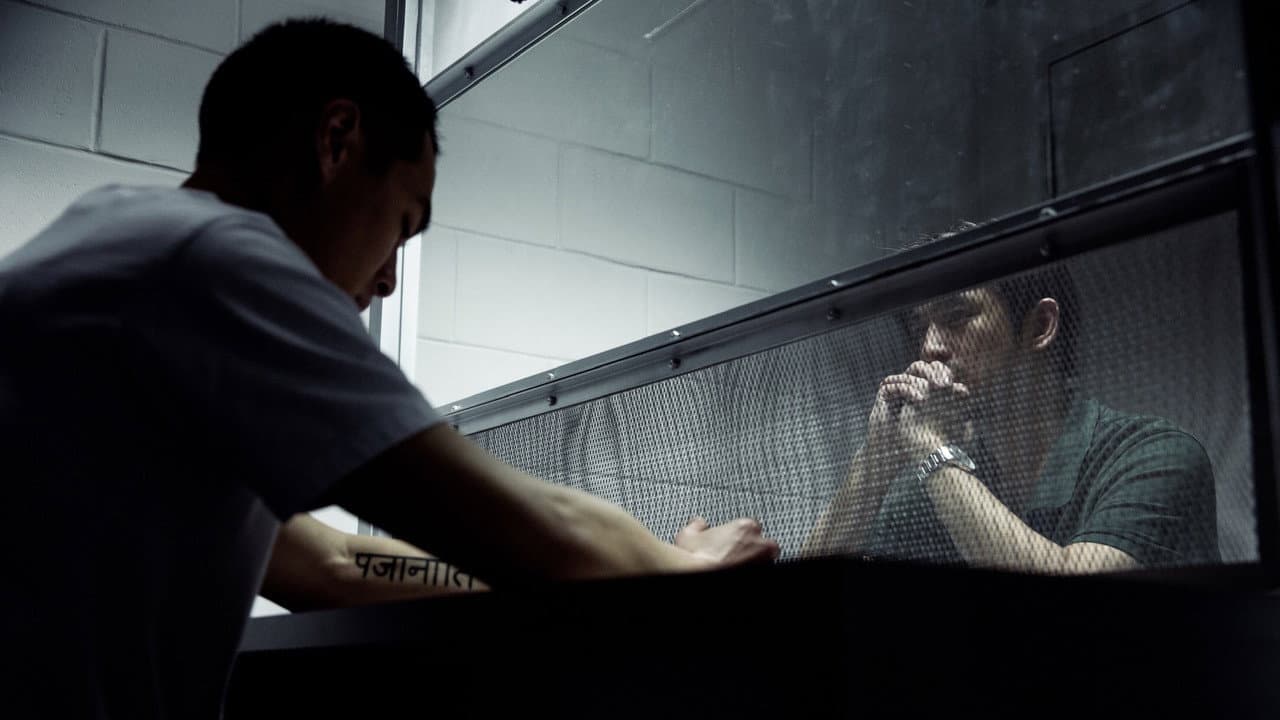







The Story of Distance
Distance isn't one story—it's three, each one pulling at a different thread of human connection. The film opens with a conflicted manager on a business trip who becomes fascinated by an elderly worker, compelled to investigate the hidden corners of his life. From there, we shift to a young father who receives a mysterious letter that pulls him across borders, unearthing emotions he thought he'd buried long ago. Finally, a visiting professor from overseas arrives at a university where a student's heart begins to flutter, even as the professor grapples with his own unresolved feelings. The official tagline says it best: "Stories about the distances between us and how we live with them."
What makes this anthology structure work is that it doesn't feel fragmented. Each segment carries its own emotional weight while building toward a larger meditation on separation—physical distance, emotional distance, the distance that grows between people who once were close. The 108-minute runtime moves swiftly, never lingering so long that you forget the previous story, yet giving each one enough space to breathe. It's the kind of film that trusts its audience to find connections without spelling them out.
Behind the Making of Distance
Distance is a true international production, bringing together filmmakers from multiple countries with distinct sensibilities. The film was directed by three different helms—Xin Yukun, Tan Shijie, and Sivaroj Kongsakul—each taking on one of the three segments. This could've been a disaster (and honestly, many anthology films are), but here it works because executive producer Anthony Chen clearly had a unified vision from the start. He wanted each story to explore one of three relationship types: family, friendship, and love. That singular thematic throughline holds everything together.
The cast brings real pedigree to the project. Chen Bolin, Jiang Wenli, Tony Yang, Paul Chun, and Chayanit Chansangavej anchor their respective segments with performances that feel lived-in rather than showy. The film premiered at the 52nd Golden Horse Film Festival and Awards on November 5, 2015—one of Asia's most prestigious film festivals—before rolling out in China on May 13, 2016, and Taiwan on May 20, 2016. It's a co-production between Guangxi Film Group, Changjinglu Cinema Studio, and Giraffe Pictures, representing a genuine collaboration across the region. Movie OTT tracks films like this that move between territories and streaming platforms, making it easier to find international work that might otherwise stay hidden.
What Makes Distance Stand Out
Here's what's striking about Distance: it doesn't try to be profound. It just sits with ordinary moments—a conversation over tea, a letter arriving in the mail, the awkward shimmer of attraction—and lets them speak. The IMDb rating of 5.7 suggests it's not universally beloved, and that's fair. Some viewers want more plot momentum, more resolution. But what the film's doing is quieter than that. It's interested in the texture of longing, the way distance creates both space and intimacy at once.
The performances carry this weight. There's a scene in the first segment where the manager finally confronts the elderly worker about his past—nothing explosive happens, but the air between them shifts. You can feel decades of untold stories hanging there. In the second story, when the young father opens that letter, the camera doesn't cut away or underscore the moment with music. It just watches his face. That restraint is what makes it work. I keep coming back to how the film trusts silence—trusts that you'll understand what's unsaid. The third segment, with the professor and student, captures that particular ache of attraction that can't quite materialize, not because of plot mechanics but because of who these people are and what they're carrying. It's the kind of emotional precision that separates good films from forgettable ones.
What nobody mentions enough is the cinematography's role in binding these stories together. Each segment has its own visual language—different color palettes, different framing—yet they all share a kind of attentive, almost documentary-like approach to human faces. You're never watching a performance. You're watching real people grappling with real distance.
How to Stream Distance Online
Distance is available on major OTT services, and if you're hunting for it, the Where to Watch widget at the top of this page will show you exactly which platforms currently have it in your region. Streaming availability shifts regularly—a film like this, with its international pedigree, bounces between services depending on licensing agreements. Rather than chase it across a dozen sites, use movieott.com to check what's live right now. The film's 108-minute runtime makes it perfect for a quiet evening when you're in the mood for something that doesn't demand constant plot movement but rewards your attention with emotional specificity.
Frequently asked questions
Q: Who directed Distance?
Distance was directed by three different filmmakers—Xin Yukun, Tan Shijie, and Sivaroj Kongsakul—each handling one of the three segments. Executive producer Anthony Chen unified the vision around the theme of three relationship types.
Q: Where can I watch Distance?
Distance is available on major OTT platforms. Check the Where to Watch widget on this page for current availability in your region, as streaming rights shift frequently for international films.
Q: What countries produced Distance?
It's a co-production between China, Thailand, Singapore, and Taiwan, involving Guangxi Film Group, Changjinglu Cinema Studio, and Giraffe Pictures.
Q: When was Distance released?
The film premiered at the Golden Horse Film Festival on November 5, 2015, then released in China on May 13, 2016, and Taiwan on May 20, 2016.
Q: Is Distance based on a true story?
No, Distance is an original anthology film. Each segment is a fictional story exploring different types of relationships and the distances that form within them.
Final Thoughts on Distance
Distance won't be for everyone. If you're looking for plot-driven drama with clear arcs and satisfying endings, look elsewhere. But if you're the kind of viewer who can sit with ambiguity, who finds meaning in what's not said, who understands that sometimes the most important conversations happen in silence—then this film's for you. It's a reminder that distance isn't always a bad thing. Sometimes it's what lets us see each other clearly.