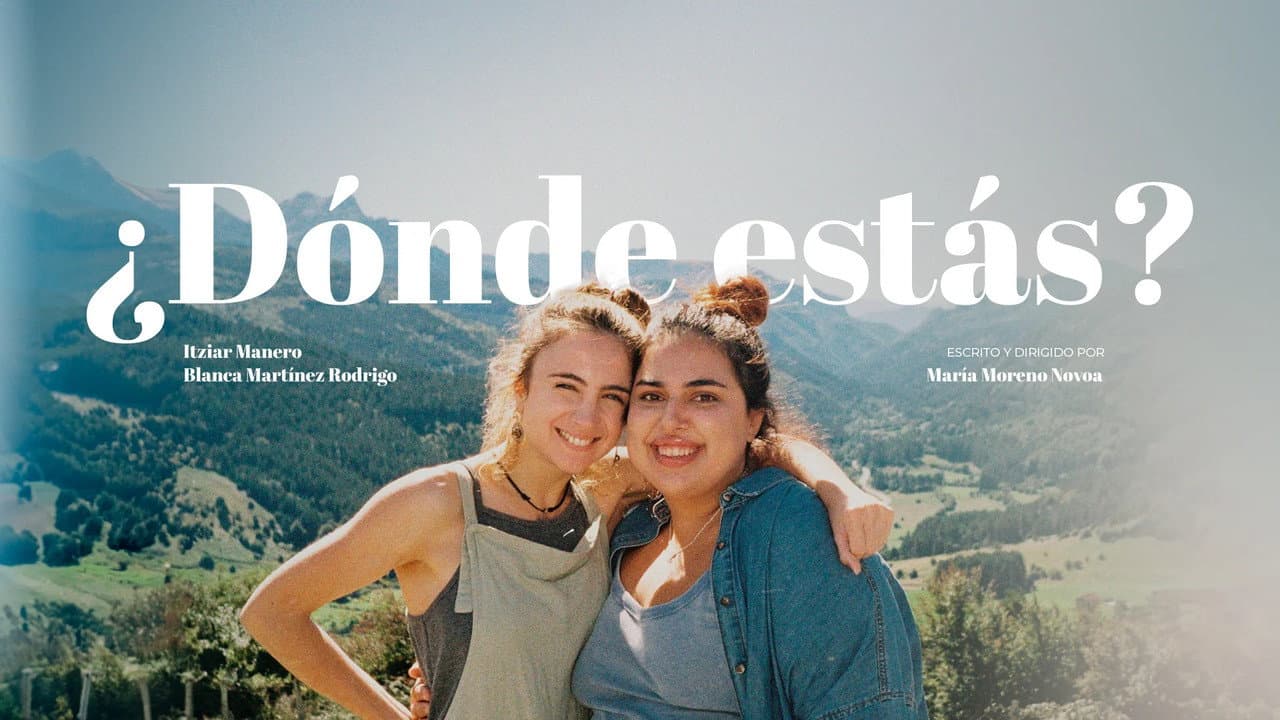


The story of ¿Dónde estás? unfolds across a pivotal moment
¿Dónde estás? is a short film that captures something most narratives gloss over: the exact moment when two people realize they're about to become strangers. Nahia and Laura are 25 years old, driving through the roads of Navarra in what feels like the last gasp of summer. Both women are on the precipice of fulfilling long-held teenage dreams, the kind of promises you make to each other when everything feels infinite. But here's the catch — those dreams don't align anymore. The film doesn't announce this conflict loudly. Instead, it lives in the silences between conversations, in the way they look at the landscape rolling past, in the unspoken understanding that something's about to give.
El Rayo Verde Films produced this intimate portrait, crafting a narrative that respects the audience's intelligence enough not to spell everything out. The 14-minute runtime works entirely in the film's favor. There's no room for padding, no subplot to distract from what really matters: two people grappling with the gap between who they promised to be and who they're actually becoming. It's the kind of story that sticks with you precisely because it doesn't try too hard to make you feel something.
Behind the making of ¿Dónde estás? and its production pedigree
Produced by El Rayo Verde Films, ¿Dónde estás? represents the kind of lean, focused filmmaking that's become increasingly rare in an era of bloated runtimes and unnecessary exposition. The production company has built a reputation for championing intimate character work, and this short film is no exception. Working within the constraints of a 14-minute format actually becomes a creative asset — every frame, every line of dialogue, every pause has to earn its place.
The film emerged from a Spanish production context that's been quietly producing some of Europe's most thoughtful short cinema in recent years. While ¿Dónde estás? hasn't accumulated the festival trophy case of some higher-profile shorts, its availability on major streaming platforms means it's reached an audience far beyond traditional film-festival circuits. Movie OTT tracks these kinds of international indie productions across streaming services, making it easier to discover work that might otherwise slip past mainstream attention. The cast — two leads who embody the vulnerability required for this kind of understated storytelling — bring a naturalism to their performances that suggests both professional training and genuine chemistry. You can't fake the kind of ease that allows silences to breathe, and both performers understand that implicitly.
What makes ¿Dónde estás? stand out in short-form storytelling
What's striking about ¿Dónde estás? is how it refuses the obvious emotional beats. You might expect a scene where one character explicitly confesses their diverging dreams, or a climactic argument that forces everything into the open. Instead, the film trusts that we understand the subtext. The landscape of Navarra becomes almost a third character — those winding roads through farmland and small towns aren't just pretty backdrop, they're a visual metaphor for the paths these two women are about to take separately. I keep coming back to how the film uses car conversations, that most mundane of settings, to explore something profound about growing apart.
The performances anchor everything. There's no melodrama here, no overwrought declarations. What you get instead is the micro-expressions of people who care deeply about each other but can feel the tectonic plates shifting beneath their friendship. One actress carries a particular scene — I won't spoil which — where she's looking out the window while the other character talks, and you can see the exact moment she's decided something. It's maybe two seconds of screen time, but it contains an entire emotional arc. That's the kind of craftsmanship that separates genuine filmmaking from content creation.
The thing nobody mentions about short films like this is how they often capture emotional truth more efficiently than feature-length narratives. There's no room for the audience to get comfortable, to assume everything will work out, to settle into a false sense of security. ¿Dónde estás? keeps you slightly off-balance throughout, which is exactly where you should be when watching two people navigate the end of something they didn't know was ending.
Where to stream ¿Dónde estás? online
¿Dónde estás? is currently available on major OTT services, making it accessible whether you're scrolling through your regular streaming subscription or hunting for something that breaks the mold of algorithm-driven recommendations. The advantage of checking Movie OTT before searching is that you'll see exactly which platforms carry it in your region — streaming rights vary, and there's nothing more frustrating than getting invested in a title only to discover it's not available where you are. The Where-to-Watch widget at the top of this page shows you current availability across all major platforms, so you can jump straight to watching without the runaround.
For a short film, ¿Dónde estás? deserves the kind of focused, uninterrupted viewing you'd give a feature. Don't queue it up while you're doing something else. Give it your full attention for those 14 minutes. That's not a demand — it's a suggestion from someone who's seen what happens when viewers actually sit with work like this instead of half-watching it.
Frequently asked questions
Q: Where can I watch ¿Dónde estás? right now?
The film is available on major OTT streaming services. Use the Where-to-Watch widget on this page to see which platforms currently carry it in your region, since streaming availability changes regularly.
Q: Who directed ¿Dónde estás? and what's their background?
The film was produced by El Rayo Verde Films, a production company known for championing intimate character-driven work. While specific directorial credits aren't detailed in available sources, the production team's approach emphasizes understated storytelling over conventional narrative beats.
Q: Is ¿Dónde estás? based on a true story?
The film appears to be an original narrative exploring the universal experience of friends diverging as they reach adulthood. While not explicitly based on real events, its emotional authenticity comes from drawing on recognizable human experiences rather than specific biographical material.
Q: How long is ¿Dónde estás? and what's the plot?
The film runs 14 minutes. It follows Nahia and Laura, both 25, driving through Navarra during the last days of summer as they approach fulfilling teenage dreams that may take them down different paths.
Q: Is ¿Dónde estás? suitable for all audiences?
As a short film exploring themes of growing apart and life transitions, it's appropriate for mature teen and adult viewers. There's no explicit content, but the emotional weight may resonate more with audiences who've experienced friendship changes themselves.
Final thoughts on ¿Dónde estás?
If you're tired of streaming platforms serving you the same predictable narratives, ¿Dónde estás? is exactly the kind of film that reminds you why cinema matters. It's short enough to fit into an evening, substantial enough to haunt you afterward. Two women, one summer, one set of roads. That's all you need. The film trusts its audience completely, refuses to condescend, and delivers something genuinely moving without ever trying to manipulate you into tears. That's rare. Watch it.