








Unearthing the Ancient Evil in Doctor Who: Pyramids of Mars
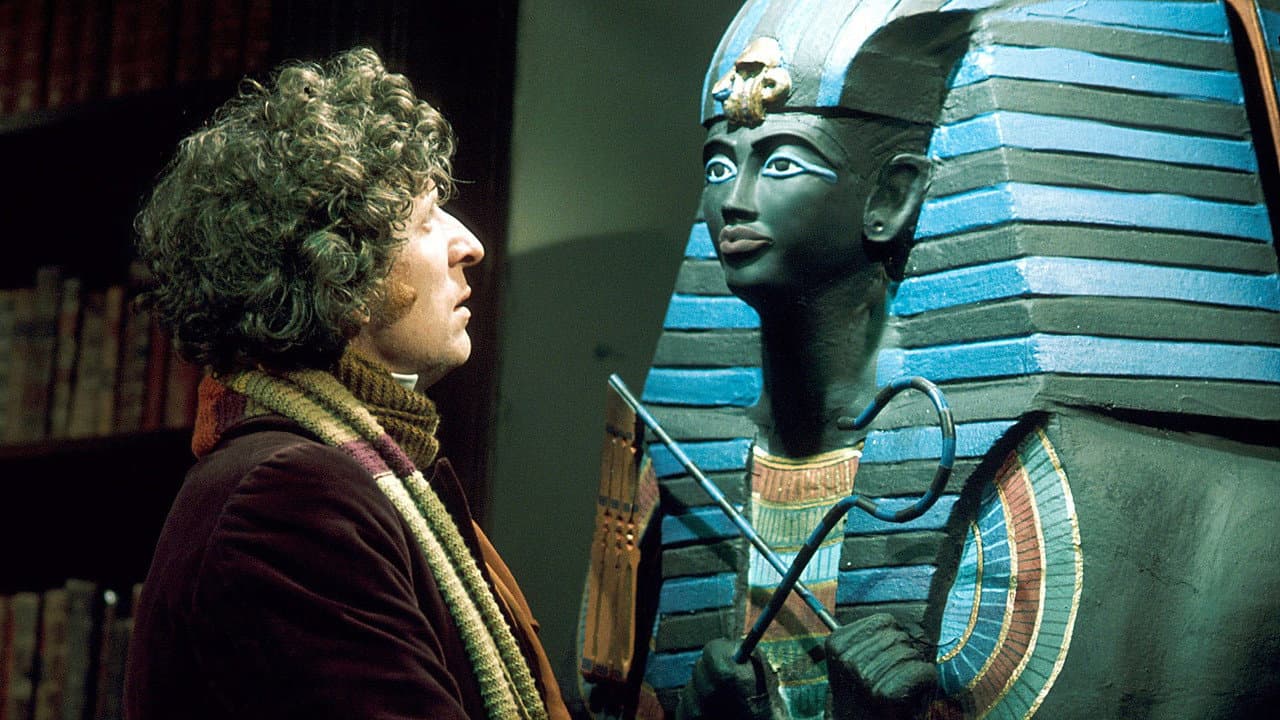
Unearthing the Ancient Evil in Doctor Who: Pyramids of Mars takes viewers back to a chilling encounter in Edwardian Britain, where the Doctor and Sarah Jane Smith stumble upon a mystery far older than humanity itself. After the TARDIS, as usual, gets dragged off course, it lands near a sprawling Gothic mansion, the estate of the eccentric archaeologist Marcus Scarman. Immediately, an unsettling atmosphere permeates the air, a palpable sense of dread that signals something profoundly wrong. The master of the house is conspicuously absent, replaced by a sinister Egyptian figure named Namin, whose presence hints at dark rituals and forbidden knowledge. Soon, cloth-wrapped mummies begin to roam the grounds, not as mere reanimated corpses, but as instruments of a terrifying, ancient will. These aren't just local hauntings; they are the advance guard for Sutekh the Destroyer, the last of the Osirans, a cosmic entity imprisoned beneath a pyramid for millennia, now poised to unleash his ultimate 'gift' of death upon the entire universe. It's a race against time, with the fate of all living things hanging precariously in the balance.
The Genesis and Enduring Legacy of Doctor Who: Pyramids of Mars
The Genesis and Enduring Legacy of Doctor Who: Pyramids of Mars stems directly from the creative powerhouse that was BBC's 1970s science fiction output, delivering one of the franchise's most revered serials in 1975. This four-part adventure, clocking in at a taut 97 minutes, perfectly encapsulates the Fourth Doctor era's signature blend of wit, horror, and high-stakes drama. Tom Baker, in his second full season as the Doctor, delivers a performance that's both commanding and utterly alien, solidifying his status as arguably the most iconic incarnation of the Time Lord. His chemistry with Elisabeth Sladen, playing the resourceful and empathetic journalist Sarah Jane Smith, is simply electric — a partnership fans still adore. The production, typical of BBC output at the time, made clever use of limited resources, crafting surprisingly effective sets and costumes that lean heavily into the Hammer Horror aesthetic. The eerie mansion, the barren Martian landscape (achieved through clever studio work), and the menacing design of the mummies and Sutekh himself, all contribute to a deeply immersive experience. It's no wonder that decades later, fans and critics alike continue to praise its quality, reflected in its impressive IMDb rating of 8.6/10. Radio Times writer Mark Braxton, for instance, retrospectively lauded it in 2011, stating, "Pyramids of Mars is simply perfect. It's a gold-standard Doctor Who adventure, a masterclass in tone, pacing and performance." Such acclaim isn't lightly given; it's earned through consistent quality and memorable storytelling that transcends its budget.
Unpacking the Enduring Appeal of Doctor Who: Pyramids of Mars
Unpacking the Enduring Appeal of Doctor Who: Pyramids of Mars reveals a masterful blend of character, atmosphere, and existential dread that has cemented its place as a fan favorite for nearly five decades. What's striking is how effectively it marries classic gothic horror tropes—the isolated mansion, the lurking mummies, the ancient curse—with grand cosmic science fiction. The terror isn't just about jump scares; it's a creeping, psychological dread, personified by the chillingly calm voice of Sutekh, who barely needs to leave his prison to exert his immense, destructive will. Fans, like CinemaSerf, often point to its incredible rewatchability, noting that it's one of those rare stories you can revisit time and again, always finding new nuances. Part of this comes down to the performances: Tom Baker's Doctor is at his eccentric, morally complex best, grappling with a truly god-like evil, while Sarah Jane grounds the story with her relatable fear and courage. The scene where the Doctor explains the sheer, overwhelming power of Sutekh to Sarah Jane, almost losing hope himself, is a pivotal moment, showcasing their dynamic perfectly. Beyond the acting, the serial's pacing is impeccable, building tension steadily across its four episodes, culminating in a truly epic confrontation. Honestly, it's a testament to the script's strength that it can handle such weighty themes—the nature of good and evil, the casual cruelty of cosmic powers—without ever feeling preachy or losing its sense of adventure. It's a truly iconic piece of television, shaping the very idea of what Doctor Who could be.
Where to Stream Doctor Who: Pyramids of Mars Today
For those eager to experience the classic terror of Doctor Who: Pyramids of Mars, finding this iconic serial to stream is fortunately quite straightforward on major OTT services. This ensures that both long-time Whovians and newcomers alike can easily access one of the Fourth Doctor's most celebrated adventures. While specific platform availability can shift, the good news is that this 1975 gem is generally well-represented across various popular streaming providers. To see every platform where Doctor Who: Pyramids of Mars is currently available, you'll find a comprehensive, up-to-date list in the "Where to Watch" widget located at the top of this page. Here at Movie OTT, we pride ourselves on tracking the latest streaming options, making it simple for you to locate your next favorite watch. So, if you're ready to dive into a chilling tale of mummies and cosmic gods, your viewing options are just a click away.
Frequently asked questions
Q: What is the plot of Doctor Who: Pyramids of Mars?
In Doctor Who: Pyramids of Mars, the Fourth Doctor and Sarah Jane Smith arrive in Edwardian Britain, discovering a sinister Egyptian figure and reanimated mummies at a Gothic mansion. They soon learn that an ancient, powerful entity named Sutekh the Destroyer is imprisoned beneath a pyramid on the estate, seeking to be freed and unleash death upon the universe.
Q: Who are the main stars of Doctor Who: Pyramids of Mars?
The serial prominently features Tom Baker as the Fourth Doctor and Elisabeth Sladen as his beloved companion, Sarah Jane Smith. Their dynamic performances are central to the story's enduring appeal.
Q: When was Doctor Who: Pyramids of Mars originally released?
Doctor Who: Pyramids of Mars first aired in 1975 as part of the BBC's thirteenth season of Doctor Who. It quickly became a fan favorite and a benchmark for the series' quality.
Q: How long is Doctor Who: Pyramids of Mars?
The complete serial has a runtime of 97 minutes, typically presented as four individual episodes. This concise pacing allows for a tight, suspenseful narrative.
Q: Is Doctor Who: Pyramids of Mars considered a classic?
Absolutely. With an IMDb rating of 8.6/10 and consistent praise from fans and critics for its gothic atmosphere, compelling performances, and memorable villain, it's widely regarded as one of the finest Doctor Who stories ever made.
Final Verdict: Why Doctor Who: Pyramids of Mars Remains Essential Viewing
Ultimately, Doctor Who: Pyramids of Mars isn't just another entry in the vast Whoniverse; it's a foundational piece that defines an era and continues to enthrall new generations. Its masterful fusion of science fiction, drama, and adventure, steeped in a genuinely terrifying gothic horror aesthetic, creates an experience unlike any other. Whether you're a long-time fan of Tom Baker's iconic scarf and jelly babies, or simply a connoisseur of classic sci-fi looking for a truly atmospheric watch, this serial delivers. Don't miss it. Movie OTT highly recommends this timeless classic for its enduring impact and sheer entertainment value.