



The story of Dragonwyck unfolds in aristocratic mystery
Dragonwyck opens with a simple premise that conceals much darker undercurrents. A young Connecticut farm girl named Miranda is recruited by her distant cousin, the aristocratic Nicholas van Ryn, to serve as governess to his daughter at his sprawling Hudson Valley estate. What begins as a chance at social elevation—an escape from the rigid piety of her rural family—becomes an entanglement with a man whose charm masks something far more sinister. The patroon's world is one of inherited privilege, coded tradition, and secrets that the mansion's grand halls seem designed to contain. As Miranda settles into her new role, the line between admiration and fear begins to blur, and she discovers that her employer's ideals about power, class, and control run far deeper—and far darker—than she could have imagined.
The film's tagline promises "secret thoughts... that led to secret love... that led to rapture and terror," and that escalation is precisely the journey Mankiewicz charts. What's striking is how the movie refuses to treat the Hudson Valley setting as mere backdrop; the mansion itself becomes a character—a place where old money and older resentments collide with the stirrings of social change happening beyond its walls.
Behind the making of Dragonwyck: Mankiewicz, Zanuck, and a literary adaptation
Dragonwyck arrived in 1946 as a Twentieth Century Fox production directed by Joseph L. Mankiewicz, who also adapted the screenplay from Anya Seton's novel of the same name. Mankiewicz was already establishing himself as a master of dialogue and psychological complexity—the kind of director who could make a drawing room feel like a pressure cooker. Producer Darryl F. Zanuck shepherded the project, with uncredited support from Ernst Lubitsch, the legendary craftsman whose influence on tone and sophistication likely shaped the film's layered approach to romance and menace.
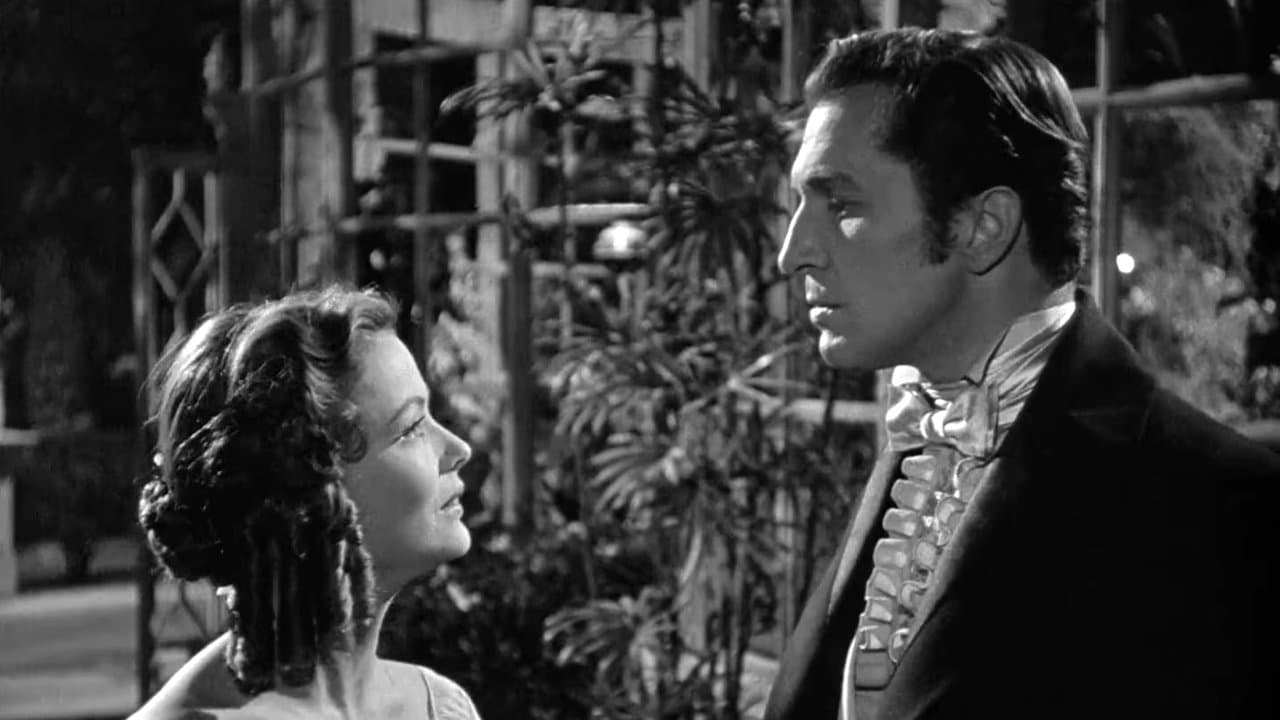
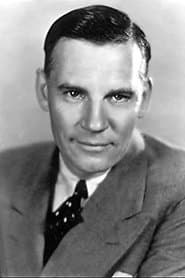
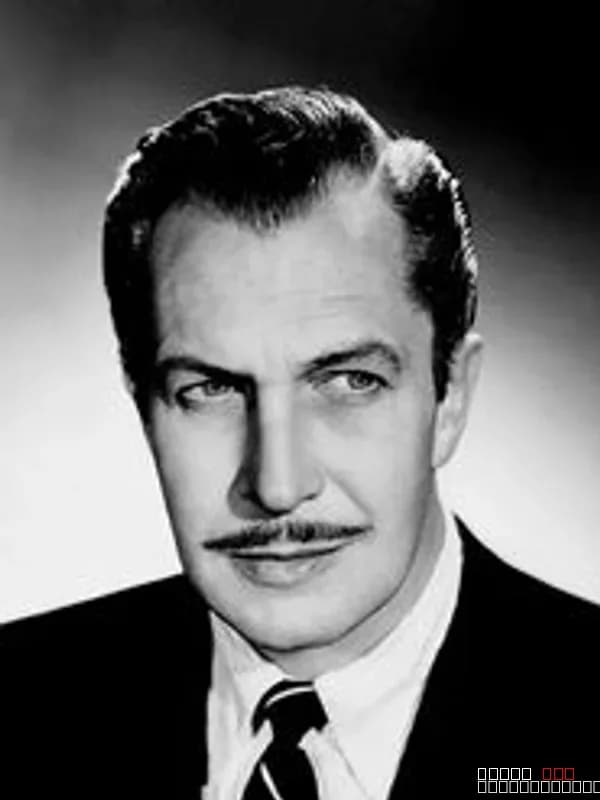
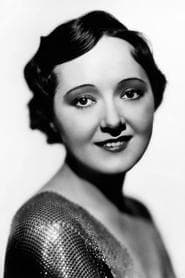
The cast assembled around the film's central tensions was formidable. Gene Tierney, fresh from her success in Laura, brought a luminous vulnerability to Miranda—the kind of actress who could convey both naïveté and dawning awareness in a single glance. Walter Huston, as her father Ephraim, embodied the stern religious conviction of her past life. But it's Vincent Price who anchors the film's moral ambiguity. Price, often remembered for his horror-film work, demonstrates here that his talent for sinister charm—the ability to make menace sound reasonable—was rooted in something far more sophisticated than camp. The supporting cast included Jessica Tandy, Anne Revere, and Spring Byington, all of whom inhabited the social hierarchies of the patroon's world with precision.
Alfred Newman composed the score, while cinematographer Arthur C. Miller captured the mansion's shadowed interiors and the Hudson Valley's moody landscapes in rich black-and-white. At 103 minutes, the film takes its time—there's no rush to revelation, which only deepens the sense of dread. The picture arrived during Hollywood's postwar period, when studios were beginning to explore psychological complexity and moral ambiguity in ways that would define the late 1940s. Dragonwyck holds an IMDb rating of 6.6/10, a respectable score that reflects its status as a well-crafted thriller that doesn't quite achieve the iconic status of its contemporaries, yet rewards patient viewing.
What makes Dragonwyck stand out as Gothic period romance
Dragonwyck works because it refuses to be a simple romance or a simple thriller—it's both, and the tension between those genres is where the film finds its power. Mankiewicz understood that the real horror isn't jump scares or sudden violence; it's the slow realization that someone you've been taught to trust is fundamentally dangerous. Price's Nicholas van Ryn doesn't skulk in shadows. He quotes philosophy, he dances with Miranda, he speaks eloquently about his vision for his estate and his place in the world. And that's precisely what makes him terrifying. The thing nobody mentions is that the film's real subject isn't just personal betrayal—it's the corruption that comes with unchecked power, the way aristocratic entitlement can metastasize into something monstrous when a man believes he answers to no one but himself.
Tierney's performance carries the emotional weight of the picture. She plays Miranda not as a helpless victim waiting to be rescued, but as a woman whose eyes are gradually opening to a reality she didn't want to see. There's a scene—I won't spoil exactly when—where she confronts Nicholas about his true nature, and the shift in her bearing is almost physical. She's no longer the girl who arrived at the mansion; she's someone who's glimpsed what lies beneath the patroon's elegant facade and can't unsee it. Huston, too, deserves credit for making her father something more than a one-note fundamentalist; he's rigid, yes, but his severity comes from genuine conviction, which makes the contrast with Nicholas's rationalized cruelty even sharper.
What's also worth noting is how the film engages with class and social upheaval. The patroon system itself—the feudal arrangement of the Hudson Valley—was already becoming obsolete by 1946, and the film's awareness of this historical moment adds texture to its drama. Nicholas's obsession with preserving his power and his bloodline feels not just personal but historical—the last gasp of a dying order. That's Mankiewicz's real sophistication at work.
Where to stream Dragonwyck online
Dragonwyck is currently available on major OTT services, and Movie OTT tracks exactly where you can watch it right now. Rather than hunting across multiple platforms, you can check the Where to Watch widget at the top of this page to see which streaming services in your region are carrying the film. Availability shifts seasonally, so if you're planning to revisit this 1946 classic or discover it for the first time, the widget will show you your options—whether that's a subscription service, a rental platform, or a free ad-supported stream. The beauty of aggregator sites like Movie OTT is that you don't waste time guessing; you get current, verified information about where to find what you want to watch.
Frequently asked questions
Q: Who directed Dragonwyck?
Joseph L. Mankiewicz directed and wrote the screenplay for Dragonwyck, adapting it from Anya Seton's novel. Mankiewicz was known for his sophisticated approach to dialogue and psychological depth, qualities that define the film's approach to its Gothic romance premise.
Q: Is Dragonwyck based on a true story?
No, Dragonwyck is based on Anya Seton's 1944 novel of the same name, which is a work of fiction. However, the film does draw on the real historical context of the patroon system in the Hudson Valley, a feudal land arrangement that was part of New York's colonial and early American history.
Q: What's the runtime of Dragonwyck?
The film runs 103 minutes, giving Mankiewicz ample time to build atmosphere and psychological tension without unnecessary padding. It's a deliberate pace that serves the story's slow-burn approach to revelation.
Q: Why is Dragonwyck compared to Rebecca?
Both films are Gothic period thrillers featuring a young woman drawn into the orbit of a charismatic but dangerous man in a grand estate. Like Hitchcock's Rebecca, Dragonwyck uses the architecture and atmosphere of the mansion itself as a character, and both explore themes of power, control, and hidden secrets. Vincent Price's performance as Nicholas van Ryn carries some of the same sinister charm that made Rebecca's Maxim de Winter so compelling.
Q: What year was Dragonwyck released?
Dragonwyck premiered in 1946 as a Twentieth Century Fox production. It arrived during a period when Hollywood was increasingly interested in psychological complexity and moral ambiguity in its storytelling.
Final thoughts on Dragonwyck
Dragonwyck isn't a film that announces itself as a masterpiece. It doesn't have the immediate impact of Rebecca or the fame of Mankiewicz's later work. But that's partly what makes it worth seeking out. It's a film that trusts its audience to sit with discomfort, to watch charm curdle into something ugly, and to understand that the real horror lies in how easily we can be seduced by surface elegance. If you're drawn to period thrillers, to Vincent Price's particular talent for menace, or to the idea of a film that takes its time building dread, Dragonwyck deserves a place in your queue.