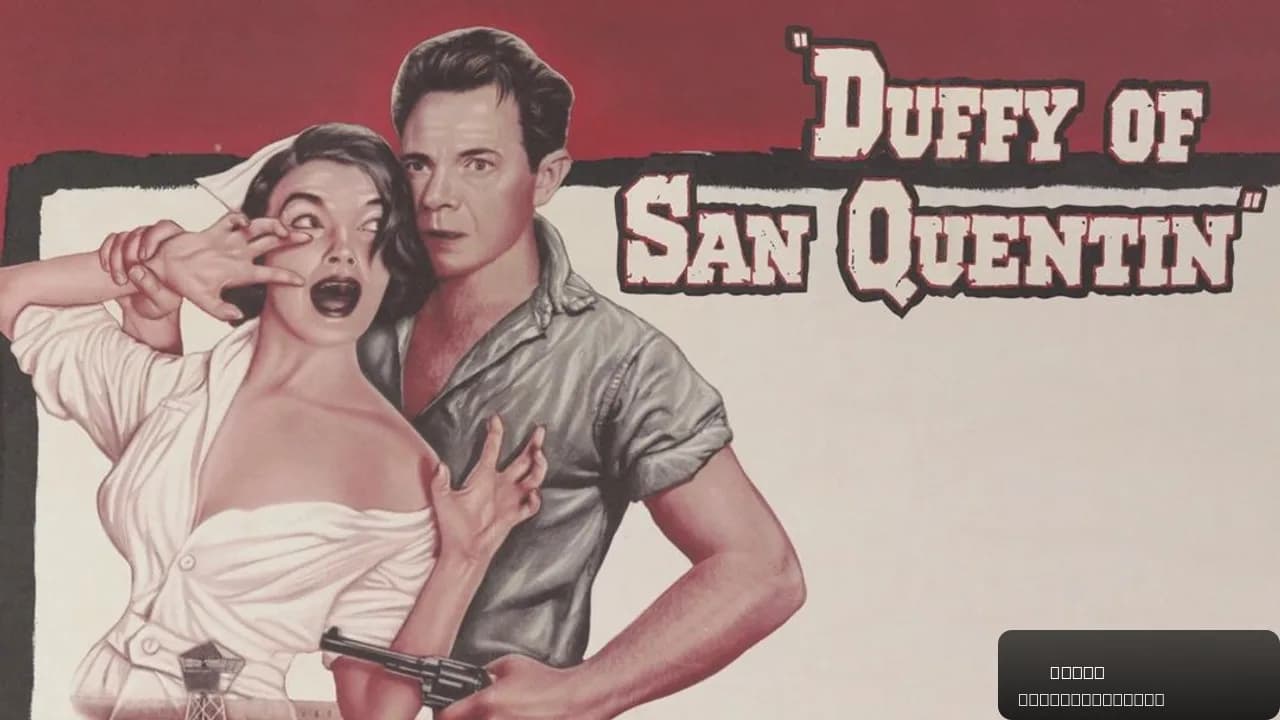

The story of Duffy of San Quentin
Duffy of San Quentin follows a man caught in the machinery of the American penal system, where survival depends on knowing which rules to break and which to follow. The film centers on the friction between institutional power and individual agency — a timeless tension that plays out across the prison's corridors and cells. Without spoiling the specifics, what matters is that the narrative doesn't shy away from the moral ambiguity that defines life inside the walls. You've got guards, inmates, administrators, and the occasional outsider all jockeying for advantage or redemption. The 78-minute runtime keeps things brisk, never lingering long enough for the audience to get comfortable. That's by design.
Behind the making of Duffy of San Quentin
Duffy of San Quentin arrived in theaters on March 16, 1954, released by Warner Bros. Pictures during a period when Hollywood was increasingly interested in exploring institutional settings and moral corruption. Director Walter Doniger, working from a script he co-wrote with Berman Swarttz, assembled a cast that brought real weight to the material. Louis Hayward — known for his work in period pieces and thrillers — anchors the film with a performance that doesn't rely on theatrical grandstanding. The supporting ensemble includes Joanne Dru, Paul Kelly, Maureen O'Sullivan, George Macready, and Horace McMahon, actors who understood how to convey tension through restraint rather than volume. This was the era when studio system contracts meant actors moved between projects with remarkable speed, and the ensemble here feels like a well-oiled machine. The film's production values are solid without being lavish; Doniger understood that the real drama came from character and circumstance, not from expensive set pieces. Warner Bros. was banking on the prison-picture formula — a reliable draw for audiences interested in crime and consequence — and the studio's distribution muscle ensured the film reached a wide theatrical release.
What makes Duffy of San Quentin stand out
What's striking about Duffy of San Quentin is how it refuses easy answers. The film doesn't present the prison as simply a place where bad people go to be punished. Instead, it's a world with its own economy, its own rules, its own hierarchy — one that doesn't always align with official policy or moral clarity. Hayward's performance captures something that's often missing from prison dramas: the exhaustion of trying to maintain your sense of self when the system is designed to strip it away. Paul Kelly and George Macready, as authority figures, aren't cartoonish villains; they're men doing a job, sometimes badly, sometimes with conviction, often with conflicting motivations. The dialogue crackles with the kind of specificity you don't hear in many films from this period — people talk like they've actually lived in confined spaces, where every word carries weight because privacy is a luxury you can't afford. I keep coming back to how the film treats San Quentin itself almost as a character. It's not just a backdrop. The architecture, the routines, the noise — they all press in on the narrative. Doniger's direction is economical; he doesn't waste frames on exposition or sentimentality. What you get instead is a lean, muscular story that trusts the audience to keep up. The film's IMDb rating of 4.5/10 suggests it hasn't aged into critical favor, but that says more about modern expectations for prison dramas than it does about the film's actual craftsmanship.
Where to stream Duffy of San Quentin online
Duffy of San Quentin is currently available across multiple streaming platforms, making it easy to catch if you're in the mood for classic crime cinema. You can stream it on Max, HBO Max Amazon Channel, YouTube TV, Apple TV Store, and Prime Video — so whether you're a subscriber to one service or juggling several, there's a good chance you've got access. Movie OTT tracks current streaming availability across all major platforms, so if you're unsure where to find a particular title, that's your go-to resource. The "Where to Watch" widget at the top of this page shows real-time availability, so you can jump directly to whichever service works best for you. Most of these platforms allow you to rent or purchase if you're not a subscriber, so there's no reason to miss out if San Quentin's calling.
Frequently asked questions
Q: Who directed Duffy of San Quentin?
Walter Doniger directed the film and also co-wrote it with Berman Swarttz. Doniger was a reliable craftsman in the 1950s, working across crime and drama genres with a focus on character-driven stories rather than spectacle.
Q: What year was Duffy of San Quentin released?
The film premiered on March 16, 1954, as a Warner Bros. Pictures release. It came out during a fertile period for prison-set dramas in Hollywood cinema.
Q: How long is Duffy of San Quentin?
The film runs 78 minutes, making it a lean, efficient narrative that doesn't overstay its welcome. That runtime was typical for mid-budget studio productions in the 1950s.
Q: Where can I watch Duffy of San Quentin?
You can stream it on Max, HBO Max Amazon Channel, YouTube TV, Apple TV Store, and Prime Video. Check the Where to Watch widget on this page for current availability and rental options.
Q: Is Duffy of San Quentin based on a true story?
The film is a fictional narrative written by Walter Doniger and Berman Swarttz, though it draws on the real setting of San Quentin prison and the broader institutional dynamics that defined American penal systems in the 1950s.
Final thoughts on Duffy of San Quentin
If you're looking for a no-nonsense prison drama that doesn't apologize for its cynicism or soften its edges for modern sensibilities, Duffy of San Quentin delivers exactly that. It's not a masterpiece — the pacing can feel dated, and some of the plot mechanics strain credibility — but it's a solid piece of 1950s studio filmmaking that respects both its subject matter and its audience. Hayward's understated performance and Doniger's efficient direction make this worth your time if you're into classic crime cinema. Stream it on whichever platform you've got access to, and don't expect sentimentality. You won't find it here.