

Earth Song
A 2026 Kurdish-Finnish drama that refuses easy answers
Here's what you need to know upfront: Earth Song is a 118-minute film directed by Erol Mintaş that premiered at IFFR 2026 and won Best Feature at the Amsterdam Kurdish Film Festival later that year. It stars Dilan Gwyn as Rojîn, a Kurdish-Finnish anaesthesiologist in Helsinki whose carefully constructed life fractures when her estranged father shows up unannounced. If you're looking for plot-driven family drama with clear resolutions, this isn't it. If you want something that actually feels like living through generational trauma — the weight of it, the silence around it — keep reading.
Why this film matters right now
Earth Song arrives at a specific moment. Kurdish cinema is gaining international visibility, but most films in wider distribution still rely on documentary urgency or political obviousness. What Mintaş does here is different: he makes a film about exile and Diyarbakır Prison trauma that barely mentions either directly. Instead, they're the invisible architecture underneath every conversation, every meal scene where nobody looks at each other, every time someone doesn't say what they're actually thinking.
The story's straightforward enough on the surface. Rojîn has built a life with her husband Ferhat and their 12-year-old adopted daughter Azad. Routine. Professional competence. Distance from whatever happened before. Then Nîzam — her father — arrives without warning, and the whole structure starts cracking. Not all at once. Slowly. The way real ruptures happen.
What's striking is how little the film relies on dramatic confrontation in the conventional sense. There's no explosive argument that clears the air. Instead, Mintaş builds tension through accumulation — a held glance, an unanswered question, the weight of what's not being said. This approach works because Dilan Gwyn carries the unspoken history in her face. Not performing it. Living inside it. The 118-minute runtime (which could drag in less careful hands) actually gives that history room to breathe.
The cast that makes it work
You probably don't know these names yet. After this film, you should.
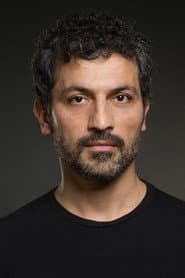
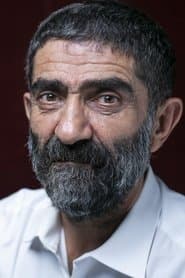
Dilan Gwyn plays Rojîn with controlled exhaustion — there's no melodrama here, just the accumulated weight of someone who's learned to function while carrying everything. Feyyaz Duman as Ferhat and Zenan Tünc as young Azad do a lot with limited screen time, creating a family dynamic that feels lived-in even when they're barely present. But the real unsettling force is Ali Seçkiner Alıcı as Nîzam. He doesn't arrive as a villain. He arrives as a question mark that nobody knows how to answer, and his presence in every scene after that point changes the temperature of the room.
The film's visual language matches this restraint. There's a Nordic patience to it — long takes, natural light, the kind of cinematography that trusts silence. You're not being told how to feel. You're being trusted to sit with the discomfort yourself.
Where to find Earth Song
The film had its world premiere at the International Film Festival Rotterdam in early 2026, then took the Best Feature prize at the Amsterdam Kurdish Film Festival later that year. Festival recognition like that typically signals good distribution movement, and Earth Song is currently available on major OTT platforms.
To find it in your region, check the Where to Watch widget at the top of this page — Movie OTT updates streaming availability across services in real time, which matters for festival films still building their distribution footprint. Availability shifts as deals are finalized, so a live tracker beats manual hunting through multiple apps.
Early critical response was positive. Eye for Film praised its restrained visual approach and willingness to treat generational trauma as the actual subject, not background. ICS Film's IFFR review similarly highlighted how the film refuses easy catharsis — it's interested in the weight of history, not its resolution.
Who should actually watch this
Not everyone. That's honest. Earth Song is patient, quiet, and it demands you meet it halfway. You can't half-watch it. But if you're drawn to films that treat diaspora identity and family fracture as the actual point — not metaphor, not backdrop — this one earns your time.
Compare it to the slow-burn family dramas of Force Majeure or early Haneke — films that use domestic spaces and silence as weapons. Or if you've connected with recent work exploring Kurdish experience (like documentaries on Movie OTT's expanding international catalog), this gives you something different: the interior life of displacement rather than its external markers.
It's the kind of film that stays with you after credits roll. Days later, something small will trigger a memory of a scene — a look, a moment of non-connection — and you'll find yourself thinking about it again. That's not accident. That's craft.
The details you might want to know
Runtime: 118 minutes
Genres: Drama
Production: Finnish-German co-production (Sons of Lumière, Elemag Pictures, Jamedia Production)
Director: Erol Mintaş (second fiction feature; his debut was Song of My Mother)
Cast: Dilan Gwyn, Feyyaz Duman, Zenan Tünc, Ali Seçkiner Alıcı
Festival premiere: International Film Festival Rotterdam 2026
Awards: Best Feature Film, Amsterdam Kurdish Film Festival 2026
What comes next
If you're ready to watch, Movie OTT has the current streaming details for your region. If you're still deciding — or if you want to understand more about Kurdish cinema's growing international presence — start with something more narrative-driven, then circle back to this. Earth Song rewards prior context but doesn't require it. It just requires patience. And honestly, that's not a small thing to ask anymore.