

The Story of Evangelion: 3.0 You Can (Not) Redo
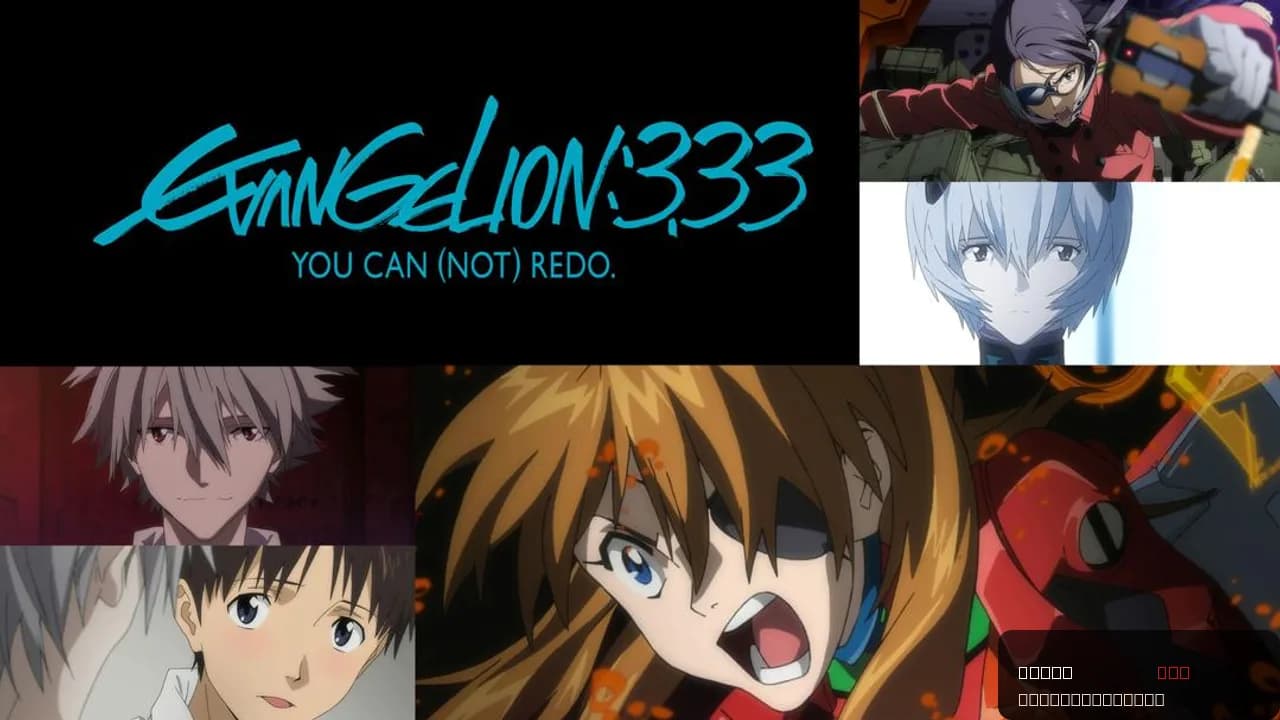
Evangelion: 3.0 You Can (Not) Redo picks up after events that fundamentally reshape the world as we knew it. The film doesn't ease you back in—instead, it drops you into a landscape where time has passed, alliances have fractured, and the characters you thought you understood are now strangers wearing familiar faces. What's striking is how Anno and his co-directors Kazuya Tsurumaki and Masayuki refuse to explain everything upfront. You're meant to feel lost, at least for a while. The mystery unfolds across the film's 106 minutes, revealing why Shinji has been absent, what happened to NERV, and why the world looks so fundamentally broken. This isn't a straightforward action film—it's a puzzle box wrapped in mecha combat, and the real stakes aren't always visible on screen.
Behind the Making of Evangelion: 3.0 You Can (Not) Redo
Evangelion: 3.0 You Can (Not) Redo arrived in 2012 as the third installment in the Rebuild of Evangelion series, a project that Hideaki Anno had been developing since 2007 to reimagine and expand upon the original Neon Genesis Evangelion anime. The film was written and chief-directed by Anno himself, working alongside Kazuya Tsurumaki, Masayuki, and Mahiro Maeda to craft something that would challenge fans who'd been following the franchise for years. The voice cast remained largely consistent with the original series—Megumi Ogata returning as Shinji Ikari, Yuko Miyamura as Misato, and Akira Ishida as Kaworu—lending continuity even as the narrative took sharp turns. The animation quality was substantial for its time, and the film's runtime of just under two hours allowed Anno to develop ideas that wouldn't have fit into a tighter frame. While specific box-office figures for the Japanese theatrical release aren't always publicly detailed in Western markets, the Rebuild films have consistently performed well domestically, signaling strong fan investment in Anno's reimagining. What's less discussed is how the film sits at an awkward middle point in the tetralogy—it's neither the hopeful reset of the first two films nor the apocalyptic finale audiences eventually got, which may explain some of the mixed critical reception it's received over time.
What Makes Evangelion: 3.0 You Can (Not) Redo Stand Out
The performances that anchor Evangelion: 3.0 You Can (Not) Redo are understated in a way that modern anime often isn't. Megumi Ogata's delivery of Shinji carries a weight of exhaustion and confusion that the script doesn't always spell out—you hear it in the pauses, the hesitation. Yuko Miyamura's Misato, meanwhile, has shifted into someone harder, colder, and the vocal performance reflects that transformation without ever becoming a caricature. The thing nobody mentions is how much the film trusts its audience to read subtext. There's no exposition dump explaining why characters have become estranged; you infer it from how they talk to each other, or don't. The action sequences—and there are several—use the mecha combat to express emotional states rather than just showcase spectacle. When Shinji pilots the Evangelion, it's not thrilling. It's agonizing. That tonal choice, that refusal to make giant robots feel cool, is what separates this from typical anime action. The visual direction by Mahiro Maeda brings a kind of industrial, almost oppressive aesthetic to the world—everything feels worn, repurposed, like civilization is running on fumes. It's not beautiful in the traditional sense, but it's unmistakably deliberate.
Where to Stream Evangelion: 3.0 You Can (Not) Redo Online
Evangelion: 3.0 You Can (Not) Redo is currently available on Prime Video, making it accessible to subscribers looking to catch up on the Rebuild series without hunting across multiple platforms. If you're tracking where anime films live these days, Movie OTT keeps a running index of which streaming services carry which titles—useful when you're trying to avoid the fragmentation headache. The film's availability on Prime Video means you can start the Rebuild series from the beginning if you haven't already, or jump back in if you've fallen behind. Streaming rights for anime films shift, so if you're planning a marathon, it's worth checking the "Where to Watch" widget at the top of this page to confirm current availability before you settle in. The 106-minute runtime makes it a reasonable evening commitment, though you'll want to be alert—this film rewards attention.
Frequently asked questions
Q: Is Evangelion: 3.0 You Can (Not) Redo a sequel to the original Neon Genesis Evangelion anime?
It's a reimagining rather than a direct sequel. The Rebuild of Evangelion series takes the core concepts and characters from the original 1995 anime but tells a substantially different story with its own plot, timeline, and ending. You don't need to have watched the original series to follow this film, though familiarity helps.
Q: Who directed Evangelion: 3.0 You Can (Not) Redo?
Hideaki Anno served as chief director and writer, with Kazuya Tsurumaki, Masayuki, and Mahiro Maeda sharing directing duties. Anno's vision shaped the film's overall direction and thematic concerns.
Q: How long is Evangelion: 3.0 You Can (Not) Redo?
The film runs 106 minutes, giving it enough space to develop its complex narrative without feeling rushed or overly long.
Q: What's the IMDb rating for Evangelion: 3.0 You Can (Not) Redo?
The film currently holds a 6.9/10 rating on IMDb, reflecting a mixed but engaged audience response—typical for a film that takes narrative risks and doesn't aim to please everyone.
Q: Can I watch Evangelion: 3.0 You Can (Not) Redo without seeing the first two Rebuild films?
While technically possible, the first two films establish crucial world-building and character dynamics. Watching them in order will give you much better context for why this film's time-skip and tonal shift matter as much as they do.
Final Thoughts on Evangelion: 3.0 You Can (Not) Redo
Evangelion: 3.0 You Can (Not) Redo is a film that doesn't apologize for being difficult. It's not trying to be the most accessible entry in the Rebuild series, and it's not designed to wrap things up neatly. If you're patient with ambiguity, if you can sit with confusion and let it resolve on the film's terms rather than demanding immediate clarity, there's something genuinely compelling here. Movie OTT readers who appreciate anime that swings for something bigger than just entertainment will find plenty to chew on. It's worth your time if you're willing to meet it halfway.