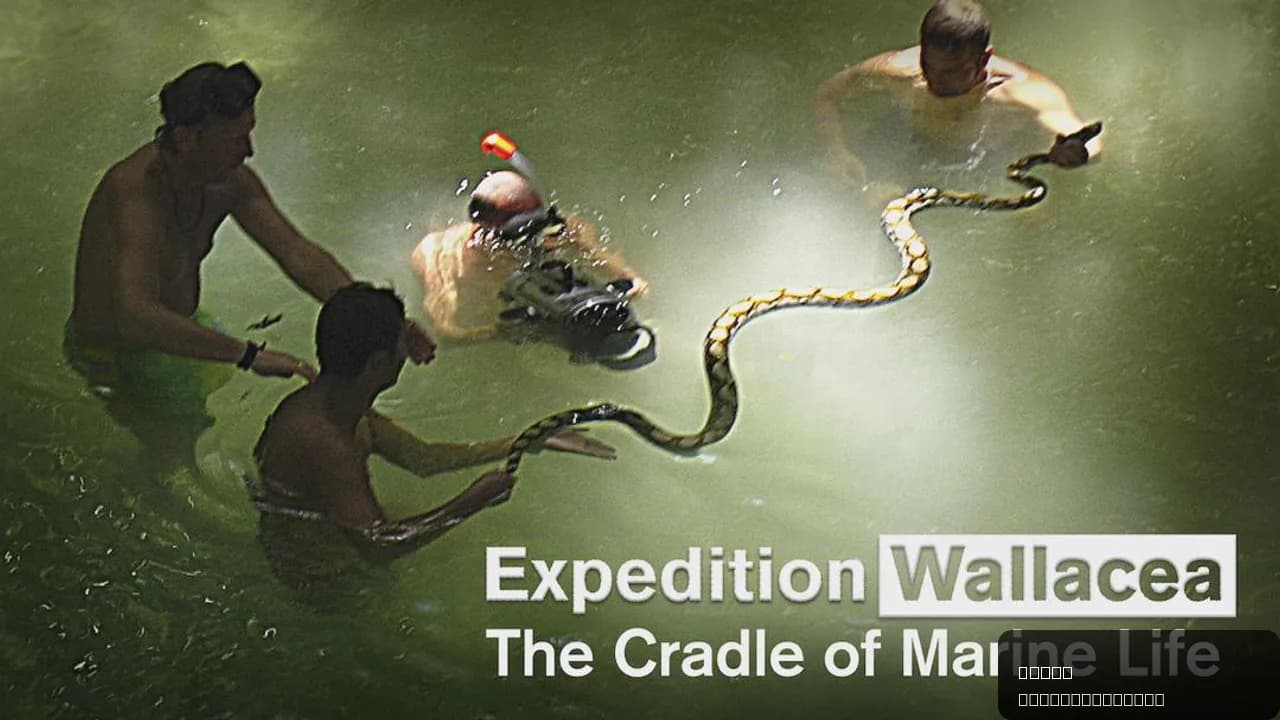
Inside the World of Expedition Wallacea – The Cradle of Marine Life
Expedition Wallacea – The Cradle of Marine Life invites viewers on a fascinating scientific voyage, venturing into the rich, mysterious waters of Indonesia. This 2007 documentary sets out to answer a profound question: why are the marine flora and fauna so radically different in certain regions of this vast archipelago? Marine biologists, driven by scientific curiosity, embark on a focused expedition into the sea, aiming to unravel the complex ecological puzzle that defines Wallacea. It's a journey not just of exploration, but of discovery—a quest to understand the very mechanisms that create and sustain such unparalleled biodiversity. The film promises an intimate look at the challenges and triumphs of scientific fieldwork in some of the planet's most biologically significant areas. A truly captivating premise.
Behind the Making of Expedition Wallacea – The Cradle of Marine Life
The creation of Expedition Wallacea – The Cradle of Marine Life required a blend of scientific rigor and cinematic vision, helmed by director Matthias Kopfmüller. Released in 2007, this 43-minute documentary isn't a sprawling epic, but rather a focused, impactful exploration of a specific ecological phenomenon. Kopfmüller's approach likely involved meticulous planning to capture the expedition's findings effectively, balancing the scientific narrative with compelling underwater cinematography. Documentaries like this often face immense logistical challenges, from securing permits to operating specialized equipment in remote marine environments—an undertaking that demands considerable dedication. While the film doesn't feature a traditional "cast" in the dramatic sense, its real stars are the marine biologists whose expertise guides the narrative, alongside the incredible natural world they investigate. Their commitment to understanding the nuances of Indonesia's underwater ecosystems forms the backbone of the film. The relatively short runtime of 43 minutes suggests a tight, information-dense presentation, designed to convey key scientific insights without unnecessary embellishment. It's clear that the production prioritized educational value and scientific accuracy. We're not talking about a blockbuster budget here, but rather the kind of passion project that often yields the most insightful results. Pure and simple.
Why Expedition Wallacea – The Cradle of Marine Life is Still Worth Watching
Despite its modest IMDb rating of 4.8/10 from just 14 votes, Expedition Wallacea – The Cradle of Marine Life offers a compelling viewing experience for those with a genuine interest in marine biology and environmental science. What makes it stand out isn't necessarily broad critical acclaim—which, let's be honest, is rare for niche documentaries of this vintage—but its focused dedication to a truly fascinating scientific question. The film works because it transports the viewer directly into the heart of an active scientific expedition, offering a glimpse into the methodical yet often thrilling process of discovery. We get to see firsthand the methodologies employed by marine biologists, the equipment they use, and the incredible, sometimes bizarre, creatures they encounter. The visual appeal of underwater photography, even from 2007, often holds up remarkably well, showcasing vibrant coral reefs and diverse species that few people ever get to witness. Quite a sight. I keep coming back to the idea that some films aren't about universal appeal, but about serving a specific, curious audience. This documentary, with its clear educational intent, excels in that regard. It provides valuable context for understanding why regions like Wallacea are so vital to global biodiversity, and the urgency behind their study and protection. Honestly, for anyone interested in the sheer diversity of life beneath the waves, the low rating shouldn't deter you. It’s a snapshot of a crucial scientific endeavor, capturing the wonder of the natural world through a lens of dedicated research.
Where to Stream Expedition Wallacea – The Cradle of Marine Life Online
For those eager to embark on this underwater journey, Expedition Wallacea – The Cradle of Marine Life is currently available to stream on Prime Video. Finding niche documentaries from 2007 can sometimes be a challenge, but thankfully, this captivating exploration of marine life is readily accessible to subscribers of Amazon's streaming service. As a destination for discovering a wide array of content, Prime Video offers a convenient platform for viewers interested in science and nature documentaries. You can find more details about its availability and other streaming options right here on Movie OTT, where we track current streaming availability across a multitude of platforms. Don't forget to check the "Where to Watch" widget at the top of this page for the most up-to-date information, ensuring you won't miss out on director Matthias Kopfmüller's unique vision. We're always working to keep you informed about where your favorite films and documentaries are streaming.
Frequently asked questions
Q: Where can I watch Expedition Wallacea – The Cradle of Marine Life online? A: You can currently stream Expedition Wallacea – The Cradle of Marine Life on Prime Video. For the most current information and other potential streaming options, be sure to check the "Where to Watch" section on Movie OTT.
Q: Who directed Expedition Wallacea – The Cradle of Marine Life? A: The documentary Expedition Wallacea – The Cradle of Marine Life was directed by Matthias Kopfmüller. His vision guided the scientific expedition into Indonesia's unique marine environments.
Q: How long is Expedition Wallacea – The Cradle of Marine Life? A: Expedition Wallacea – The Cradle of Marine Life has a runtime of 43 minutes. It's a concise and focused documentary, delivering its insights efficiently.
Q: What is the main subject of Expedition Wallacea – The Cradle of Marine Life? A: The film follows marine biologists on an expedition to Indonesia to investigate why the flora and fauna in certain regions of Wallacea are so distinct. It explores the unique biodiversity of this crucial marine area.
Q: When was Expedition Wallacea – The Cradle of Marine Life released? A: This documentary was released in 2007. It offers a look back at scientific exploration from that period, still relevant for its ecological insights.
Final Thoughts on Expedition Wallacea – The Cradle of Marine Life
Ultimately, Expedition Wallacea – The Cradle of Marine Life isn't going to be for everyone, and that's perfectly fine. If you're a documentary aficionado, a budding marine biologist, or simply someone captivated by the mysteries of the deep sea, then this 2007 film offers a rewarding experience. It serves as a valuable, albeit brief, educational resource, shining a light on the incredible ecological diversity found within Indonesia's Wallacea region. It's a testament to the power of dedicated scientific inquiry and the enduring importance of understanding our planet's most unique ecosystems. For its specific audience, it's a worthwhile watch, providing a window into the complex biological processes that make our world so astonishingly varied. Movie OTT recommends this for anyone looking to expand their knowledge of marine science.