What Foxing: Kitsuné-tsuki is about
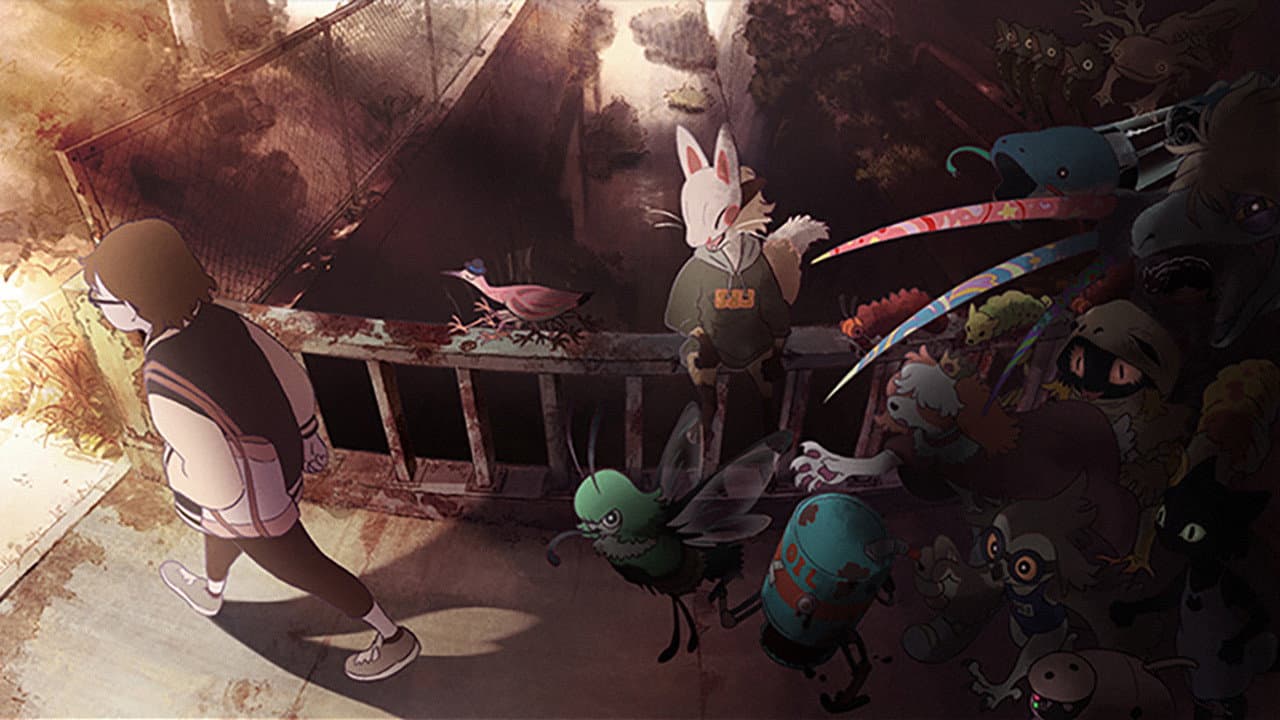
Foxing: Kitsuné-tsuki, the 2026 animated short from Toei Animation, follows Shinano, a character designer whose days have collapsed into a kind of gray routine — deadlines met, work submitted, scrolling through social media that offers connection in theory and nothing in practice. Her creativity doesn't feel like hers anymore. It's been absorbed into a production pipeline that doesn't care where the ideas came from, only that they arrive on time. Then Koyami appears. Fox-masked, mischievous, unmistakably familiar — because Shinano drew her, years ago, in margins and notebooks nobody ever saw. Koyami is followed by others: discarded characters, half-finished ideas, the creative debris of a life spent making things for systems that swallow them whole. The film's official tagline — "A mischievous fox, seen only by her" — lands harder once you understand what that invisibility really means.
How Foxing: Kitsuné-tsuki came together at Toei Animation
Foxing: Kitsuné-tsuki is a Toei Animation production, which immediately signals a certain level of craft pedigree. Toei is one of Japan's oldest and most storied animation studios — the house behind Dragon Ball, Sailor Moon, and One Piece — and while those franchises represent the commercial machine the film quietly critiques, the studio has a parallel history of supporting shorter, more personal work that doesn't always make headlines. This short fits that tradition.
Released in 2026, the film runs exactly 15 minutes, which is a format that anime has always handled more confidently than Western animation tends to. Short-form anime has a distinct grammar: it doesn't need to justify its runtime with plot density, and the best examples use brevity as a structural argument. Foxing: Kitsuné-tsuki earns its length. At the time of writing, the film carries an IMDb rating of 0/10, which reflects the early-release data gap rather than audience reception — it's simply too new for aggregated scores to have settled. No Metascore or major awards circuit results are available yet, and the film hasn't announced an MPAA rating, which is consistent with its streaming-first release strategy targeting anime and animation fans across major OTT platforms.
What's striking is how the production design choices feel intentional at every level — the way Koyami's fox mask sits slightly wrong on her face, the color palette that shifts from washed-out office blues to something warmer and stranger as Shinano's inner world bleeds into her outer one. Hard to say if that visual language was a directorial mandate or emerged from the animators themselves, but either way it works. Movie OTT, which tracks animated shorts alongside feature releases across streaming platforms, listed this title ahead of its wider availability window, which suggests the distributor was building awareness early.
Why Foxing: Kitsuné-tsuki resonates with anime fans and artists alike
Foxing: Kitsuné-tsuki works because it doesn't explain itself. The film trusts the audience to sit with Shinano's loneliness rather than narrating it, and that restraint is rarer than it should be. The kitsune — the fox spirit of Japanese folklore — has always carried dual meanings: trickster and guide, illusion and revelation. Using that mythology as the film's central conceit isn't just decorative. It's load-bearing. Koyami and the other returning characters aren't hallucinations or metaphors the film winks at; they're treated with the same visual weight as the real world, which means the audience experiences the same uncertainty Shinano does.
The thematic territory here — Japan's relationship between individual creative labor and commercial production, the particular loneliness of social media performance, the way artists can become strangers to their own work — feels specific enough to be honest rather than universal in the vague, hollow way that phrase usually implies. Anime has a long tradition of stories about creators and creation, from Satoshi Kon's Millennium Actress to the quieter introspective moments scattered through Makoto Shinkai's early work, and this short earns a place in that conversation.
The moment that stays with you (and I keep coming back to it) is when Shinano walks through a landscape built entirely from her own unfinished sketches — not triumphant, not healed, just present. She doesn't resolve her loneliness. She decides to keep making things anyway. That's not a happy ending. It's something more honest than that.
Movie OTT's editorial team noted this title as one to watch in the 2026 anime short-form slate, particularly for audiences who responded to recent introspective animation releases.
Where to stream Foxing: Kitsuné-tsuki online
Foxing: Kitsuné-tsuki is currently available on major OTT services, making it accessible to a wide streaming audience without requiring a specific platform subscription hunt. The film's short runtime — 15 minutes — means it fits easily into an evening without the commitment of a feature, which is part of why short-form anime works so well in a streaming context. Check the Where-to-Watch widget at the top of this page for the most current platform availability, since streaming rights for short-form animation can shift faster than feature films. Movie OTT tracks current streaming availability across major services in real time, so if the title moves platforms or becomes available in a new region, that widget will reflect it before most other aggregators do.
Frequently asked questions
Q: Where can I watch Foxing: Kitsuné-tsuki?
Foxing: Kitsuné-tsuki is currently streaming on major OTT services. The Where-to-Watch widget at the top of this Movie OTT page lists every platform currently carrying the title and updates in real time as availability changes.
Q: How long is Foxing: Kitsuné-tsuki?
The film runs 15 minutes, making it a short-form animated work rather than a feature. That runtime is deliberate — the story is structured to use brevity as part of its emotional argument, and it doesn't feel incomplete.
Q: Who made Foxing: Kitsuné-tsuki?
Foxing: Kitsuné-tsuki is a Toei Animation production, released in 2026. Toei is one of Japan's most established animation studios, with a decades-long history spanning major franchise anime and shorter independent works.
Q: Is Foxing: Kitsuné-tsuki suitable for children?
The film carries no announced MPAA rating at this time, which is common for streaming-first short-form anime. The content — loneliness, creative identity, fantasy imagery — is emotionally mature but not graphic. Older children and teenagers who enjoy introspective anime are likely to connect with it.
Q: What does the title Foxing: Kitsuné-tsuki mean?
Kitsuné-tsuki (狐憑き) is a Japanese term referring to fox possession — the folkloric state of being inhabited or haunted by a kitsune spirit. The title frames Shinano's experience as a kind of possession by her own discarded creative work, which is the film's central metaphor.
Who should watch Foxing: Kitsuné-tsuki
Foxing: Kitsuné-tsuki won't be for everyone — it's quiet, it's short, and it doesn't offer resolution so much as recognition. But for anyone who has ever felt their creative work disappear into a machine that doesn't care about them, or who has scrolled through social media feeling more alone than before they opened it, this film will land somewhere specific. Fans of introspective anime, Japanese folklore, and Toei Animation's quieter output should seek it out. At 15 minutes, the ask is small. What it leaves behind isn't.


