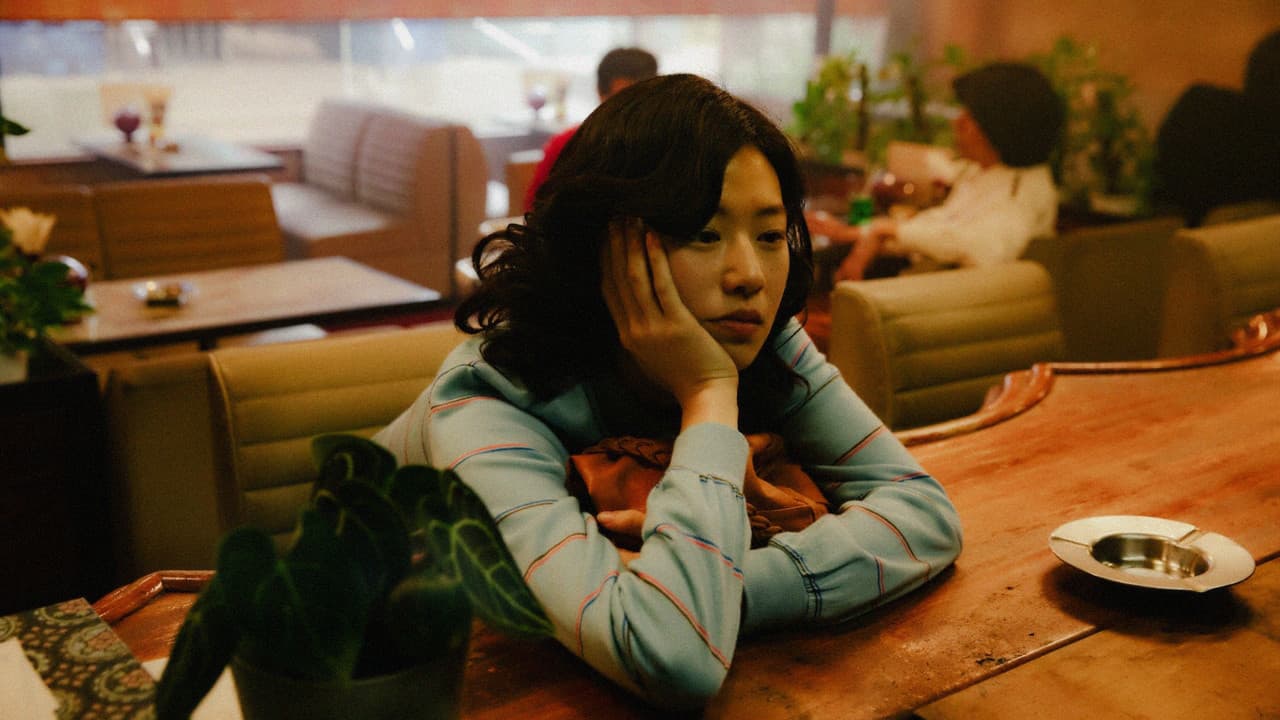
Fujiko
A quiet rebellion: Why this 2026 drama won a major festival
Fujiko opens on something that feels almost unbearably ordinary — a young woman, mistreated by her husband Jiro's family, trying to hold herself together inside a household that was never truly hers. Then Jiro's relatives kidnap Mari, Fujiko's daughter, and the film shifts entirely. What looked like a slow domestic drama becomes something far more urgent: a story about what it costs a woman to trust her own judgment when everyone around her is telling her she's wrong.
That choice — to raise Mari alone, against all advice — is quiet. Stubborn. Radical.
It's also the engine driving everything that follows. Director Taichi Kimura refuses to let Fujiko become a victim narrative. The film sits somewhere between social drama and women's empowerment storytelling, which matters enormously to how it lands emotionally. There's a sequence after the kidnapping where the world around Fujiko becomes slightly unmoored from realism — Kimura seems to be saying that grief and determination can coexist in a space that doesn't follow normal logic. It shouldn't work as well as it does.
How Fujiko reached the festival circuit — and what it won
The film premiered in competition at the Far East Film Festival (FEFF) 28 in Udine, Italy in 2026, one of the most prestigious showcases for Asian cinema in Europe. It didn't just screen there. According to Screen Daily, Fujiko won the Golden Mulberry for Best Film — the festival's top prize, beating the full competition lineup. That's not a footnote. FEFF 28 is a serious competition, and taking the top award puts Kimura's work in genuinely accomplished company.
The production also screened in the Nippon Cinema section at Nippon Connection in Frankfurt, one of the largest Japanese film festivals outside Japan. Two major festival placements in a single year, one of them a win. For a film with no wide theatrical release confirmed yet, that's a striking early track record.
Produced under the EPISCOPE banner and featuring Katayama Yuki in the lead role alongside Megumi — who serves as both cast and producer — the film runs exactly 95 minutes. That dual role (performer and producer) is worth noting: it suggests a level of personal investment in the material that tends to show up on screen, and honestly, it does here.
What makes the performances land
What's striking about Katayama Yuki's work is that she doesn't ask for sympathy so much as recognition. She's not playing a saint. Fujiko makes choices the people around her find baffling or reckless, and the film doesn't rush to vindicate her — it just stays with her, which is harder to pull off than it sounds. The thing nobody mentions is how much that restraint matters. Megumi's presence both in front of and behind the camera gives the production a coherence of vision you can feel even in the quieter scenes.
Early critical coverage flagged this one precisely because of that combination: festival pedigree plus performance-driven storytelling. Asian Movie Pulse described the film's approach as thematically ambitious, pointing to the dreamlike visual register that the festival programmers also highlighted in their notes. The result is a drama that doesn't feel like a drama — it feels like something closer to lived experience.
Where to watch Fujiko right now
Fujiko is currently available on major OTT platforms, though regional availability varies more than most people expect. Check Movie OTT's where-to-watch tracker at the top of this page to find which service has it in your territory — streaming rights for festival films shift quickly, and manually cross-referencing apps is a waste of time you don't have.
The film's 95-minute runtime makes it ideal for a single-sitting watch. No multi-episode commitment. No cliffhangers. Just a complete, self-contained story that doesn't overstay its welcome.
Who should watch Fujiko — and what to expect
If you're drawn to Japanese cinema that takes women's interior lives seriously without wrapping everything in tidy resolution, this is exactly the kind of drama worth your time. It's not comfortable viewing, but it's rewarding. The Golden Mulberry win isn't hype — it reflects a film that genuinely earned its place at the top of a competitive festival lineup.
Hard to say if it'll break through to wider mainstream audiences, but for viewers who know what they're looking for — who've found themselves coming back to films like After the Storm or Our Little Sister — Fujiko delivers what those films promise: a story about difficult women making their own way. Look for it now through the streaming links available via Movie OTT's platform tracker.
FAQ
Q: Who directed Fujiko?
Taichi Kimura. The film was produced by EPISCOPE.
Q: Did Fujiko win awards?
Yes — it won the Golden Mulberry for Best Film at FEFF 28 in Udine, Italy, and screened in the Nippon Cinema section at Nippon Connection in Frankfurt.
Q: Where can I watch it?
Fujiko is on major OTT platforms. Use Movie OTT's where-to-watch widget to check availability in your region, since streaming rights vary by country.
Q: How long is the film?
95 minutes — a single-sitting watch with no sequel attached.
Q: Is it based on a true story?
No confirmed real-life basis has been reported. The story appears to be an original drama, though its themes of family conflict and single motherhood reflect recognizable social realities in contemporary Japan.