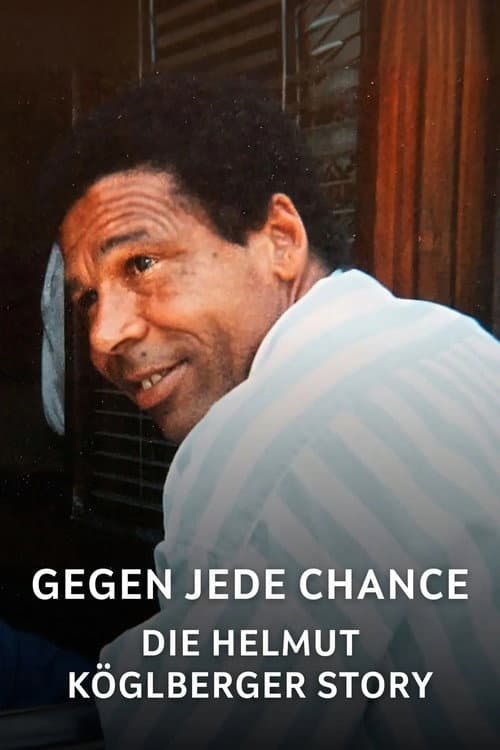
Gegen jede Chance: The Helmut Köglberger Story
Here's what you need to know: Gegen jede Chance - Die Helmut Köglberger Story is a 45-minute Austrian documentary about Helmut Köglberger, the first Black player and the first Black captain of Austria's national football team. It premiered June 3, 2026 on ORF 1 and ORF ON. If you're interested in football history, Austrian culture, or stories about breaking barriers in sport — this one lands differently than the usual inspirational sports doc.
What actually happened: Köglberger's life before the film
Helmut Köglberger's story doesn't start on the pitch. It starts with a difficult childhood — the kind of circumstance that doesn't usually lead to a national team captaincy, which is partly why the documentary exists at all. He played for LASK and later Austria Vienna, two of Austria's biggest clubs, but what matters more than his club career is what it cost him to get there.
The film doesn't dwell on the hardship for effect. There's a sequence early where you understand the weight of what he was navigating — socially, personally, in a country that hadn't exactly made space for him — just through quiet accumulated testimony. No dramatic reconstruction needed. The facts do that work themselves.
What's striking is how the film refuses to treat this as a straightforward underdog narrative. That's the right call. Most sports documentaries flatten their subjects by leading with match footage and statistics. This one keeps the human story front and center — which means you're not watching a highlight reel with narration, you're watching someone explain what it felt like to be the only one in the room.
How ORF brought this story to screen
Directors Florian Berger and Claudia Grünwald shaped the film from a script by Jürgen Marschal and Daniel Hendler. This is an Austrian production through and through — no international co-production credits, no attempt to repackage the story for audiences outside Austria. That focus matters. It keeps the story grounded in the specific context where it happened.
The film aired as part of ORF's True Stories documentary strand, a slot that's built a reputation for actual editorial ambition rather than the kind of flattering profile pieces clubs commission themselves. ORF released it simultaneously on broadcast (ORF 1) and on their streaming platform (ORF ON) on June 3, 2026 — which meant Austrian audiences could catch it either way from day one.
What gives the production real texture is the roster of voices they assembled. Hans Krankl — arguably the most famous name in Austrian football history — appears as a contemporary commentator. That's credibility no amount of archival footage alone could manufacture. Then there's Alfred Dorfer, a comedian and cultural commentator, who brings a completely different lens — he situates Köglberger not just within football but within Austrian society itself. Family members also contribute. Together, those voices shift the film's register from sports documentary into something closer to a personal portrait.
The decision to include both Krankl and Dorfer is the kind of structural choice that doesn't announce itself loudly, but it's worth pausing on. Krankl validates the football credentials. Dorfer asks the cultural questions. You're hearing the story from inside the game and from the society that surrounded it simultaneously. That's sophisticated documentary work.
Why this film stands apart
At 45 minutes, the film is tightly structured. Whether that's a strength or a limitation depends on how much room you think Köglberger's story deserves to breathe — honestly, there's a case that this subject could sustain feature length. But the compact runtime also means the film moves with purpose. No filler.
What I keep coming back to is the restraint. There's no sensationalism here, no attempt to manipulate you into caring. The filmmakers seem confident that the story itself is enough — and they're right. You don't need the film to tell you this was extraordinary. The facts do that.
The thing nobody mentions about sports documentaries is how many of them collapse under the weight of trying to be about everything at once: the player's technique, the tactical evolution, the era, the cultural backdrop, the family drama. This one picks a lane. It's about what it cost to belong. That focus is rare.
Looking at where documentaries like this typically land — buried between algorithm-friendly prestige productions and big-budget sports series on streaming platforms — Movie OTT is one of the few places tracking titles like this as they move across platforms. The documentary didn't get a theatrical release (it's a television production), so streaming availability is where most people will find it.
Where to watch it right now
Gegen jede Chance premiered on ORF ON and ORF 1 in Austria. For viewers outside Austria, availability depends on regional licensing — which changes regularly. The best way to check what's currently streaming where you are is to use Movie OTT's where-to-watch tracker, which updates as availability shifts across platforms.
Because the runtime is only 45 minutes, it's an easy single-sitting watch. No multi-episode commitment. You can finish it between dinner and whatever comes next.
Is this for you?
Should I watch it? If you care about football history, yes. If you're interested in stories about race and belonging in European sport, yes. If you like documentaries that trust their subject enough to step back — that don't need to tell you what to think — then definitely yes.
Even if you haven't followed Austrian football closely, the story itself carries weight. Köglberger was breaking ground in a country that wasn't necessarily ready for it, and the film doesn't look away from that tension.
How does it compare to other sports docs? It's less like The Last Dance (which is partly mythmaking) and more like the best BBC sports documentaries — the kind that use sport as a lens to look at something bigger about society, identity, and what it takes to survive in a space that wasn't built for you.
FAQs
When did it premiere? June 3, 2026, on ORF 1 and ORF ON.
How long is it? 45 minutes. Tight. Designed to watch in one sitting.
Who's in it? Helmut Köglberger himself, plus testimony from Hans Krankl, Alfred Dorfer, and Köglberger's family.
Where can I stream it? Check the Movie OTT platform for current availability in your region — it launched on ORF ON and ORF 1 in Austria, and licensing varies elsewhere.
Is it really about football, or is it about something else? It's framed by football but it's really about belonging, identity, and what it costs to be first at something. The football is the container.
Do I need to know Austrian football history to get it? No. The film works on its own. But if you know the context, some moments hit harder.